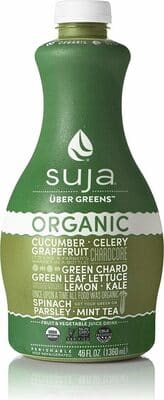
Plant-based beverages
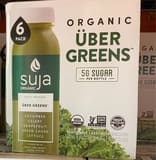
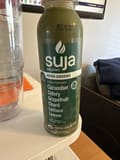
Suja Uber greens
46 fl oz/1360 mL
Score
- Certified organic
- No additives
Why it scores 100
Suja Uber greens scores 100 out of 100 (Excellent) under GoodSwap’s published rules. What moved the score most:
- minus 6 points Sugars 1.7 g / 100 ml: High in sugar. Strong
- plus 5 points Certified organic: Carries a certified-organic label. Info
- plus 3 points No additives: No food additives in the ingredient list. Info
Every line of the math is on The Receipt below, with its evidence tier and sources.
The Receipt
Uber greens
Nutrition per 100 ml
- Sugars 1.7 g / 100 ml minus 6 points
- Energy 15 kcal / 100 ml minus 2 points
Bonuses
- Certified organic plus 5 points
- No additives plus 3 points
100 + 0 = 100
Nutrition per 100 ml
| Energy | 15 kcal |
|---|---|
| Fat | 0 g |
| Saturated fat | 0 g |
| Trans fat | 0 g |
| Carbohydrates | 3.4 g |
| Sugars | 1.7 g |
| Added sugars | 0 g |
| Fiber | 0 g |
| Protein | 0.4 g |
| Salt | 0.1 g |
Serving: 8 OZA (237 ml)
Ingredients
- ORGANIC CUCUMBER JUICE
- ORGANIC CELERY JUICE
- ORGANIC GRAPEFRUIT JUICE
- ORGANIC GREEN CHARD JUICE
- ORGANIC GREEN LEAF LETTUCE JUICE
- ORGANIC LEMON JUICE
- ORGANIC KALE JUICE
- ORGANIC SPINACH JUICE
- ORGANIC PARSLEY JUICE
- ORGANIC MINT TEA (PURIFIED WATER, ORGANIC PEPPERMINT TEA LEAF, ORGANIC SPEARMINT TEA LEAF)
Label text, as published
ORGANIC CUCUMBER JUICE, ORGANIC CELERY JUICE, ORGANIC GRAPEFRUIT JUICE, ORGANIC GREEN CHARD JUICE, ORGANIC GREEN LEAF LETTUCE JUICE, ORGANIC LEMON JUICE, ORGANIC KALE JUICE, ORGANIC SPINACH JUICE, ORGANIC PARSLEY JUICE, ORGANIC MINT TEA (PURIFIED WATER, ORGANIC PEPPERMINT TEA LEAF, ORGANIC SPEARMINT TEA LEAF)
Allergens and diets
Contains: Celery
- Vegan
- Vegetarian
- Gluten-free
- Palm-oil-free
Always check the package: recipes change.
More plant-based beverages on GoodSwap
-
 Non-Dairy Protein Shake OWYN · 12 oz Ultra-processedContains non-nutritive sweetenersContains added sugarsContains seed oils Score 39 out of 100 Poor
 -
 Orange juice Aldi No additives Score 90 out of 100 Excellent
 -
 Simply Light Orange Juice Pulp Free Simply Beverages · 52.0 fl oz Ultra-processedContains non-nutritive sweetenersNo synthetic dyes Score 59 out of 100 Okay
 -
 Martinellis gold medal sparkling cider Martinelli's Gold Medal · 25.4 fl oz/750 mL High in sugar Score 79 out of 100 Good
 -
 White Cran x Peach Peach Cranberry Flavored Juice Drink Ocean Spray · 64 fl oz Ultra-processedContains added sugars Score 21 out of 100 Poor
 -
 Coconut Water with Pulp C2O · 17.5 oz No additives Score 97 out of 100 Excellent
More from Suja
Sources
-
Guideline: sugars intake for adults and children
“In both adults and children, WHO recommends reducing the intake of free sugars to less than 10% of total energy intake”
who.int
-
Dietary Guidelines for Americans, 2025–2030
“Limit foods and beverages that include artificial flavors, petroleum-based dyes, artificial preservatives, and low-calorie non-nutritive sweeteners.”
cdn.realfood.gov
-
7 CFR 205.102 Use of the term "organic" (National Organic Program)
“Any agricultural product that is sold, labeled, or represented as “100 percent organic,” “organic,” or “made with organic (specified ingredients or food group(s))” must be: (a) Produced in accordance with the requirements specified in § 205.101 or §§ 205.202 through 205.207”
ecfr.gov