Curry sauces
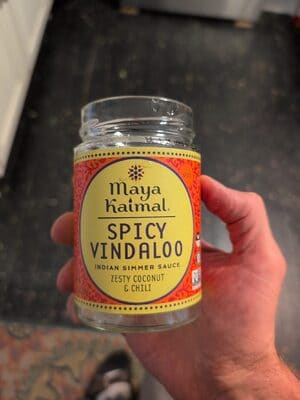
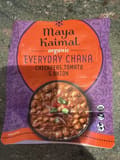
Maya Kaimal Spicy Vindaloo
12.5 oz
Score
- Contains seed oils
- No additives
Why it scores 84
Maya Kaimal Spicy Vindaloo scores 84 out of 100 (Excellent) under GoodSwap’s published rules. What moved the score most:
- minus 8 points Processed (NOVA 3): Classified NOVA 3: processed with added salt, sugar or oil. Emerging
- minus 3 points Saturated fat 2.7 g / 100 g: High in saturated fat. Strong
- minus 3 points Salt 0.9 g / 100 g: High in salt. Strong
Every line of the math is on The Receipt below, with its evidence tier and sources.
The Receipt
Spicy Vindaloo
Ingredients
- Safflower oil minus 2.5 points
Processing
- Processed (NOVA 3) minus 8 points
Nutrition per 100 g
- Saturated fat 2.7 g / 100 g minus 3 points
- Salt 0.9 g / 100 g minus 3 points
100 − 16.5 = 83.5 → 84
Nutrition per 100 g
| Energy | 89 kcal |
|---|---|
| Fat | 7.1 g |
| Saturated fat | 2.7 g |
| Trans fat | 0 g |
| Carbohydrates | 7.1 g |
| Sugars | 3.6 g |
| Added sugars | 0 g |
| Fiber | 1.8 g |
| Protein | 1.8 g |
| Salt | 0.9 g |
Serving: 0.25 cup (56 g)
Ingredients
- Water
- Onion
- Tomato
- Paste (Fresh Vine-Ripened Tomatoes) (not recognized)
- Coconut Cream
- (Extracted Coconut) Organic Apple Cider Vinegar
- Safflower Oil
- Spices (including Turmeric)
- Serrano Chili
- Ginger
- Sea Salt
- Garlic
- Organic Tapioca Starch
- Tamarind Fruit
- Brown Mustard Seds
Label text, as published
Water, Onion, Tomato Paste (Fresh Vine-Ripened Tomatoes), Coconut Cream, (Extracted Coconut) Organic Apple Cider Vinegar, Safflower Oil, Spices (including Turmeric), Serrano Chili, Ginger, Sea Salt, Garlic, Organic Tapioca Starch, Tamarind Fruit, Brown Mustard Seds.
Allergens and diets
Contains: Tree nuts, Mustard
- Vegan
- Vegetarian
- Palm-oil-free
Always check the package: recipes change.
More curry sauces on GoodSwap
-
 Tikka Masala Curry Sauce Burman's · 70 g Ultra-processedContains added sugarsContains seed oilsNo synthetic dyes Score 53 out of 100 Okay
 -
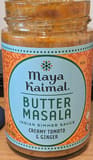 Butter Masala Indian Simmer Sauce Maya Kaimal · 354 g Ultra-processedHigh in saturated fatContains added sugarsContains seed oils Score 44 out of 100 Okay
 -
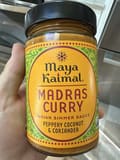 Madras curry indian simmer sauce Maya Kaimal · 12.5 oz/354 g Contains seed oilsNo additives Score 87 out of 100 Excellent
 -
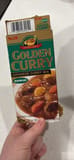 Golden Curry Japanese Curry Mix S&B · 92 g Ultra-processedHigh in saltHigh in saturated fatContains added sugars Score 9 out of 100 Bad
 -
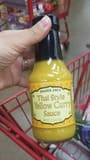 Thai style yellow curry sauce Trader Joe's · 312 g Ultra-processedHigh in saltContains added sugarsContains seed oils Score 30 out of 100 Poor
 -
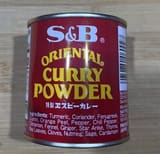 Sb curry powder oriental S&B Foods Inc. · 3 oz/85 g No additives Score 100 out of 100 Excellent
More from Maya Kaimal
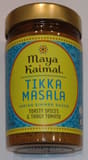
Sources
-
“replacement of saturated fat in the diet with linoleic acid effectively lowers serum cholesterol but does not support the hypothesis that this translates to a lower risk of death from coronary heart disease or all causes.”
doi.org
-
“These data provide support for current recommendations to replace saturated fat with polyunsaturated fat for primary prevention of CHD.”
doi.org
-
Saturated fatty acid and trans-fatty acid intake for adults and children: WHO guideline
“WHO recommends that adults and children reduce saturated fatty acid intake to 10% of total energy intake (strong recommendation).”
who.int
-
“For adults, WHO recommends less than 2000 mg/day of sodium (equivalent to less than 5 g/day salt), or just under a teaspoon.”
who.int