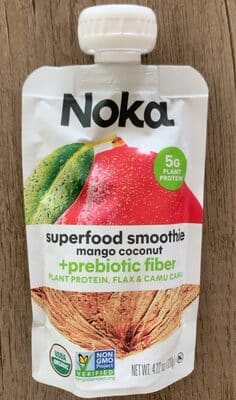
Snacks
Noka Superfood Smoothie - Mango Coconut
4.22 oz/120 g
Score
- Ultra-processed
- Certified organic
- No additives
Why it scores 81
Noka Superfood Smoothie - Mango Coconut scores 81 out of 100 (Excellent) under GoodSwap’s published rules. What moved the score most:
- minus 18 points Ultra-processed (NOVA 4): Classified NOVA 4: made with industrial ingredients and additives. Strong
- plus 5 points Certified organic: Carries a certified-organic label. Info
- minus 3 points Sugars 8.3 g / 100 g: Contains some sugar. Strong
Every line of the math is on The Receipt below, with its evidence tier and sources.
The Receipt
Superfood Smoothie - Mango Coconut
Ingredients
- Rice protein minus 2.5 points
- Natural flavors minus 2.5 points
Processing
- Ultra-processed (NOVA 4) minus 18 points
- 2 kinds of ultra-processing markers minus 1.5 points
Nutrition per 100 g
- Sugars 8.3 g / 100 g minus 3 points
Bonuses
- Certified organic plus 5 points
- No additives plus 3 points
100 − 19.5 = 80.5 → 81
Nutrition per 100 g
| Energy | 100 kcal |
|---|---|
| Fat | 2.9 g |
| Saturated fat | 0 g |
| Trans fat | 0 g |
| Carbohydrates | 15 g |
| Sugars | 8.3 g |
| Added sugars | 0 g |
| Fiber | 1.7 g |
| Protein | 4.2 g |
| Salt | 0 g |
Serving: 1 POUCH (120 g)
Ingredients
- MANGO
- BANANA
- APPLE
- WATER
- BROWN RICE PROTEIN
- FLAX SEED
- COCONUT CREAM
- LEMON JUICE CONCENTRATE
- NATURAL FLAVORS
- CAMU CAMU
Label text, as published
MANGO*, BANANA*, APPLE*, WATER, BROWN RICE PROTEIN*, FLAX SEED*, COCONUT CREAM*, LEMON JUICE CONCENTRATE*, NATURAL FLAVORS*, CAMU CAMU*
Allergens and diets
Contains: Tree nuts
- Palm-oil-free
Always check the package: recipes change.
More snacks on GoodSwap
-
 Yoggies Natures Garden Probiotic Strawberry Yoggies · (20 g) 0.7 oz Ultra-processedContains added sugarsContains seed oilsContains palm oil Score 47 out of 100 Okay
 -
 Crispy Coconut Rolls Organic · 312 g High in sugarHigh in saturated fatContains added sugarsCertified organic Score 27 out of 100 Poor
 -
 Protein Peanut butter Dark Chocolate chewy bar Nature Valley Protein · 40 g Ultra-processedHigh in saturated fatContains added sugarsContains seed oils Score 9 out of 100 Bad
 -
 Chocolate Chip Oatmeal Bar Bobo's · 3 oz/85 g Ultra-processedHigh in sugarHigh in saturated fatContains added sugars Score 7 out of 100 Bad
 -
 Paleo Puffs No Cheese Cheesiness Lesser Evil · 5.0 oz Ultra-processedHigh in saltHigh in saturated fatCertified organic Score 66 out of 100 Good
 -
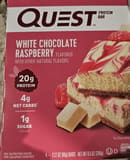 White Chocolate Raspberry Protein Bar Quest · 240 g Ultra-processedContains non-nutritive sweetenersContains sugar alcoholsContains seed oils Score 46 out of 100 Okay
More from Noka
-
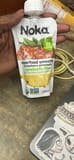 Superfood Smoothie Strawberry Pineapple + Prebiotic Fiber Noka · 4.22 oz/120 g Score 46 out of 100 Okay
 -
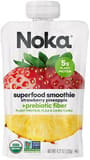 Organic Superfood Smoothies Strawberry Pineapple Noka · 1.4 kg Score 68 out of 100 Good
 -
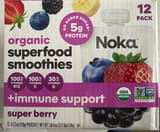 Superfood Smoothie - Super Berry Noka Score 58 out of 100 Okay
 -
 Superfood Smoothie Super Berry Noka · 4.22 oz/120 g Score 62 out of 100 Good
Sources
-
21 CFR 101.22 Foods; labeling of spices, flavorings, colorings and chemical preservatives
“whose significant function in food is flavoring rather than nutritional.”
ecfr.gov
-
Guideline: sugars intake for adults and children
“In both adults and children, WHO recommends reducing the intake of free sugars to less than 10% of total energy intake”
who.int
-
7 CFR 205.102 Use of the term "organic" (National Organic Program)
“Any agricultural product that is sold, labeled, or represented as “100 percent organic,” “organic,” or “made with organic (specified ingredients or food group(s))” must be: (a) Produced in accordance with the requirements specified in § 205.101 or §§ 205.202 through 205.207”
ecfr.gov
-
“Greater exposure to ultra-processed food was associated with a higher risk of adverse health outcomes, especially cardiometabolic, common mental disorder, and mortality outcomes.”
doi.org