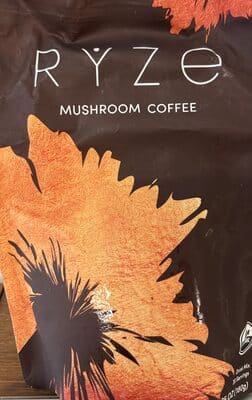
Coffee without sugar
Ryze Mushroom Coffee
180 g
Score
- High in saturated fat
- Contains caffeine
- Certified organic
- No additives
- Seed-oil free
Why it scores 79
Ryze Mushroom Coffee scores 79 out of 100 (Good) under GoodSwap’s published rules. What moved the score most:
- minus 9 points Saturated fat 16.7 g / 100 ml: Very high in saturated fat. Strong
- minus 4 points Energy 250 kcal / 100 ml: Energy-dense for its volume. Info
Capped at 79: High in fat and saturated fat (above the front-of-pack "high" level).
Every line of the math is on The Receipt below, with its evidence tier and sources.
Better coffee
-
 Mushroom Coffee Ten Mushroom Coffee · 7 oz Less saturated fat Score 100 out of 100 , 21 points higher
 -
 Mushroom Ground Coffee Four Sigmatic · 12 oz Less saturated fat Score 100 out of 100 , 21 points higher
 -
 Mushroom instant coffee Simple Truth · 2.12 oz Less saturated fat Score 100 out of 100 , 21 points higher
 -
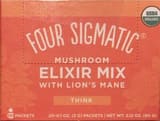 Mushroom Elixir Mix with Lion’s Mane Four Sigmatic Less saturated fat · No caffeine Score 100 out of 100 , 21 points higher
 -
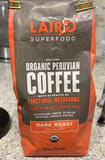 Peruvian Coffee with Extracts of Functional Mushrooms Laird Superfood · 12 oz Less saturated fat Score 100 out of 100 , 21 points higher
The same kind of product, at least 10 points higher, sold in the US. Never paid placements.
The Receipt
Mushroom Coffee
Nutrition per 100 ml
- Saturated fat 16.7 g / 100 ml minus 9 points
- Energy 250 kcal / 100 ml minus 4 points
100 − 13 = 87 → capped at 79
Capped at 79. High in fat and saturated fat (above the front-of-pack "high" level). [3]
Nutrition per 100 ml
| Energy | 250 kcal |
|---|---|
| Fat | 16.7 g |
| Saturated fat | 16.7 g |
| Trans fat | 0 g |
| Carbohydrates | 16.7 g |
| Sugars | 0 g |
| Added sugars | 0 g |
| Fiber | 0 g |
| Protein | 0 g |
| Salt | 0 g |
Serving: 6g
Ingredients
- Organic instant Arabica coffee
- Ryze organic mushroom blend (cordyceps, reishi, king trumpet, shiitake, turkey tail, lion's mane)
- organic coconut milk
- organic MCT oil
Label text, as published
Organic instant Arabica coffee, Ryze organic mushroom blend (cordyceps, reishi, king trumpet, shiitake, turkey tail, lion's mane), organic coconut milk, organic MCT oil. Contains: Tree Nuts (Coconuts) Caffeine Content: 48mg
Allergens and diets
Contains: Tree nuts
- Not vegan
- Not vegetarian
Always check the package: recipes change.
Sources
-
Saturated fatty acid and trans-fatty acid intake for adults and children: WHO guideline
“WHO recommends that adults and children reduce saturated fatty acid intake to 10% of total energy intake (strong recommendation).”
who.int
-
Dietary Guidelines for Americans, 2025–2030
“Limit foods and beverages that include artificial flavors, petroleum-based dyes, artificial preservatives, and low-calorie non-nutritive sweeteners.”
cdn.realfood.gov
-
“Table 3: Criteria for drinks (per 100ml)”
assets.publishing.service.gov.uk
-
Spilling the Beans: How Much Caffeine is Too Much?
“For most adults, the FDA has cited 400 milligrams* a day — that's about two to three 12-fluid-ounce cups of coffee — as an amount not generally associated with negative effects.”
fda.gov
-
Regulation (EU) No 1169/2011, Annex III point 4.1 (beverages with high caffeine content)
“‘High caffeine content. Not recommended for children or pregnant or breast-feeding women’”
eur-lex.europa.eu