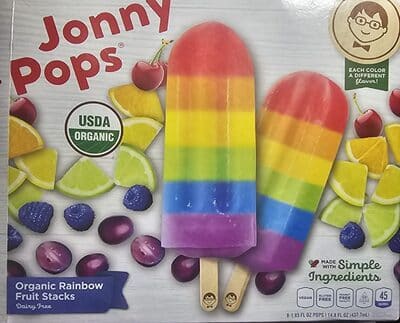
Ice pops
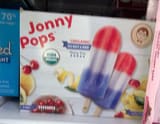
Jonny Pops Organic Rainbow Fruit Stacks
1.85 fl oz
Score
- Ultra-processed
- Contains added sugars
- No synthetic dyes
Why it scores 45
Jonny Pops Organic Rainbow Fruit Stacks scores 45 out of 100 (Okay) under GoodSwap’s published rules. What moved the score most:
- minus 20 points Sugar: An added sugar. Strong
- minus 18 points Ultra-processed (NOVA 4): Classified NOVA 4: made with industrial ingredients and additives. Strong
- minus 8 points Sugars 17.9 g / 100 g: High in sugar. Strong
Every line of the math is on The Receipt below, with its evidence tier and sources.
Better ice cream bars and frozen treats
-
 Smoothie Pops Dragon Fruit & Mango Pitaya Foods Not ultra-processed · No added sugars Score 100 out of 100 , 55 points higher
 -
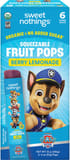 Organic Berry Lemonade Squeezable Fruit Pops Sweet Nothings · 342 g Not ultra-processed · No added sugars Score 79 out of 100 , 34 points higher
 -
 Fruit blends Outshine · 15 oz No added sugars · No sugar Score 77 out of 100 , 32 points higher
 -
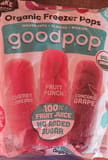 Organic Freezer Pops No added sugars · No sugar Score 68 out of 100 , 23 points higher
 -
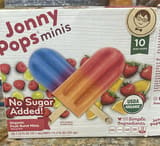 Fruit Burst Minis Jonny Pops No added sugars · No sugar Score 69 out of 100 , 24 points higher
The same kind of product, at least 10 points higher, sold in the US. Never paid placements.
The Receipt
Organic Rainbow Fruit Stacks
Ingredients
- Sugar minus 20 points
- Natural flavors minus 2.5 points
- Guar gum minus 2.5 points
- Gum arabic (acacia) minus 1.5 points
Processing
- Ultra-processed (NOVA 4) minus 18 points
- 3 kinds of ultra-processing markers minus 3 points
Nutrition per 100 g
- Sugars 17.9 g / 100 g minus 8 points
100 − 55.5 = 44.5 → 45
Can’t score above 79. Contains sugar, an ingredient of high concern. [1][2][3]
Nutrition per 100 g
| Energy | 80 kcal |
|---|---|
| Fat | 0 g |
| Saturated fat | 0 g |
| Trans fat | 0 g |
| Carbohydrates | 19.6 g |
| Sugars | 17.9 g |
| Added sugars | 17.9 g |
| Fiber | 0 g |
| Protein | 0 g |
| Salt | 0 g |
Serving: 1 portion (56 g)
Ingredients
- PURIFIED WATER
- ORGANIC CANE SUGAR (high concern)
- NATURAL FLAVORS
- ORGANIC FRUIT AND VEGETABLE JUICE FOR COLOR
- CITRIC ACID
- ORGANIC ORANGE JUICE CONCENTRATE
- ORGANIC CHERRY JUICE CONCENTRATE
- ORGANIC STABILIZER (ORGANIC GUAR GUM, ORGANIC GUM ACACIA) (not recognized)
- ORGANIC SPIRULINA EXTRACT FOR COLOR
- ORGANIC TURMERIC FOR COLOR
- SALT
Label text, as published
PURIFIED WATER, ORGANIC CANE SUGAR, NATURAL FLAVORS, ORGANIC FRUIT AND VEGETABLE JUICE FOR COLOR, CITRIC ACID, ORGANIC ORANGE JUICE CONCENTRATE, ORGANIC CHERRY JUICE CONCENTRATE, ORGANIC STABILIZER (ORGANIC GUAR GUM, ORGANIC GUM ACACIA), ORGANIC SPIRULINA EXTRACT FOR COLOR, ORGANIC TURMERIC FOR COLOR, SALT
Allergens and diets
- Palm-oil-free
Always check the package: recipes change.
More ice pops on GoodSwap
-
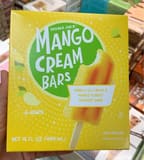 Mango Cream Bars Trader Joe's Ultra-processedContains added sugarsContains emulsifiers studied for gut effects Score 30 out of 100 Poor
 -
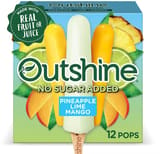 No Sugar Added Pineapple, Lemon, and Mango Frozen Fruit Mini Pops Variety Pack Outshine · 18 fl oz Ultra-processedContains non-nutritive sweetenersContains added sugarsNo synthetic dyes Score 45 out of 100 Okay
 -
 Original Bomb Pop The Original Bomb Pop · 1.75 fl oz Dye with an EU warning labelContains synthetic dyesUltra-processedContains added sugars Score 20 out of 100 Poor
 -
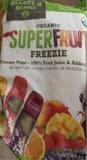 Superfruit Organic Freezie Pops Deebee's Organics · 13.5 fl oz/400 mL Ultra-processedContains added sugars Score 46 out of 100 Okay
 -
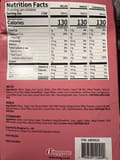 Melon Frozen Dessert Bar Melona · 24 2.7 fl oz (80 mL) Ultra-processedContains added sugarsSeed-oil freeNo synthetic dyes Score 15 out of 100 Bad
More from Jonny Pops
Sources
-
Guideline: sugars intake for adults and children
“In both adults and children, WHO recommends reducing the intake of free sugars to less than 10% of total energy intake”
who.int
-
Dietary Guidelines for Americans, 2025–2030
“Limit foods and beverages that include artificial flavors, petroleum-based dyes, artificial preservatives, and low-calorie non-nutritive sweeteners.”
cdn.realfood.gov
-
Added and free sugars should be as low as possible
“Sugar consumption is a known cause of dental caries.”
efsa.europa.eu
-
21 CFR 101.22 Foods; labeling of spices, flavorings, colorings and chemical preservatives
“whose significant function in food is flavoring rather than nutritional.”
ecfr.gov
-
“Greater exposure to ultra-processed food was associated with a higher risk of adverse health outcomes, especially cardiometabolic, common mental disorder, and mortality outcomes.”
doi.org