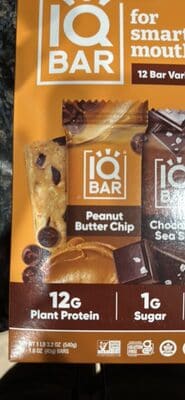
Protein bars
IQ Bar Peanut Butter Chip
Score
- Ultra-processed
- High in saturated fat
- Seed-oil free
Why it scores 67
IQ Bar Peanut Butter Chip scores 67 out of 100 (Good) under GoodSwap’s published rules. What moved the score most:
- minus 18 points Ultra-processed (NOVA 4): Classified NOVA 4: made with industrial ingredients and additives. Strong
- minus 7 points Saturated fat 6.7 g / 100 g: Very high in saturated fat. Strong
- plus 4 points Fiber 17.8 g / 100 g: A good source of fiber. Strong
Every line of the math is on The Receipt below, with its evidence tier and sources.
Better protein bars
-
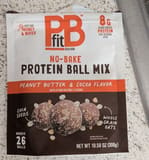 No-Bake Protein Ball Mix Peanut Butter & Cocoa Flavor PB fit BRAND Less saturated fat Score 81 out of 100 , 14 points higher
 -
 Fellas Peanut and Cocoa High-Protein Bar 45 g Fellas · 45 g Not ultra-processed · Less saturated fat Score 79 out of 100 , 12 points higher
 -
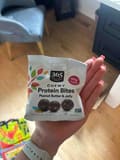 Chewy Protein Bites Peanut Butter & Jelly 365 Whole Foods Market Less saturated fat Score 79 out of 100 , 12 points higher
 -
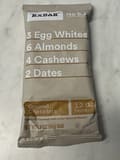 Coconut Chocolate RXBAR · 52 g Not ultra-processed · Less saturated fat Score 79 out of 100 , 12 points higher
 -
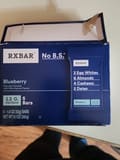 Blueberry RXBAR · 1.83 oz Not ultra-processed · Less saturated fat Score 79 out of 100 , 12 points higher
The same kind of product, at least 10 points higher, sold in the US. Never paid placements.
The Receipt
Peanut Butter Chip
Ingredients
- Protein blend (unspecified) minus 2.5 points
- Pea protein minus 2.5 points
- Natural flavors minus 2.5 points
Processing
- Ultra-processed (NOVA 4) minus 18 points
- 2 kinds of ultra-processing markers minus 1.5 points
Nutrition per 100 g
- Saturated fat 6.7 g / 100 g minus 7 points
- Salt 0.8 g / 100 g minus 3 points
- Energy 356 kcal / 100 g minus 2 points
- Fiber 17.8 g / 100 g plus 4 points
- Protein 26.7 g / 100 g plus 2 points
100 − 33 = 67
Can’t score above 79. High in fat and saturated fat (above the front-of-pack "high" level). [6]
Nutrition per 100 g
| Energy | 356 kcal |
|---|---|
| Fat | 26.7 g |
| Saturated fat | 6.7 g |
| Trans fat | 0 g |
| Carbohydrates | 22.2 g |
| Sugars | 2.2 g |
| Added sugars | 0 g |
| Fiber | 17.8 g |
| Protein | 26.7 g |
| Salt | 0.8 g |
Serving: 1 bar (45 g)
Ingredients
- Net Carbs Almonds
- Protein Blend (Pea Protein Crisps, Natural Flavors, Prebiotic Blend, Cocoa, Coconut Oil, Unsweetened Chocolate, Water, Cocoa Butter, Sea Salt, Lion's Mane, Stevia Plant Extract, Vitamin E Allergens: Almonds, Coconut NON GMO Project VERIFIE D nongmoprojectorg, (DV) tel serving of food contributes day is used for general nutr Nu Blend)
Label text, as published
Total Fat 12g Saturated Fat 3g Trans Fat 0g Cholesterol 0mg Sodium 135mg Total Carbohydrate 10g Dietary Fiber 8g Total Sugars 1g Includes 0g Added Sugars Protein 12g % Daily Value* 15% 15% 0% 6% 4% 29% 0% 24% Vitamin D 0mcg Calcium 70mg Iron 35mg Potassium 210mg Vitamin E 143mg Magnesium 75mg 0% 6% 20% 4% 100% 15% * The % Daily Value (DV) tells you how much a nutrient in a serving of food contributes to a daily diet 2,000 calories a day is used for general nutrition advice - 8G Fiber = 2G Net Carbs Almonds, Protein Blend (Pea Protein Crisps [Pea Protein, Tapioca Starchl, Pea Protein), Natural Flavors, Prebiotic Blend (Tapioca Fiber, Vegetable Fiber), Cocoa, Coconut Oil, Unsweetened Chocolate, Water, Cocoa Butter, Sea Salt, Lion's Mane, Stevia Plant Extract, Vitamin E Allergens: Almonds, Coconut NON GMO Project VERIFIE D nongmoprojectorg Total Fat 10g Saturated Fat 25g Trans Fat 0g Cholesterol 0mg Sodium 135mg Total Carbohydra Dietary Fiber 9g Total Sugars 1g Includes 0g Adde Protein 12g Vitamin D 0mcg Calcium 50mg Iron 24mg Potassium 120mg Vitamin E 145mg Magnesium 55mg * The % Daily Value (DV) tel serving of food contributes day is used for general nutr Nu Blend (Tapioca Blend (Pea Prot Starch], Pea Pro Coconut Oil, Un Cocoa Butter, S Extract, Vitamin Allergens: Pean VEGAN
Allergens and diets
Contains: Tree nuts
- Vegan
- Vegetarian
Always check the package: recipes change.
More protein bars on GoodSwap
-
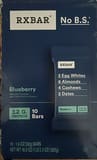 Blueberry RXBAR RXBAR · 52 g Ultra-processedHigh in sugarNo additives Score 64 out of 100 Good
 -
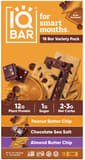 Iq Bar 18 Protein Bar Variety Pack IQ Bar · 816 g Seed-oil free Score 97 out of 100 Excellent
 -
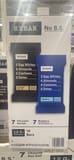 Protein Bars RXBAR Score 99 out of 100 Excellent
 -
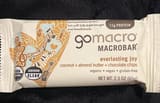 MACROBAR everlasting joy coconut + almond butter + chocolate chips GoMacro · 1 bar 65 g Contains added sugarsCertified organicNo additivesSeed-oil free Score 46 out of 100 Okay
 -
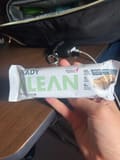 Ready Clean Dark Chocolate Sea-Salt Ready · 1.98 oz (56 g) Ultra-processedContains added sugarsContains seed oilsContains palm oil Score 17 out of 100 Bad
 -
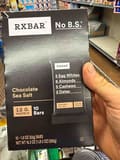 Chocolate Sea Salt RXBAR · 18.3 oz/520 g Ultra-processedHigh in sugarNo additives Score 65 out of 100 Good
More from IQ Bar
Sources
-
21 CFR 101.22 Foods; labeling of spices, flavorings, colorings and chemical preservatives
“whose significant function in food is flavoring rather than nutritional.”
ecfr.gov
-
Saturated fatty acid and trans-fatty acid intake for adults and children: WHO guideline
“WHO recommends that adults and children reduce saturated fatty acid intake to 10% of total energy intake (strong recommendation).”
who.int
-
“For adults, WHO recommends less than 2000 mg/day of sodium (equivalent to less than 5 g/day salt), or just under a teaspoon.”
who.int
-
Dietary Guidelines for Americans, 2025–2030
“Limit foods and beverages that include artificial flavors, petroleum-based dyes, artificial preservatives, and low-calorie non-nutritive sweeteners.”
cdn.realfood.gov
-
“Table 3: Criteria for drinks (per 100ml)”
assets.publishing.service.gov.uk
-
“Greater exposure to ultra-processed food was associated with a higher risk of adverse health outcomes, especially cardiometabolic, common mental disorder, and mortality outcomes.”
doi.org