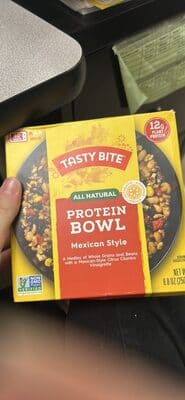
Prepared meats
Tasty Bite Protein Bowl Mexican Style
8.8 oz (250 g)
Score
- Contains added sugars
- Contains seed oils
Why it scores 70
Tasty Bite Protein Bowl Mexican Style scores 70 out of 100 (Good) under GoodSwap’s published rules. What moved the score most:
- minus 20 points Sugar: An added sugar. Strong
- minus 8 points Processed (NOVA 3): Classified NOVA 3: processed with added salt, sugar or oil. Emerging
- plus 4 points Fiber 6.8 g / 100 g: A good source of fiber. Strong
Every line of the math is on The Receipt below, with its evidence tier and sources.
Better frozen meals
-
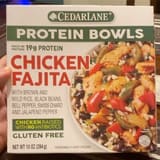 Chicken Fajita Protein Bowl Cedarlane No added sugars · No sugar Score 97 out of 100 , 27 points higher
 -
 PROTEIN BOWL Chickpea Masala Tasty Bite · 8.8 oz/250 g No added sugars · No sugar Score 94 out of 100 , 24 points higher
 -
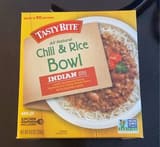 Madras Lentil Protein Bowl Tasty Bite · 8.8 oz/250 g No added sugars · No sugar Score 99 out of 100 , 29 points higher
 -
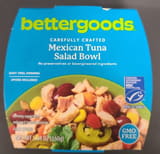 Mexican Tuna Salad Bowl Bettergoods · 160 g No added sugars · No seed oils Score 94 out of 100 , 24 points higher
 -
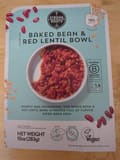 Baked Bean & Red Lentil Bowl Strong Roots · 10 oz No added sugars · No seed oils Score 100 out of 100 , 30 points higher
The same kind of product, at least 10 points higher, sold in the US. Never paid placements.
The Receipt
Protein Bowl Mexican Style
Ingredients
- Sugar minus 20 points
- Sunflower oil minus 2.5 points
- Yeast extract minus 2.5 points
Processing
- Processed (NOVA 3) minus 8 points
Nutrition per 100 g
- Salt 0.5 g / 100 g minus 1 points
- Fiber 6.8 g / 100 g plus 4 points
100 − 30 = 70
Can’t score above 79. Contains sugar, an ingredient of high concern. [1][2][3]
Nutrition per 100 g
| Energy | 144 kcal |
|---|---|
| Fat | 2.8 g |
| Saturated fat | 0.4 g |
| Trans fat | 0 g |
| Carbohydrates | 24.4 g |
| Sugars | 2 g |
| Added sugars | 0.8 g |
| Fiber | 6.8 g |
| Protein | 4.8 g |
| Salt | 0.5 g |
Serving: 1 package (250 g)
Ingredients
- VINAIGRETTE*: WATER
- ONION
- GARLIC
- SUNFLOWER OIL
- CILANTRO
- RED WINE VINEGAR
- LEMON JUICE POWDER
- SUGAR (high concern)
- YEAST EXTRACT (YEAST EXTRACT, SALT)
- SALT
- OREGANO
- CHILI PEPPER FLAKES
Label text, as published
BOWL: WATER, VINAIGRETTE*, SWEET CORN, WHOLE GRAIN BROWN RICE, BLACK BEANS, NAVY BEANS, RED QUINOA, RED BELL PEPPER, MUNG BEANS. INGREDIENTS: VINAIGRETTE*: WATER, ONION, GARLIC, SUNFLOWER OIL, CILANTRO, RED WINE VINEGAR, LEMON JUICE POWDER, SUGAR; LESS THAN 2% OF: YEAST EXTRACT (YEAST EXTRACT, SALT), SALT, OREGANO, CHILI PEPPER FLAKES. This product has been processed in a facility that also processes milk, cashew, coconut, wheat, peanuts, soy and sesame. Imported by: Preferred Brands International PO Box 3385, Stamford, CT 06905 © 2023 PBI Product of India ●
Allergens and diets
Contains: Peanuts, Tree nuts, Soy, Gluten, Egg, Sesame
May contain: Milk
- Not vegan
- Vegetarian
- Not gluten-free
- Palm-oil-free
Always check the package: recipes change.
More prepared meats on GoodSwap
-
 Smoked Snack Stick Slim Jim · 8 g Ultra-processedHigh in saltHigh in saturated fatContains nitrites or nitrates Score 11 out of 100 Bad
 -
 Turkey Pepperoni Hormel · 6 oz Ultra-processedHigh in saltContains nitrites or nitratesContains added sugars Score 21 out of 100 Poor
 -
 Turkey Bacon Butterball · 12 oz Ultra-processedContains nitrites or nitratesContains added sugarsContains seed oils Score 30 out of 100 Poor
 -
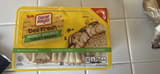 Honey Smoked Turkey Breast Oscar Mayer · 9 oz Ultra-processedHigh in saltContains added sugarsContains emulsifiers studied for gut effects Score 28 out of 100 Poor
 -
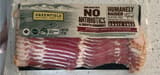 Applewood Smoked Uncured Bacon Greenfield Natural Meat Co. · 12 oz High in saltHigh in saturated fatContains nitrites or nitratesNo additives Score 74 out of 100 Good
 -
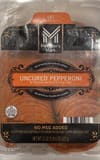 Uncured Pepperoni Member's Mark · 22 oz Ultra-processedHigh in saltHigh in saturated fatContains nitrites or nitrates Score 12 out of 100 Bad
More from Tasty Bite
-
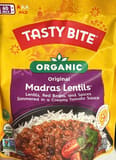 Madras Lentils Tasty Bite · 285 g Score 92 out of 100 Excellent
 -
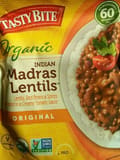 Original madras lentils Tasty Bite · 5 lb Score 94 out of 100 Excellent
 -
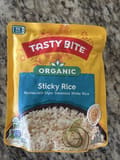 Sticky Rice Restaurant-Style Steamed White Rice Tasty Bite · 8.8 oz/250 g Score 100 out of 100 Excellent
 -
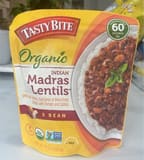 Madras Lentils Tasty Bite · 10 oz Score 94 out of 100 Excellent
Sources
-
Guideline: sugars intake for adults and children
“In both adults and children, WHO recommends reducing the intake of free sugars to less than 10% of total energy intake”
who.int
-
Dietary Guidelines for Americans, 2025–2030
“Limit foods and beverages that include artificial flavors, petroleum-based dyes, artificial preservatives, and low-calorie non-nutritive sweeteners.”
cdn.realfood.gov
-
Added and free sugars should be as low as possible
“Sugar consumption is a known cause of dental caries.”
efsa.europa.eu
-
“replacement of saturated fat in the diet with linoleic acid effectively lowers serum cholesterol but does not support the hypothesis that this translates to a lower risk of death from coronary heart disease or all causes.”
doi.org
-
“These data provide support for current recommendations to replace saturated fat with polyunsaturated fat for primary prevention of CHD.”
doi.org
-
“For adults, WHO recommends less than 2000 mg/day of sodium (equivalent to less than 5 g/day salt), or just under a teaspoon.”
who.int