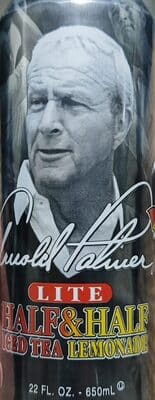
Half iced tea and half lemonade
Arnold Palmer
22 fl oz
Score
- Ultra-processed
- Contains non-nutritive sweeteners
- Contains added sugars
Why it scores 12
Arnold Palmer scores 12 out of 100 (Bad) under GoodSwap’s published rules. What moved the score most:
- minus 20 points Fructose: An added sugar. Strong
- minus 20 points Corn syrup: An added sugar. Strong
- minus 18 points Ultra-processed (NOVA 4): Classified NOVA 4: made with industrial ingredients and additives. Strong
Every line of the math is on The Receipt below, with its evidence tier and sources.
Better lemonade
-
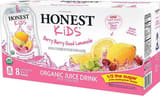 Berry Berry Good Lemonade Honest Kids · 8 pouches No non-nutritive sweeteners · No fructose Score 52 out of 100 , 40 points higher
 -
 Sparkling Tea & Lemonade Trader Joe's No non-nutritive sweeteners · No fructose Score 56 out of 100 , 44 points higher
 -
 Half Tea & Half Lemonade Just Ice Tea No non-nutritive sweeteners · No fructose Score 62 out of 100 , 50 points higher
 -
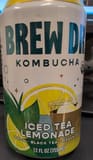 Iced Tea Lemonade Brew Dr. Not ultra-processed · No non-nutritive sweeteners Score 69 out of 100 , 57 points higher
 -
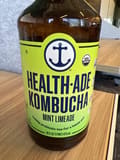 Mint Limeade Health-Ade Kombucha · 16 fl oz (473 mL) No non-nutritive sweeteners · No fructose Score 56 out of 100 , 44 points higher
The same kind of product, at least 10 points higher, sold in the US. Never paid placements.
The Receipt
Arnold Palmer
Ingredients
- Fructose minus 20 points
- Corn syrup minus 20 points
- Sucralose minus 7.5 points
- Acesulfame potassium (Ace-K) minus 2.5 points
Processing
- Ultra-processed (NOVA 4) minus 18 points
- 5 kinds of ultra-processing markers minus 6 points
Nutrition per 100 ml
- Sugars 5.4 g / 100 ml minus 12 points
- Energy 23 kcal / 100 ml minus 2 points
100 − 88 = 12
Can’t score above 79. Contains fructose, an ingredient of high concern. [1][2][3]
Nutrition per 100 ml
| Energy | 23 kcal |
|---|---|
| Fat | 0 g |
| Carbohydrates | 5.9 g |
| Sugars | 5.4 g |
| Added sugars | 5.1 g |
| Protein | 0 g |
| Salt | 0 g |
Serving: 12 fl oz
Ingredients
- PREMIUM BREWED BLACK TEAS USING FILTERED WATER
- FRUCTOSE (high concern)
- CORN SYRUP (GLUCOSE-FRUCTOSE SYRUP) (high concern)
- PEAR JUICE FROM CONCENTRATE
- LEMON JUICE FROM CONCENTRATE
- FLAVORS
- SUCRALOSE (moderate concern)
- ACESULFAME POTASSIUM (moderate concern)
- ASCORBIC ACID (VITAMIN C)
- GUM ACACIA
- ESTER GUM
Label text, as published
PREMIUM BREWED BLACK TEAS USING FILTERED WATER, FRUCTOSE, CORN SYRUP (GLUCOSE-FRUCTOSE SYRUP), PEAR JUICE FROM CONCENTRATE, LEMON JUICE FROM CONCENTRATE, FLAVORS, SUCRALOSE, ACESULFAME POTASSIUM, ASCORBIC ACID (VITAMIN C), GUM ACACIA, ESTER GUM
Allergens and diets
- Palm-oil-free
Always check the package: recipes change.
Sources
-
Guideline: sugars intake for adults and children
“In both adults and children, WHO recommends reducing the intake of free sugars to less than 10% of total energy intake”
who.int
-
Dietary Guidelines for Americans, 2025–2030
“Limit foods and beverages that include artificial flavors, petroleum-based dyes, artificial preservatives, and low-calorie non-nutritive sweeteners.”
cdn.realfood.gov
-
Added and free sugars should be as low as possible
“Sugar consumption is a known cause of dental caries.”
efsa.europa.eu
-
Personalized microbiome-driven effects of non-nutritive sweeteners on human glucose tolerance
“As groups, each administered NNS distinctly altered stool and oral microbiome and plasma metabolome, whereas saccharin and sucralose significantly impaired glycemic responses.”
doi.org
-
“Sucralose-6-acetate significantly increased the expression of genes associated with inflammation, oxidative stress, and cancer”
doi.org
-
“EFSA’s experts concluded that the sweetener sucralose (E 955) continues to be safe for consumers for its currently authorised uses as a food additive.”
efsa.europa.eu
-
WHO advises not to use non-sugar sweeteners for weight control in newly released guideline
“The recommendation is based on the findings of a systematic review of the available evidence which suggests that use of NSS does not confer any long-term benefit in reducing body fat in adults or children.”
who.int
-
Artificial sweeteners and cancer risk: Results from the NutriNet-Santé population-based cohort study
“In this large cohort study, artificial sweeteners (especially aspartame and acesulfame-K), which are used in many food and beverage brands worldwide, were associated with increased cancer risk.”
doi.org
-
Re-evaluation of acesulfame K (E 950) as food additive (plain language summary)
“The acceptable daily intake (ADI) considered safe for all population groups was set at 15 mg/kg body weight (bw) per day.”
efsa.europa.eu
-
“Greater exposure to ultra-processed food was associated with a higher risk of adverse health outcomes, especially cardiometabolic, common mental disorder, and mortality outcomes.”
doi.org