Food
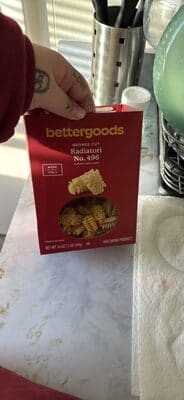
Bettergoods Radiatori
16 oz
Score
- No additives
Why it scores 100
Bettergoods Radiatori scores 100 out of 100 (Excellent) under GoodSwap’s published rules. What moved the score most:
- plus 3 points No additives: No food additives in the ingredient list. Info
- minus 2 points Energy 375 kcal / 100 g: Energy-dense for its weight. Info
- plus 2 points Fiber 3.6 g / 100 g: A good source of fiber. Strong
Every line of the math is on The Receipt below, with its evidence tier and sources.
The Receipt
Radiatori
START100
Nutrition per 100 g
- Energy 375 kcal / 100 g minus 2 points
- Fiber 3.6 g / 100 g plus 2 points
- Protein 14.3 g / 100 g plus 2 points
subtotal+2
Bonuses
- No additives plus 3 points
subtotal+3
TOTAL 100Excellent
100 + 5 = 100
Nutrition per 100 g
| Energy | 375 kcal |
|---|---|
| Fat | 1.8 g |
| Saturated fat | 0 g |
| Trans fat | 0 g |
| Carbohydrates | 73.2 g |
| Sugars | 3.6 g |
| Added sugars | 0 g |
| Fiber | 3.6 g |
| Protein | 14.3 g |
| Salt | 0 g |
Serving: 0.75 cup (56 g)
Ingredients
High Moderate Not recognized Tap an ingredient for its evidence and rules.
Label text, as published
DURUM WHEAT SEMOLINA
Allergens and diets
Contains: Wheat, Gluten
- Vegan
- Vegetarian
- Not gluten-free
- Palm-oil-free
Always check the package: recipes change.
More from Bettergoods
Sources
-
Dietary Guidelines for Americans, 2025–2030
“Limit foods and beverages that include artificial flavors, petroleum-based dyes, artificial preservatives, and low-calorie non-nutritive sweeteners.”
cdn.realfood.gov