Frozen seafood
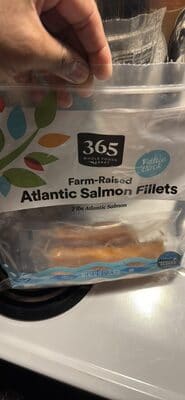
365 Whole Foods Market Farm-Raised Atlantic Salmon Fillets
32 oz
Score
- Ultra-processed
- No additives
Why it scores 85
365 Whole Foods Market Farm-Raised Atlantic Salmon Fillets scores 85 out of 100 (Excellent) under GoodSwap’s published rules. What moved the score most:
- minus 18 points Ultra-processed (NOVA 4): Classified NOVA 4: made with industrial ingredients and additives. Strong
- plus 4 points Protein 20.4 g / 100 g: A good source of protein. Info
- minus 3 points Saturated fat 3.1 g / 100 g: High in saturated fat. Strong
Every line of the math is on The Receipt below, with its evidence tier and sources.
Better fish sticks and frozen fish
-
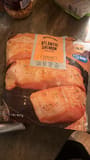 Atlantic Salmon Fillets Marketside · 32 oz Not ultra-processed Score 100 out of 100 , 15 points higher
 -
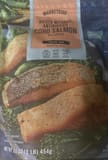 COHO Salmon Fillets (skin on) Marketside · 16.0 oz Not ultra-processed Score 100 out of 100 , 15 points higher
 -
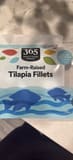 Farm-Raised Tilapia Fillets 365 Whole Foods Market Not ultra-processed Score 100 out of 100 , 15 points higher
 -
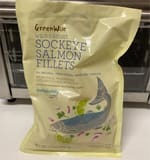 Sockeye Salmon Fillets Greenwise · 12 oz Not ultra-processed Score 100 out of 100 , 15 points higher
 -
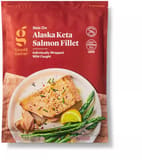 Wild caught alaskan keta salmon fillets Good & Gather · 24 oz/680 g Not ultra-processed Score 100 out of 100 , 15 points higher
The same kind of product, at least 10 points higher, sold in the US. Never paid placements.
The Receipt
Farm-Raised Atlantic Salmon Fillets
Processing
- Ultra-processed (NOVA 4) minus 18 points
Nutrition per 100 g
- Saturated fat 3.1 g / 100 g minus 3 points
- Energy 212 kcal / 100 g minus 1 points
- Protein 20.4 g / 100 g plus 4 points
Bonuses
- No additives plus 3 points
100 − 15 = 85
Nutrition per 100 g
| Energy | 212 kcal |
|---|---|
| Fat | 13.3 g |
| Saturated fat | 3.1 g |
| Trans fat | 0 g |
| Carbohydrates | 0 g |
| Sugars | 0 g |
| Added sugars | 0 g |
| Fiber | 0 g |
| Protein | 20.4 g |
| Salt | 0.2 g |
Serving: 4 ONZ (113 g)
Ingredients
Label text, as published
SALMON, ASTAXANTHIN (COLOR).
Allergens and diets
Contains: Fish
- Not vegan
- Not vegetarian
- Palm-oil-free
Always check the package: recipes change.
More frozen seafood on GoodSwap
-
 Tortilla Crusted Fish with rice, poblano peppers & corn in sour cream sauce Lean Cuisine · 8 oz Ultra-processedContains added sugarsContains seed oilsNo synthetic dyes Score 24 out of 100 Poor
 -
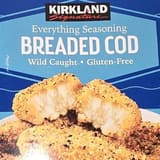 Everything Seasoning Breaded Cod Gluten Free Kirkland Signature Ultra-processedContains added sugarsContains seed oils Score 28 out of 100 Poor
 -
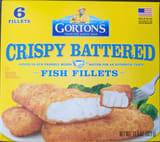 Crispy Battered Fish Fillets Gorton's · 323 g Ultra-processedContains added sugarsContains seed oilsNo synthetic dyes Score 21 out of 100 Poor
 -
 Wild Alaskan Pink Salmon Fillets Waterfront Bistro · 16 oz/1 lb/454 g Ultra-processed Score 83 out of 100 Excellent
 -
 Super Crunchy Fish Sticks Gorton's · 60.8 oz/1.72 kg Ultra-processedContains added sugarsContains seed oils Score 51 out of 100 Okay
 - Atlantintic nova salmon Vita · 4 oz/113 g Ultra-processedHigh in saltContains nitrites or nitrates Score 51 out of 100 Okay
More from 365 Whole Foods Market
-
 Organic Ground Flaxseed 365 Whole Foods Market · 14 oz/397 g Score 100 out of 100 Excellent
 -
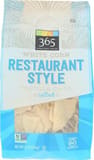 Organic Restaurant Style salted Tortilla Chips 365 Whole Foods Market · 14 oz Score 79 out of 100 Good
 -
 Organic Whole Flaxseed 365 Whole Foods Market · 16 oz Score 100 out of 100 Excellent
 -
 Organic Classic Ranch Dressing & Dip 365 Whole Foods Market Score 21 out of 100 Poor
Sources
-
Saturated fatty acid and trans-fatty acid intake for adults and children: WHO guideline
“WHO recommends that adults and children reduce saturated fatty acid intake to 10% of total energy intake (strong recommendation).”
who.int
-
Dietary Guidelines for Americans, 2025–2030
“Limit foods and beverages that include artificial flavors, petroleum-based dyes, artificial preservatives, and low-calorie non-nutritive sweeteners.”
cdn.realfood.gov
-
“Greater exposure to ultra-processed food was associated with a higher risk of adverse health outcomes, especially cardiometabolic, common mental disorder, and mortality outcomes.”
doi.org