Milks
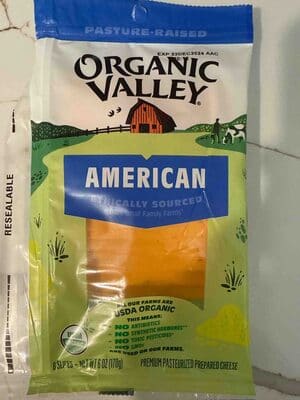
Organic Valley American Premium Pasteurized Prepared Cheese
Score
- Ultra-processed
- Seed-oil free
- No synthetic dyes
Why it scores 78
Organic Valley American Premium Pasteurized Prepared Cheese scores 78 out of 100 (Good) under GoodSwap’s published rules. What moved the score most:
- minus 18 points Ultra-processed (NOVA 4): Classified NOVA 4: made with industrial ingredients and additives. Strong
- minus 3 points Salt 0.7 g / 100 g: High in salt. Strong
- minus 1.5 points Saturated fat 4 g / 100 g: Contains some saturated fat. Counted at half for this whole-food category. Strong
Every line of the math is on The Receipt below, with its evidence tier and sources.
Better cheese
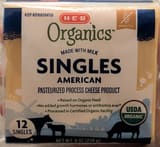
The same kind of product, at least 10 points higher, sold in the US. Never paid placements.
The Receipt
American Premium Pasteurized Prepared Cheese
Processing
- Ultra-processed (NOVA 4) minus 18 points
Nutrition per 100 g
- Saturated fat 4 g / 100 g minus 1.5 points
- Salt 0.7 g / 100 g minus 3 points
100 − 22.5 = 77.5 → 78
Nutrition per 100 g
| Energy | 80 kcal |
|---|---|
| Fat | 6 g |
| Saturated fat | 4 g |
| Trans fat | 0 g |
| Carbohydrates | 1 g |
| Sugars | 0 g |
| Added sugars | 0 g |
| Fiber | 0 g |
| Protein | 4 g |
| Salt | 0.7 g |
Serving: 1 slice (21 g)
Ingredients
- Organic Cultured Milk
- Water
- Organic Butter (Organic Pasteurized Sweet Cream, Salt)
- Sodium Citrate
- Salt
- Organic Annatto ( Color)
- Enzyme
Label text, as published
Organic Cultured Milk, Water, Organic Butter ( Organic Pasteurized Sweet Cream, Salt), Sodium Citrate, Salt, Organic Annatto ( Color), Enzyme.
Allergens and diets
Contains: Milk
- Not vegan
- Palm-oil-free
Always check the package: recipes change.
More milks on GoodSwap
-
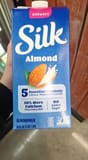 Almondmilk Silk · 64 fl oz (1.89 L) Contains seed oils Score 92 out of 100 Excellent
 -
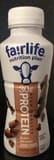 Fairlife protein drink Fairlife · 6.12 L/340 mL Ultra-processedContains non-nutritive sweetenersContains emulsifiers studied for gut effects Score 49 out of 100 Okay
 -
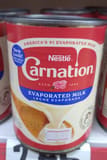 Evaporated Milk / Leche Evaporada Carnation · 354 mL Ultra-processedContains added sugarsContains emulsifiers studied for gut effects Score 50 out of 100 Okay
 -
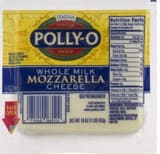 Whole Milk Mozzarella Cheese Polly-O · 16 oz Score 98 out of 100 Excellent
 -
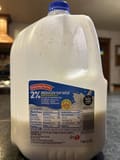 2% Reduced Fat Milk Friendly Farms No additives Score 100 out of 100 Excellent
 -
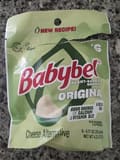 PLANT-BASED ORIGINAL Cheese Alternative Babybel · 1 piece 20 g Ultra-processedSeed-oil freeNo synthetic dyes Score 72 out of 100 Good
More from Organic Valley
-
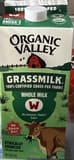 Whole Milk Organic Valley · Half gallon (1.89 L) Score 100 out of 100 Excellent
 -
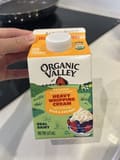 Heavy Whipping Cream Organic Valley · 16 oz Score 82 out of 100 Excellent
 -
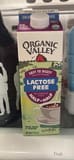 Lactose Free Half & Half Organic Valley Score 100 out of 100 Excellent
 -
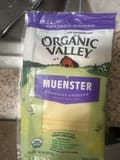 Muenster Cheese Deli Slices Organic Valley · 6 oz Score 85 out of 100 Excellent
Sources
-
Saturated fatty acid and trans-fatty acid intake for adults and children: WHO guideline
“WHO recommends that adults and children reduce saturated fatty acid intake to 10% of total energy intake (strong recommendation).”
who.int
-
“For adults, WHO recommends less than 2000 mg/day of sodium (equivalent to less than 5 g/day salt), or just under a teaspoon.”
who.int
-
“Greater exposure to ultra-processed food was associated with a higher risk of adverse health outcomes, especially cardiometabolic, common mental disorder, and mortality outcomes.”
doi.org