Cookies and cakes
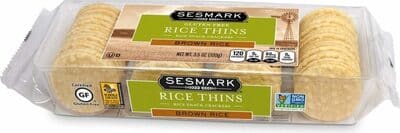
Sesmark Rice Thins Brown Rice
3.5 oz/100 g
Score
- Contains seed oils
- Contains whole grains
Why it scores 87
Sesmark Rice Thins Brown Rice scores 87 out of 100 (Excellent) under GoodSwap’s published rules. What moved the score most:
- minus 8 points Processed (NOVA 3): Classified NOVA 3: processed with added salt, sugar or oil. Emerging
- minus 3 points Salt 0.7 g / 100 g: High in salt. Strong
- minus 2.5 points Safflower oil: High in omega-6 linoleic acid. Emerging
Every line of the math is on The Receipt below, with its evidence tier and sources.
Better rice crackers
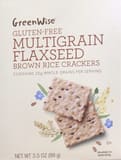
The same kind of product, at least 10 points higher, sold in the US. Never paid placements.
The Receipt
Rice Thins Brown Rice
Ingredients
- Safflower oil minus 2.5 points
Processing
- Processed (NOVA 3) minus 8 points
Nutrition per 100 g
- Salt 0.7 g / 100 g minus 3 points
- Energy 400 kcal / 100 g minus 2 points
- Fiber 3.3 g / 100 g plus 2 points
100 − 13.5 = 86.5 → 87
Nutrition per 100 g
| Energy | 400 kcal |
|---|---|
| Fat | 6.7 g |
| Saturated fat | 0 g |
| Trans fat | 0 g |
| Carbohydrates | 76.7 g |
| Sugars | 0 g |
| Added sugars | 0 g |
| Fiber | 3.3 g |
| Protein | 6.7 g |
| Salt | 0.7 g |
Serving: 17 CRACKERS (30 g)
Ingredients
Label text, as published
WHOLE GRAIN BROWN RICE, EXPELLER PRESSED SAFFLOWER OIL, SALT, ROSEMARY EXTRACT (PRESERVATIVE).
Allergens and diets
- Vegan
- Vegetarian
- Gluten-free
- Palm-oil-free
Always check the package: recipes change.
More cookies and cakes on GoodSwap
-
 Nut Thins Pecan Rice Cracker Snacks with Pecans Blue Diamond Almonds · 4.25 oz/120.5 g Ultra-processedContains seed oilsNo additives Score 77 out of 100 Good
 -
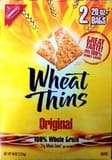 Nabisco original snack crackers gram whole grain Nabisco · 1.13 kg High in saltContains added sugarsContains seed oilsContains whole grains Score 31 out of 100 Poor
 -
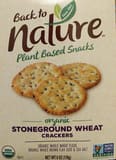 Organic Stoneground Wheat Crackers Back To Nature · 6 oz Ultra-processedHigh in saltContains added sugarsContains seed oils Score 23 out of 100 Poor
 -
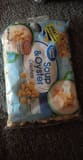 Soup & Oyster Crackers Great Value · 9 oz/255 g Ultra-processedHigh in saltContains seed oilsContains palm oil Score 64 out of 100 Good
 -
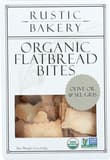 Organic Sourdough Flatbread bites Rustic Bakery · 4 oz High in saltContains added sugarsCertified organicNo additives Score 65 out of 100 Good
 -
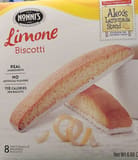 Limone Biscotti Nonni's Bakery · 6.88 oz Ultra-processedHigh in sugarHigh in saturated fatContains added sugars Score 23 out of 100 Poor
Sources
-
“replacement of saturated fat in the diet with linoleic acid effectively lowers serum cholesterol but does not support the hypothesis that this translates to a lower risk of death from coronary heart disease or all causes.”
doi.org
-
“These data provide support for current recommendations to replace saturated fat with polyunsaturated fat for primary prevention of CHD.”
doi.org
-
“For adults, WHO recommends less than 2000 mg/day of sodium (equivalent to less than 5 g/day salt), or just under a teaspoon.”
who.int
-
Dietary Guidelines for Americans, 2025–2030
“Limit foods and beverages that include artificial flavors, petroleum-based dyes, artificial preservatives, and low-calorie non-nutritive sweeteners.”
cdn.realfood.gov