Beauty & personal care
Old Spice Swagger
Score
- Contains fragrance
- May contain traces of 1,4-dioxane
- Contains cyclic silicones (D4/D5/D6)
Why it scores 85
Old Spice Swagger scores 85 out of 100 (Excellent) under GoodSwap’s published rules. What moved the score most:
- minus 5 points Cyclopentasiloxane (D5): Restricted in the EU (0.1%) in wash-off cosmetics since 2020 and in other cosmetics from 6 June 2027 because they persist and build up in the environment. Regulatory
- minus 5 points Fragrance (parfum): A single label term covers an undisclosed mixture. Regulatory
- minus 1 points Aluminum chlorohydrate: The US National Cancer Institute says no scientific evidence links antiperspirant use to breast cancer. Strong
Every line of the math is on The Receipt below, with its evidence tier and sources.
Better deodorant
-
 Toms Deodorant No ethoxylated ingredients · No D4, D5 or D6 Score 99 out of 100 , 14 points higher
 -
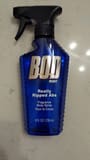 Really Ripped Abs Fragrance Body Spray BOD man · 8 oz 236 mL No fragrance · No ethoxylated ingredients Score 98 out of 100 , 13 points higher
 -
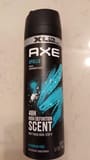 Apollo 48H High Definition Scent Axe · 5.1 oz 144 g No fragrance · No ethoxylated ingredients Score 97 out of 100 , 12 points higher
 -
 Deodorant Unilever No fragrance · No ethoxylated ingredients Score 97 out of 100 , 12 points higher
 -
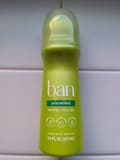 Ban Unscented Invisible Roll-On Ban · 3.5 fl oz (103 mL) No fragrance · No D4, D5 or D6 Score 99 out of 100 , 14 points higher
The same kind of product, at least 10 points higher, sold in the US. Never paid placements.
The Receipt
Old Spice Swagger
Ingredients
- Cyclopentasiloxane (D5) minus 5 points
- Fragrance (parfum) minus 5 points
- Aluminum chlorohydrate minus 1 points
- Polyethylene glycols (PEG) and ethoxylates minus 0.5 points
- Mineral oil and petrolatum minus 0.5 points
- BHT (butylated hydroxytoluene) minus 0.5 points
- Benzyl salicylate minus 0.5 points
- Citronellol minus 0.5 points
- Coumarin minus 0.5 points
- Cinnamal minus 0.5 points
- Limonene minus 0.5 points
- Linalool minus 0.5 points
100 − 15.5 = 84.5 → 85
Ingredients
- Aluminum Sesquichlorohydrate (12.8%)
- Cyclopentasiloxane (moderate concern)
- Stearyl Alcohol
- C12-15 Alkyl Benzoate
- PPG-14 Butyl Ether
- Hydrogenated Castor Oil
- Glycine
- PEG-8
- Calcium Chloride
- Fragrance (Parfum) (moderate concern)
- Dimethicone
- Polyethylene
- Silica
- Helianthus Annuus (Sunfiower) Seed Oil
- Steareth-100
- Stearic Acid
- BHT
- Benzyl Aloohol (not recognized)
- Benzyl Salicylate
- Citronellol
- Coumarin
- Hexy Cinnamal
- Limonene
- Linalool
Label text, as published
Aluminum Sesquichlorohydrate (12.8%) Cyclopentasiloxane, Stearyl Alcohol, C12-15 Alkyl Benzoate, PPG-14 Butyl Ether, Hydrogenated Castor Oil, Glycine, PEG-8, Calcium Chloride, Fragrance (Parfum), Dimethicone, Polyethylene, Silica, Helianthus Annuus (Sunfiower) Seed Oil, Steareth-100, Stearic Acid, BHT, Benzyl Aloohol, Benzyl Salicylate, Citronellol, Coumarin, Hexy Cinnamal, Limonene, Linalool
Allergens and diets
- Palm-oil-free
Always check the package: recipes change.
More from Old Spice
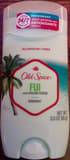
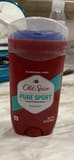
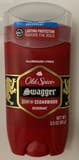
Sources
-
“Shall not be placed on the market in wash-off cosmetic products in a concentration equal to or greater than 0,1 % by weight of either substance, after 31 January 2020.”
eur-lex.europa.eu
-
“for all cosmetic products other than the ones mentioned in paragraph 3(a), paragraph 1 shall apply after 6 June 2027”
eur-lex.europa.eu
-
“when their concentration exceeds 0,001 % in leave-on products and 0,01 % in rinse-off products.”
eur-lex.europa.eu
-
Regulation (EC) No 1223/2009 of 30 November 2009 on cosmetic products
“cosmetic products shall not contain any of the following: (a) prohibited substances — prohibited substances listed in Annex II”
eur-lex.europa.eu
-
fda.gov
-
Antiperspirants/Deodorants and Breast Cancer
“However, no scientific evidence links the use of these products to the development of breast cancer.”
cancer.gov
-
1,4-Dioxane in Cosmetics: A Manufacturing Byproduct
“1,4-dioxane forms as a byproduct during the manufacturing process of certain cosmetic ingredients.”
fda.gov
-
Agents Classified by the IARC Monographs, Volumes 1–142 (List of Classifications)
monographs.iarc.who.int
-
“the use of Homosalate should be restricted to face products (non-spray and pump spray products) only, up to a maximum concentration of 7,34 %.”
eur-lex.europa.eu