Food
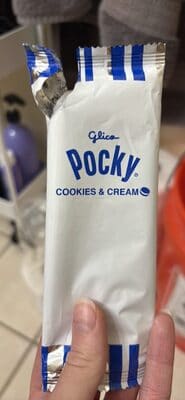
Glico Pocky Pocky 12 Packs
1 lb 0.9 oz (480 g)
Score
- Ultra-processed
- High in saturated fat
- Contains emulsifiers studied for gut effects
- Contains palm oil
- Seed-oil free
Why it scores 63
Glico Pocky Pocky 12 Packs scores 63 out of 100 (Good) under GoodSwap’s published rules. What moved the score most:
- minus 18 points Ultra-processed (NOVA 4): Classified NOVA 4: made with industrial ingredients and additives. Strong
- minus 9 points Saturated fat 12.5 g / 100 g: Very high in saturated fat. Strong
- minus 3 points Energy 500 kcal / 100 g: Energy-dense for its weight. Info
Every line of the math is on The Receipt below, with its evidence tier and sources.
The Receipt
Pocky 12 Packs
Ingredients
- Palm oil minus 2.5 points
- Vegetable shortening minus 2.5 points
- Mono- and diglycerides minus 2.5 points
Processing
- Ultra-processed (NOVA 4) minus 18 points
- 2 kinds of ultra-processing markers minus 1.5 points
Nutrition per 100 g
- Saturated fat 12.5 g / 100 g minus 9 points
- Energy 500 kcal / 100 g minus 3 points
- Protein 10 g / 100 g plus 2 points
100 − 37 = 63
Can’t score above 79. High in fat and saturated fat (above the front-of-pack "high" level). [8]
Nutrition per 100 g
| Energy | 500 kcal |
|---|---|
| Fat | 22.5 g |
| Saturated fat | 12.5 g |
| Carbohydrates | 65 g |
| Added sugars | 81.3 g |
| Protein | 10 g |
Serving: 1 pack (40 g)
Ingredients
- wheat flour
- bugar (not recognized)
- chocolate liquor
- blend of vegetable oil8 (runflower oil, palm oil)
- vegetable oil shortening (palm oil hydrogenated palm oil) contains i percent or le88 of cocoa butter
- bal1 artificial fu avors yeast
- boy leoithin (not recognized)
- polyalyycerol polyricinoleic acid (not recognized)
- leavening (rodium bicarronate) mono and diglycerides of fatty acids
- containb wheat
- milk and 8oybean
Label text, as published
wheat flour, sugar, ble nd of vegetable oils (palm oil, hydhogenated palm kernel oil hydrogenated palm oil, hydrogenated rapeseed oil), lactose, whole milik powder, vegetable oil shohtening (palm oil, hydrogenated palm oid), gogoa powder, contains i percent on less of artificial fl avors, soy lecthin, balt, yeabt corn starch, modified starch, leavening (bodium bigarbonate) ingredients: wheat flour, bugar, chocolate liquor, blend of vegetable oil8 (runflower oil, palm oil) whole milk powder, vegetable oil shortening (palm oil hydrogenated palm oil) contains i percent or le88 of cocoa butter, bal1 artificial fu avors yeast, boy leoithin, polyalyycerol polyricinoleic acid, leavening (rodium bicarronate) mono and diglycerides of fatty acids, containb wheat, milk and 8oybean. may contain peanut, almond and coconut ingredients: wheat flour sugar, blend of vegetaine ols (sunflowerol palam or lactose, wnole milk powder veaetable or shortening alm or hydrogenated palm oll contains y p cent or less of beet red color artwcial fl avors salt yeast soy lecchen straivaeny powoer leavening s boaronate mono-and drlycerdes of fatty ac0s gontains wheat, milk and soybean. may contairn almond and coconut contains wneat mlk an soybean may contain almond and 000omue and dry place below 89 f and away from direet sunlightpocky
Allergens and diets
Contains: Milk, Soy, Wheat, Gluten
May contain: Peanuts, Tree nuts
- Not vegan
- Not gluten-free
- Not palm-oil-free
Always check the package: recipes change.
Sources
-
Saturated fatty acid and trans-fatty acid intake for adults and children: WHO guideline
“WHO recommends that adults and children reduce saturated fatty acid intake to 10% of total energy intake (strong recommendation).”
who.int
-
Process contaminants in vegetable oils and foods
“The highest levels of GE, as well as 3-MCPD and 2-MCPD (including esters) were found in palm oils and palm fats, followed by other oils and fats.”
efsa.europa.eu
-
“Glycidyl fatty acid esters, expressed as glycidol”
eur-lex.europa.eu
-
“This study found positive associations between risk of CVD and intake of five individual and two groups of food additive emulsifiers widely used in industrial foods.”
doi.org
-
Re-evaluation of mono- and di-glycerides of fatty acids (E 471) as food additives
“The available studies did not raise any concern with regard to genotoxicity.”
doi.org
-
Dietary Guidelines for Americans, 2025–2030
“Limit foods and beverages that include artificial flavors, petroleum-based dyes, artificial preservatives, and low-calorie non-nutritive sweeteners.”
cdn.realfood.gov
-
“Table 3: Criteria for drinks (per 100ml)”
assets.publishing.service.gov.uk
-
“Greater exposure to ultra-processed food was associated with a higher risk of adverse health outcomes, especially cardiometabolic, common mental disorder, and mortality outcomes.”
doi.org
-
Dietary emulsifiers impact the mouse gut microbiota promoting colitis and metabolic syndrome
“carboxymethylcellulose and polysorbate-80, induced low-grade inflammation and obesity/metabolic syndrome in wild-type hosts and promoted robust colitis in mice predisposed to this disorder.”
doi.org
-
“Relative to control subjects, CMC consumption modestly increased postprandial abdominal discomfort and perturbed gut microbiota composition in a way that reduced its diversity.”
doi.org