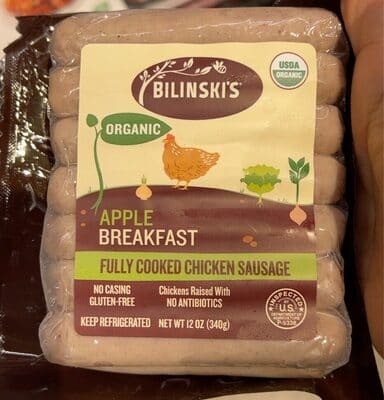
Prepared meats
Bilinski's Apple Breakfast Organic Chicken Sausage
12 oz
Score
- Contains added sugars
- Certified organic
- No additives
Why it scores 54
Bilinski's Apple Breakfast Organic Chicken Sausage scores 54 out of 100 (Okay) under GoodSwap’s published rules. What moved the score most:
- minus 20 points Maple syrup: An added sugar. Strong
- minus 20 points Sugar: An added sugar. Strong
- minus 10 points Fruit juice concentrate (sweetener): An added sugar. Strong
Every line of the math is on The Receipt below, with its evidence tier and sources.
Better sausages
-
 Organic Chicken Sausage Wild Mushroom with Italian Herbs Bilinski's · 12 oz/340 g No added sugars · No maple syrup Score 99 out of 100 , 45 points higher
 -
 Organic Bratwurst Savory Herb Chicken Sausage Whole Foods Market · 12 oz No added sugars · No maple syrup Score 99 out of 100 , 45 points higher
 -
 Organic Chicken Sausage Jones · 2 lb No added sugars · No maple syrup Score 94 out of 100 , 40 points higher
 -
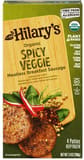 Organic spicy veggie meatless breakfast sausage Hilary's · 7.3 oz/208 g No added sugars · No maple syrup Score 91 out of 100 , 37 points higher
 -
 Chicken Breakfast Links Amylu · 40 oz No added sugars · No maple syrup Score 89 out of 100 , 35 points higher
The same kind of product, at least 10 points higher, sold in the US. Never paid placements.
The Receipt
Apple Breakfast Organic Chicken Sausage
Ingredients
- Maple syrup minus 20 points
- Sugar minus 20 points
- Fruit juice concentrate (sweetener) minus 10 points
Nutrition per 100 g
- Sugars 8.3 g / 100 g minus 3 points
- Salt 1.3 g / 100 g minus 5 points
- Protein 18.8 g / 100 g plus 4 points
Bonuses
- Certified organic plus 5 points
- No additives plus 3 points
100 − 46 = 54
Can’t score above 79. Contains maple syrup, an ingredient of high concern. [1][2][3]
Nutrition per 100 g
| Energy | 146 kcal |
|---|---|
| Fat | 4.2 g |
| Saturated fat | 0 g |
| Trans fat | 0 g |
| Carbohydrates | 8.3 g |
| Sugars | 8.3 g |
| Added sugars | 6.2 g |
| Fiber | 0 g |
| Protein | 18.8 g |
| Salt | 1.3 g |
Serving: 1 serving (72 g)
Ingredients
- ORGANIC SKINLESS CHICKEN
- ORGANIC MAPLE SYRUP (high concern)
- ORGANIC SUGAR (high concern)
- ORGANIC DRIED APPLES
- ORGANIC APPLE JUICE CONCENTRATE (high concern)
- SEA SALT
- ORGANIC CINNAMON
- ORGANIC NUTMEG
Label text, as published
ORGANIC SKINLESS CHICKEN, ORGANIC MAPLE SYRUP, ORGANIC SUGAR, ORGANIC DRIED APPLES, ORGANIC APPLE JUICE CONCENTRATE, SEA SALT, ORGANIC CINNAMON, ORGANIC NUTMEG.
Allergens and diets
- Not vegan
- Not vegetarian
- Gluten-free
- Palm-oil-free
Always check the package: recipes change.
More prepared meats on GoodSwap
-
 Smoked Snack Stick Slim Jim · 8 g Ultra-processedHigh in saltHigh in saturated fatContains nitrites or nitrates Score 11 out of 100 Bad
 -
 Turkey Pepperoni Hormel · 6 oz Ultra-processedHigh in saltContains nitrites or nitratesContains added sugars Score 21 out of 100 Poor
 -
 Turkey Bacon Butterball · 12 oz Ultra-processedContains nitrites or nitratesContains added sugarsContains seed oils Score 30 out of 100 Poor
 -
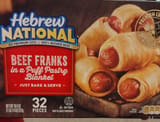 BEEF FRANKS in a Puff Pastry Blanket Hebrew National · 18.4 oz Ultra-processedHigh in saltHigh in saturated fatContains nitrites or nitrates Score 31 out of 100 Poor
 -
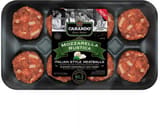 Mozzarella Rustica Italian Style Meatballs Carando · 16 oz Ultra-processedHigh in saltHigh in saturated fatContains added sugars Score 22 out of 100 Poor
 -
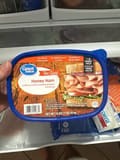 Honey Ham Great Value · 16 oz Ultra-processedHigh in saltContains nitrites or nitratesContains added sugars Score 22 out of 100 Poor
Sources
-
Guideline: sugars intake for adults and children
“In both adults and children, WHO recommends reducing the intake of free sugars to less than 10% of total energy intake”
who.int
-
Dietary Guidelines for Americans, 2025–2030
“Limit foods and beverages that include artificial flavors, petroleum-based dyes, artificial preservatives, and low-calorie non-nutritive sweeteners.”
cdn.realfood.gov
-
Added and free sugars should be as low as possible
“Sugar consumption is a known cause of dental caries.”
efsa.europa.eu
-
“For adults, WHO recommends less than 2000 mg/day of sodium (equivalent to less than 5 g/day salt), or just under a teaspoon.”
who.int
-
7 CFR 205.102 Use of the term "organic" (National Organic Program)
“Any agricultural product that is sold, labeled, or represented as “100 percent organic,” “organic,” or “made with organic (specified ingredients or food group(s))” must be: (a) Produced in accordance with the requirements specified in § 205.101 or §§ 205.202 through 205.207”
ecfr.gov