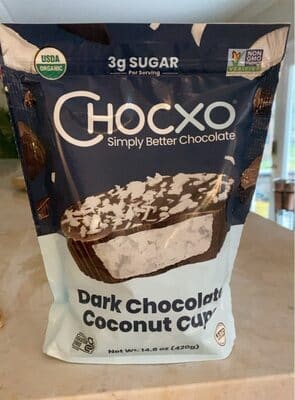
Dark chocolates
Chocxo Simply Better Chocolate
Score
- Ultra-processed
- High in saturated fat
- Contains added sugars
- Certified organic
- Seed-oil free
Why it scores 33
Chocxo Simply Better Chocolate scores 33 out of 100 (Poor) under GoodSwap’s published rules. What moved the score most:
- minus 20 points Sugar: An added sugar. Strong
- minus 18 points Ultra-processed (NOVA 4): Classified NOVA 4: made with industrial ingredients and additives. Strong
- minus 11 points Sugars 21.4 g / 100 g: Very high in sugar. Strong
Every line of the math is on The Receipt below, with its evidence tier and sources.
Better chocolate bars
-
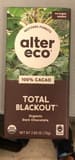 Total Blackout Alter Eco · 2.65 oz Not ultra-processed · No added sugars Score 79 out of 100 , 46 points higher
 -
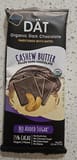 Cashew Butter Filled Dark Chocolate D.a.T. Not ultra-processed · No added sugars Score 76 out of 100 , 43 points higher
 -
 Mixed Berry Date-Sweetened Chocolate Spring & Mulberry Not ultra-processed · No added sugars Score 79 out of 100 , 46 points higher
 -
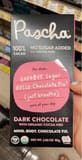 100% Cacao Dark Chocolate with organic chocolate nibs Pascha · 2.82 oz 80 g Not ultra-processed · No added sugars Score 79 out of 100 , 46 points higher
 -
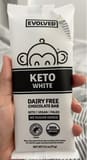 Keto White Chocolate Bar Evolved · 2.5 oz No added sugars · No sugar Score 72 out of 100 , 39 points higher
The same kind of product, at least 10 points higher, sold in the US. Never paid placements.
The Receipt
Simply Better Chocolate
Ingredients
- Sugar minus 20 points
- Chocolate (sweetened, ingredient) minus 7.5 points
- Soy lecithin minus 2.5 points
Processing
- Ultra-processed (NOVA 4) minus 18 points
Nutrition per 100 g
- Sugars 21.4 g / 100 g minus 11 points
- Saturated fat 28.6 g / 100 g minus 9 points
- Energy 571 kcal / 100 g minus 3 points
- Fiber 14.3 g / 100 g plus 4 points
100 − 67 = 33
Can’t score above 79. Contains sugar, an ingredient of high concern. [1][2][3]
Can’t score above 79. High in fat and saturated fat (above the front-of-pack "high" level). [6]
Nutrition per 100 g
| Energy | 571 kcal |
|---|---|
| Fat | 42.9 g |
| Saturated fat | 28.6 g |
| Carbohydrates | 35.7 g |
| Sugars | 21.4 g |
| Added sugars | 21.4 g |
| Fiber | 14.3 g |
| Protein | 7.1 g |
Serving: 1 cup(s) (14 g)
Ingredients
- organic dark chocolate (organic cocoa mass, organic cane sugar, organic low-fat cocoa powder, organic cocoa butter, organic vanilla extract) (moderate concern)
- organic white chocolate (organic sugar, organic cocoa butter, organic whole milk powder, organic soy lecithin, ganic vanilla) (moderate concern)
- organic coconut butter concentrate
- organic macaroon coconut
- organic coconut
Label text, as published
organic dark chocolate (organic cocoa mass, organic cane sugar, organic low-fat cocoa powder, organic cocoa butter, organic vanilla extract), organic white chocolate (organic sugar, organic cocoa butter, organic whole milk powder, organic soy lecithin, ganic vanilla), organic coconut butter concentrate, organic macaroon coconut, organic coconut. contains: coconut, milk, soy. produced on equipment that also processses: peanuts and other tree nuts.
Allergens and diets
Contains: Milk, Peanuts, Tree nuts, Soy
- Not vegan
- Gluten-free
- Palm-oil-free
Always check the package: recipes change.
More dark chocolates on GoodSwap
-
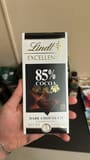 Dark Chocolate Lindt · 3.5 oz (100 g) High in saturated fatContains added sugarsNo additivesSeed-oil free Score 54 out of 100 Okay
 -
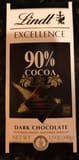 Dark Chocolate Lindt · 3.5 oz (100 g) High in saturated fatContains added sugarsNo additivesSeed-oil free Score 62 out of 100 Good
 -
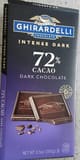 Intense Dark 72% Cacao Dark Chocolate Ghirardelli · 100 g Ultra-processedHigh in sugarHigh in saturated fatContains added sugars Score 38 out of 100 Poor
 -
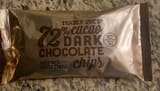 72% Cacao Dark Chocolate Chips Trader Joe's · 10 oz Ultra-processedHigh in sugarHigh in saturated fatContains added sugars Score 32 out of 100 Poor
 -
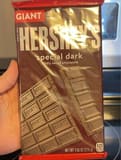 Special dark mildly sweet chocolate Hershey's · 7.56 oz/214 g Ultra-processedHigh in sugarHigh in saturated fatContains added sugars Score 33 out of 100 Poor
 -
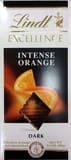 Intense Orange Dark Chocolate Lindt · 3.5 oz (100 g) Ultra-processedHigh in sugarHigh in saturated fatContains added sugars Score 22 out of 100 Poor
Sources
-
Guideline: sugars intake for adults and children
“In both adults and children, WHO recommends reducing the intake of free sugars to less than 10% of total energy intake”
who.int
-
Dietary Guidelines for Americans, 2025–2030
“Limit foods and beverages that include artificial flavors, petroleum-based dyes, artificial preservatives, and low-calorie non-nutritive sweeteners.”
cdn.realfood.gov
-
Added and free sugars should be as low as possible
“Sugar consumption is a known cause of dental caries.”
efsa.europa.eu
-
Saturated fatty acid and trans-fatty acid intake for adults and children: WHO guideline
“WHO recommends that adults and children reduce saturated fatty acid intake to 10% of total energy intake (strong recommendation).”
who.int
-
“Table 3: Criteria for drinks (per 100ml)”
assets.publishing.service.gov.uk
-
“Greater exposure to ultra-processed food was associated with a higher risk of adverse health outcomes, especially cardiometabolic, common mental disorder, and mortality outcomes.”
doi.org