Why it scores 92
Good Thins Rice Snacks scores 92 out of 100 (Excellent) under GoodSwap’s published rules. What moved the score most:
- minus 8 points Processed (NOVA 3): Classified NOVA 3: processed with added salt, sugar or oil. Emerging
- plus 3 points No additives: No food additives in the ingredient list. Info
- minus 2.5 points Safflower oil: High in omega-6 linoleic acid. Emerging
Every line of the math is on The Receipt below, with its evidence tier and sources.
The Receipt
Rice Snacks
Ingredients
- Safflower oil minus 2.5 points
Processing
- Processed (NOVA 3) minus 8 points
Nutrition per 100 g
- Salt 0.4 g / 100 g minus 1 points
Bonuses
- No additives plus 3 points
100 − 8.5 = 91.5 → 92
Nutrition per 100 g
| Energy | 120 kcal |
|---|---|
| Fat | 1.5 g |
| Saturated fat | 0 g |
| Trans fat | 0 g |
| Carbohydrates | 25 g |
| Sugars | 0 g |
| Added sugars | 0 g |
| Fiber | 1 g |
| Protein | 2 g |
| Salt | 0.4 g |
Serving: 19 pieces (30 g)
Ingredients
Label text, as published
rice flour, sesame seeds, safflower oil, salt
Allergens and diets
Contains: Sesame
- Vegan
- Vegetarian
- Gluten-free
- Palm-oil-free
Always check the package: recipes change.
More crackers (appetizers) on GoodSwap
-
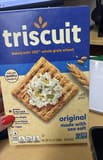 Original Made with Sea Salt Triscuit · 8.5 oz High in saltContains seed oilsNo additivesContains whole grains Score 79 out of 100 Good
 -
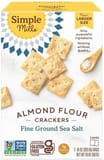 Almond Flour Crackers - Fine Ground Sea Salt Simple Mills · 2 × 10 oz No additives Score 79 out of 100 Good
 -
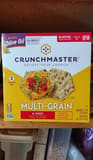 Crunchmaster Multi-Grain 6-Seed Crunchy Baked Rice Crackers Crunchmaster · 794 g Ultra-processedSeed-oil freeContains whole grains Score 76 out of 100 Good
 -
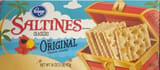 Saltines Kroger · 16 oz Contains added sugarsContains seed oils Score 66 out of 100 Good
 -
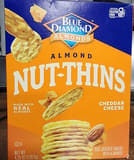 Almond Nut-Thins Cheddar Cheese Blue Diamond Almonds · 120.5 g Ultra-processedHigh in saltContains seed oilsNo synthetic dyes Score 56 out of 100 Okay
 -
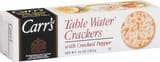 Table Water Crackers Cracked Pepper Carr's · 120 g High in saltContains palm oilNo additivesSeed-oil free Score 79 out of 100 Good
More from Good Thins



Sources
-
“replacement of saturated fat in the diet with linoleic acid effectively lowers serum cholesterol but does not support the hypothesis that this translates to a lower risk of death from coronary heart disease or all causes.”
doi.org
-
“These data provide support for current recommendations to replace saturated fat with polyunsaturated fat for primary prevention of CHD.”
doi.org
-
“For adults, WHO recommends less than 2000 mg/day of sodium (equivalent to less than 5 g/day salt), or just under a teaspoon.”
who.int