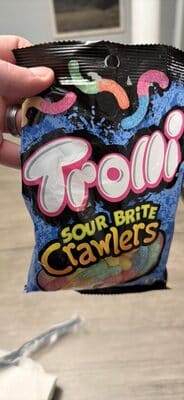
Gummi candies
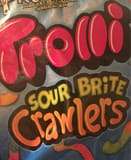
Trolli Sour Brite Crawlers
7.2 oz
Score
- Dye with an EU warning label
- Contains synthetic dyes
- Ultra-processed
- High in sugar
- Contains added sugars
- Contains artificial flavors
Why it scores 10
Trolli Sour Brite Crawlers scores 10 out of 100 (Bad) under GoodSwap’s published rules. What moved the score most:
- minus 20 points Corn syrup: An added sugar. Strong
- minus 20 points Sugar: An added sugar. Strong
- minus 18 points Ultra-processed (NOVA 4): Classified NOVA 4: made with industrial ingredients and additives. Strong
Every line of the math is on The Receipt below, with its evidence tier and sources.
Better gummy and chewy candy
-
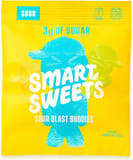 Smart sweets sour blast buddies Smart Sweets · 1.8 oz/50 g No EU warning-label dyes · No synthetic dyes Score 62 out of 100 , 52 points higher
 -
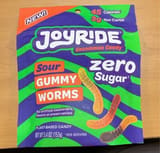 Sour Gummy Worms Joyride · 5.4 oz No EU warning-label dyes · No synthetic dyes Score 67 out of 100 , 57 points higher
 -
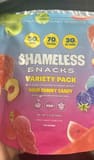 Variety Pack Sour Gummy Candy Shameless Snacks · 5.5 oz No EU warning-label dyes · No synthetic dyes Score 50 out of 100 , 40 points higher
 -
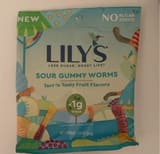 Sour Gummy Worms Tart 'n Tasty Fruit Flavors Lily's · 51 g No EU warning-label dyes · No synthetic dyes Score 60 out of 100 , 50 points higher
 -
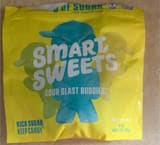 Sour Blast Buddies Smart Sweets No EU warning-label dyes · No synthetic dyes Score 61 out of 100 , 51 points higher
The same kind of product, at least 10 points higher, sold in the US. Never paid placements.
The Receipt
Sour Brite Crawlers
Ingredients
- Corn syrup minus 20 points
- Sugar minus 20 points
- Red 40 minus 10 points
Processing
- Ultra-processed (NOVA 4) minus 18 points
- 5 kinds of ultra-processing markers minus 6 points
Nutrition per 100 g
- Sugars 44.8 g / 100 g minus 14 points
- Salt 0.4 g / 100 g minus 1 points
- Energy 310 kcal / 100 g minus 1 points
100 − 90 = 10
Can’t score above 79. Contains corn syrup, an ingredient of high concern. [1][2][3][4][5][6][7][8][9][12]
Can’t score above 79. High in sugars (above the front-of-pack "high" level). [13]
Nutrition per 100 g
| Energy | 310 kcal |
|---|---|
| Fat | 0 g |
| Saturated fat | 0 g |
| Trans fat | 0 g |
| Carbohydrates | 75.9 g |
| Sugars | 44.8 g |
| Added sugars | 44.8 g |
| Fiber | 0 g |
| Protein | 3.5 g |
| Salt | 0.4 g |
Serving: 7 pieces (29 g)
Recipe changed
- Titanium dioxide removed
Compared with an older list (Open Food Facts). The current list is from August 2023.
Ingredients
- CORN SYRUP (high concern)
- SUGAR (high concern)
- WATER
- GELTAIN (not recognized)
- MODIFIED CORN STARCH
- FUMARIC ACID
- LACTIC ACID
- CITRIC ACID
- SODIUM CITRATE
- CALCIUM LACTATE
- SODIUM LACTATE
- COLOR ADDED
- NATURAL AND ARTIFICIAL FLAVORS
- RED 40 (high concern)
- YELLOW 5 (high concern)
- YELLOW 6 (high concern)
- BLUE 1 (moderate concern)
Label text, as published
CORN SYRUP, SUGAR, WATER, GELTAIN, MODIFIED CORN STARCH, CONTAINS 2% OR LESS OF FUMARIC ACID, LACTIC ACID, CITRIC ACID, SODIUM CITRATE, CALCIUM LACTATE, SODIUM LACTATE, COLOR ADDED, NATURAL AND ARTIFICIAL FLAVORS, RED 40, YELLOW 5, YELLOW 6, BLUE 1.
Allergens and diets
May contain: Milk, Peanuts, Tree nuts, Soy, Gluten, Egg
- Not vegan
- Not vegetarian
- Palm-oil-free
Always check the package: recipes change.
More gummi candies on GoodSwap
-
 Fruit Snacks Welch's · 4.5 lb (2043 g) Dye with an EU warning labelContains synthetic dyesUltra-processedHigh in sugar Score 10 out of 100 Bad
 -
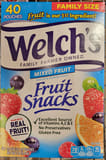 Mixed Fruit Fruit Snacks Welch's · 2 lb, 40 × 0.8 oz pouches Dye with an EU warning labelContains synthetic dyesUltra-processedHigh in sugar Score 10 out of 100 Bad
 -
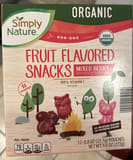 Fruit Flavored Snacks Mixed Berry Simply Nature Ultra-processedHigh in sugarContains added sugarsContains seed oils Score 15 out of 100 Bad
 -
 Mixed Fruit Fruit Snacks Welch's · 14 g Dye with an EU warning labelContains synthetic dyesUltra-processedHigh in sugar Score 9 out of 100 Bad
 -
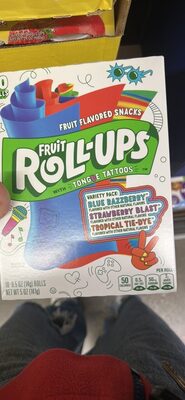 Fruit Roll-Ups General Mills · 5 oz, 10 × 0.5 oz rolls Dye with an EU warning labelContains synthetic dyesUltra-processedHigh in sugar Score 4 out of 100 Bad
 -
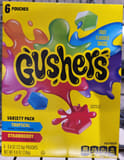 Gushers Variety Pack General Mills · 4.8 oz, 6 × 0.8 oz pouches Dye with an EU warning labelContains synthetic dyesUltra-processedHigh in sugar Score 4 out of 100 Bad
More from Trolli
Sources
-
Guideline: sugars intake for adults and children
“In both adults and children, WHO recommends reducing the intake of free sugars to less than 10% of total energy intake”
who.int
-
Dietary Guidelines for Americans, 2025–2030
“Limit foods and beverages that include artificial flavors, petroleum-based dyes, artificial preservatives, and low-calorie non-nutritive sweeteners.”
cdn.realfood.gov
-
Added and free sugars should be as low as possible
“Sugar consumption is a known cause of dental caries.”
efsa.europa.eu
-
Regulation (EC) No 1333/2008 of 16 December 2008 on food additives
“may have an adverse effect on activity and attention in children.”
eur-lex.europa.eu
-
“may have an adverse effect on activity and attention in children.”
legislation.gov.uk
-
“Artificial colours or a sodium benzoate preservative (or both) in the diet result in increased hyperactivity in 3-year-old and 8/9-year-old children in the general population.”
doi.org
-
Tracking Food Industry Pledges to Remove Petroleum Based Food Dyes
“FD&C Green No. 3, FD&C Red No. 40, FD&C Yellow No. 5, FD&C Yellow No. 6, FD&C Blue No. 1, and FD&C Blue No. 2—by the end of 2027.”
fda.gov
-
California AB 2316 (2024), Pupil nutrition: substances: prohibition
“beginning December 31, 2027, would prohibit a school district, county superintendent of schools, or charter school”
leginfo.legislature.ca.gov
-
List of Select Chemicals in the Food Supply Under FDA Review
“The table below includes select food ingredients (including food and color additives), food contact substances, and contaminants under FDA review as of May 12, 2026 .”
fda.gov
-
“For adults, WHO recommends less than 2000 mg/day of sodium (equivalent to less than 5 g/day salt), or just under a teaspoon.”
who.int
-
21 CFR 74.705 FD&C Yellow No. 5
“shall specifically declare the presence of FD&C Yellow No. 5 by listing the color additive as FD&C Yellow No. 5 among the list of ingredients.”
ecfr.gov
-
“Table 3: Criteria for drinks (per 100ml)”
assets.publishing.service.gov.uk
-
HHS, FDA to Phase Out Petroleum-Based Synthetic Dyes in Nation’s Food Supply (press release)
“Initiating the process to revoke authorization for two synthetic food colorings—Citrus Red No. 2 and Orange B—within the coming months.”
fda.gov
-
“Greater exposure to ultra-processed food was associated with a higher risk of adverse health outcomes, especially cardiometabolic, common mental disorder, and mortality outcomes.”
doi.org