Food
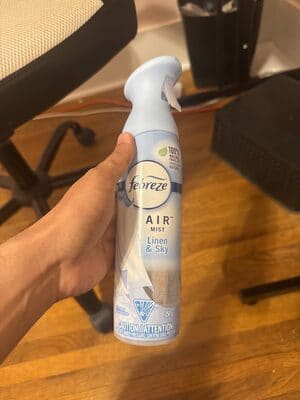
Febreze Febreeze
Score
- Ultra-processed
- Contains fragrance
- Contains a common skin-allergen preservative
Why it scores 72
Febreze Febreeze scores 72 out of 100 (Good) under GoodSwap’s published rules. What moved the score most:
- minus 18 points Ultra-processed (NOVA 4): Classified NOVA 4: made with industrial ingredients and additives. Strong
- minus 7.5 points Fragrance (parfum): A single label term covers an undisclosed mixture. Regulatory
- minus 2.5 points Benzisothiazolinone (BIT): Isothiazolinones are a recognized cause of allergic contact dermatitis, and sensitization to newer ones such as this has been reported. Strong
Every line of the math is on The Receipt below, with its evidence tier and sources.
The Receipt
Febreeze
Ingredients
- Fragrance (parfum) minus 7.5 points
- Benzisothiazolinone (BIT) minus 2.5 points
Processing
- Ultra-processed (NOVA 4) minus 18 points
Nutrition
- Nutrition facts unavailable no points
100 − 28 = 72
Can’t score above 79. No nutrition facts on file, so we can't confirm excellent.
Ingredients
- water
- alcohol denat
- PEG-60 hydrogenated cast (not recognized)
- fragrances (moderate concern)
- sodium citrate
- hydroxypropyl cyclodextrin (not recognized)
- diethy (not recognized)
- sodium sulfosuccinate
- benzisothiazolinone
- nitrogen
Label text, as published
water, alcohol denat., PEG-60 hydrogenated cast, fragrances, sodium citrate, hydroxypropyl cyclodextrin, diethy, sodium sulfosuccinate, benzisothiazolinone, nitrogen
Packaging
O 7 other plastics
Context only: no points in v1.
More from Febreze

Sources
-
“when their concentration exceeds 0,001 % in leave-on products and 0,01 % in rinse-off products.”
eur-lex.europa.eu
-
Regulation (EC) No 1223/2009 of 30 November 2009 on cosmetic products
“cosmetic products shall not contain any of the following: (a) prohibited substances — prohibited substances listed in Annex II”
eur-lex.europa.eu
-
fda.gov
-
Isothiazolinone derivatives and allergic contact dermatitis: a review and update
“Moreover, sensitization to newer and lesser known isothiazolinones has been reported.”
doi.org
-
“Greater exposure to ultra-processed food was associated with a higher risk of adverse health outcomes, especially cardiometabolic, common mental disorder, and mortality outcomes.”
doi.org
-
“this substance should therefore be banned in leave-on products.”
eur-lex.europa.eu
-
“up to a maximum authorised concentration of 0,0015 % in rinse-off cosmetic products, apart from its skin sensitising potential.”
eur-lex.europa.eu
-
“a concentration up to 0,0015 % (15 ppm) Methylisothiazolinone is considered safe for the consumer from the point of view of induction of contact allergy.”
eur-lex.europa.eu