Rice dishes
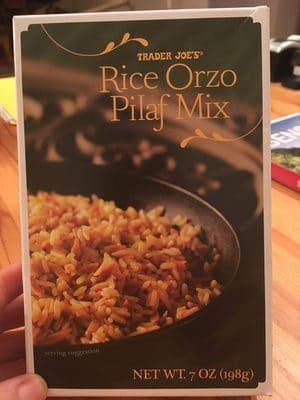
Trader Joe's Rice Orzo Pilaf Mix
7 oz
Score
- Ultra-processed
- High in salt
- Seed-oil free
Why it scores 57
Trader Joe's Rice Orzo Pilaf Mix scores 57 out of 100 (Okay) under GoodSwap’s published rules. What moved the score most:
- minus 18 points Ultra-processed (NOVA 4): Classified NOVA 4: made with industrial ingredients and additives. Strong
- minus 9 points Salt 2.5 g / 100 g: Very high in salt. Strong
- minus 6 points 5 kinds of ultra-processing markers: Industrial additive classes found: emulsifier, flavor enhancer, flavoring, industrial sugar or starch hydrolysate and modified starch. Emerging
Every line of the math is on The Receipt below, with its evidence tier and sources.
Better rice and pasta side dishes
-
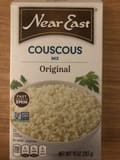 Couscous Mix Original Near East · 10 oz Not ultra-processed · Less salt Score 100 out of 100 , 43 points higher
 -
 Couscous Mix Rice Bowl · 62 g Not ultra-processed · Less salt Score 100 out of 100 , 43 points higher
 -
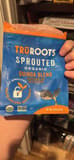 Sprouted Organic Quinoa Blend Truroots Not ultra-processed · Less salt Score 100 out of 100 , 43 points higher
 -
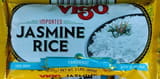 Long grain jasmine rice Vigo · 2 lb Not ultra-processed · Less salt Score 100 out of 100 , 43 points higher
 -
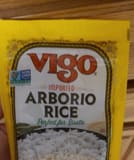 Arborio Rice Vigo · 12 oz/340 g Not ultra-processed · Less salt Score 100 out of 100 , 43 points higher
The same kind of product, at least 10 points higher, sold in the US. Never paid placements.
The Receipt
Rice Orzo Pilaf Mix
Ingredients
- Maltodextrin minus 2.5 points
- Natural flavors minus 2.5 points
- Yeast extract minus 2.5 points
- Modified starch minus 1.5 points
- Soy lecithin minus 1.5 points
Processing
- Ultra-processed (NOVA 4) minus 18 points
- 5 kinds of ultra-processing markers minus 6 points
Nutrition per 100 g
- Salt 2.5 g / 100 g minus 9 points
- Energy 456 kcal / 100 g minus 2 points
- Protein 10.3 g / 100 g plus 2 points
100 − 43.5 = 56.5 → 57
Can’t score above 79. High in salt (above the front-of-pack "high" level). [5]
Nutrition per 100 g
| Energy | 456 kcal |
|---|---|
| Fat | 2.9 g |
| Carbohydrates | 72.1 g |
| Sugars | 1.5 g |
| Added sugars | 0 g |
| Fiber | 2.9 g |
| Protein | 10.3 g |
| Salt | 2.5 g |
Serving: 0.3 cup (68 g)
Ingredients
- Parboiled long grain rice
- enriched orzo pasta (semolina [wheat], niacin, ferrous sulfate, thiamine mononitrate, riboflavin, folic acid)
- chicken flavor broth (chicken stock, maltodextrin [corn], salt, natural flavor, yeast extract, modified starch, thiamine [vitamin b] and soy lecithin)
- salt
- powdered chicken fat & chicken broth (chicken fat, chicken broth, natural flavor [extract of rosemary])
- natural flavor
- onion powder
- garlic powder
- turmeric
- dehydrated chives
- pepper
Label text, as published
Parboiled long grain rice, enriched orzo pasta (semolina [wheat], niacin, ferrous sulfate, thiamine mononitrate, riboflavin, and folic acid), chicken flavor broth (chicken stock, maltodextrin [corn], salt, natural flavor, yeast extract, modified starch, thiamine [vitamin b] and soy lecithin), salt, powdered chicken fat & chicken broth (chicken fat, chicken broth, and natural flavor [extract of rosemary]), natural flavor, onion powder, garlic powder, turmeric, dehydrated chives, pepper.
Allergens and diets
Contains: Soy, Wheat, Gluten
- Not vegan
- Not vegetarian
- Not gluten-free
- Palm-oil-free
Always check the package: recipes change.
More rice dishes on GoodSwap
-
 Spanish Rice Knorr · 67 g Ultra-processedHigh in saltContains added sugarsSeed-oil free Score 40 out of 100 Okay
 -
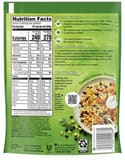 Rice & Pasta Blend in a Savory Chicken Flavored Sauce Knorr · 65 g Ultra-processedHigh in saltContains added sugarsSeed-oil free Score 24 out of 100 Poor
 -
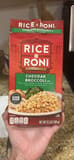 CHEDDAR BROCCOLI flavor Rice, pasta, cheddar cheese and broccoli with other natural flavors Rice A Roni · 6.5 oz/184 g Ultra-processedHigh in saltContains added sugarsContains palm oil Score 13 out of 100 Bad
 -
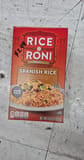 Spanish Rice Rice A Roni · 6.8 oz/192 g Ultra-processedHigh in salt Score 66 out of 100 Good
 -
 Chicken Flavor Broccoli Rice & Pasta Blend with Broccoli in a Chicken Flavored Sauce Knorr · 5.5 oz (155 g) Ultra-processedHigh in saltContains added sugarsSeed-oil free Score 41 out of 100 Okay
 -
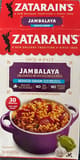 Jambalaya reduced sodium rice dinner mix Zatarain's · 8 oz High in salt Score 79 out of 100 Good
More from Trader Joe's
Sources
-
21 CFR 101.22 Foods; labeling of spices, flavorings, colorings and chemical preservatives
“whose significant function in food is flavoring rather than nutritional.”
ecfr.gov
-
“For adults, WHO recommends less than 2000 mg/day of sodium (equivalent to less than 5 g/day salt), or just under a teaspoon.”
who.int
-
Dietary Guidelines for Americans, 2025–2030
“Limit foods and beverages that include artificial flavors, petroleum-based dyes, artificial preservatives, and low-calorie non-nutritive sweeteners.”
cdn.realfood.gov
-
“Table 3: Criteria for drinks (per 100ml)”
assets.publishing.service.gov.uk
-
“Greater exposure to ultra-processed food was associated with a higher risk of adverse health outcomes, especially cardiometabolic, common mental disorder, and mortality outcomes.”
doi.org