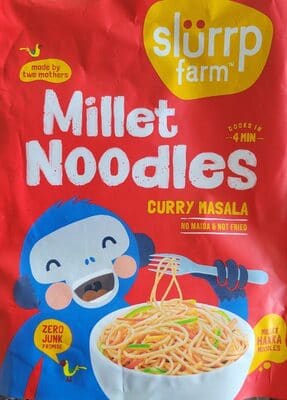
Food
Slurrp Farm NO0DLES 6.4
192 g
Score
- Ultra-processed
- Contains added sugars
- Contains whole grains
Why it scores 61
Slurrp Farm NO0DLES 6.4 scores 61 out of 100 (Good) under GoodSwap’s published rules. What moved the score most:
- minus 20 points Sugar: An added sugar. Strong
- minus 18 points Ultra-processed (NOVA 4): Classified NOVA 4: made with industrial ingredients and additives. Strong
- plus 4 points Fiber 11.5 g / 100 g: A good source of fiber. Strong
Every line of the math is on The Receipt below, with its evidence tier and sources.
The Receipt
NO0DLES 6.4
Ingredients
- Sugar minus 20 points
- Natural flavors minus 2.5 points
Processing
- Ultra-processed (NOVA 4) minus 18 points
Nutrition per 100 g
- Sugars 6.4 g / 100 g minus 3 points
- Energy 365 kcal / 100 g minus 2 points
- Fiber 11.5 g / 100 g plus 4 points
- Protein 10 g / 100 g plus 2 points
100 − 39.5 = 60.5 → 61
Can’t score above 79. Contains sugar, an ingredient of high concern. [1][2][3]
Nutrition per 100 g
| Energy | 365 kcal |
|---|---|
| Fat | 1.1 g |
| Saturated fat | 0.2 g |
| Trans fat | 0 g |
| Carbohydrates | 78.7 g |
| Sugars | 6.4 g |
| Added sugars | 0.8 g |
| Fiber | 11.5 g |
| Protein | 10 g |
Ingredients
- Noodles: Multigrain flour blend (whole wheat (atta), foxtail millet)
- cluster bean powder (natural gum) (not recognized)
- iodised salt
- rosemary
- Spice Mix (6%): Spice blend (garlic, onion, coriander, chilli, cumin)
- iodised salt
- unrefined raw sugar (high concern)
- milk solids
- corn starch
- natural and nature-identical flavouring substances
- citric acid (acidity regulator) [INS 330]
Label text, as published
Noodles: Multigrain flour blend (whole wheat (atta), foxtail millet) (91%), cluster bean powder (natural gum), iodised salt, rosemary. Spice Mix (6%): Spice blend (garlic, onion, coriander, chilli, cumin), iodised salt, unrefined raw sugar, milk solids, corn starch, natural and nature-identical flavouring substances, citric acid (acidity regulator) [INS 330].
Allergens and diets
Contains: Milk, Wheat, Gluten
- Not vegan
- Not gluten-free
- Palm-oil-free
Always check the package: recipes change.
Sources
-
Guideline: sugars intake for adults and children
“In both adults and children, WHO recommends reducing the intake of free sugars to less than 10% of total energy intake”
who.int
-
Dietary Guidelines for Americans, 2025–2030
“Limit foods and beverages that include artificial flavors, petroleum-based dyes, artificial preservatives, and low-calorie non-nutritive sweeteners.”
cdn.realfood.gov
-
Added and free sugars should be as low as possible
“Sugar consumption is a known cause of dental caries.”
efsa.europa.eu
-
21 CFR 101.22 Foods; labeling of spices, flavorings, colorings and chemical preservatives
“whose significant function in food is flavoring rather than nutritional.”
ecfr.gov
-
“Greater exposure to ultra-processed food was associated with a higher risk of adverse health outcomes, especially cardiometabolic, common mental disorder, and mortality outcomes.”
doi.org