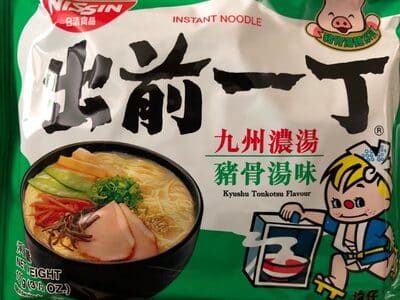
Instant noodle soups
Nissin Tonkotsu Flavor Ramen Noodles
100 g
Score
- Ultra-processed
- High in salt
- High in saturated fat
- Contains added sugars
- Contains emulsifiers studied for gut effects
- Contains palm oil
- Contains caffeine
- Seed-oil free
Why it scores 8
Nissin Tonkotsu Flavor Ramen Noodles scores 8 out of 100 (Bad) under GoodSwap’s published rules. What moved the score most:
- minus 20 points Corn syrup: An added sugar. Strong
- minus 20 points Sugar: An added sugar. Strong
- minus 18 points Ultra-processed (NOVA 4): Classified NOVA 4: made with industrial ingredients and additives. Strong
Every line of the math is on The Receipt below, with its evidence tier and sources.
Better instant noodles and ramen
-
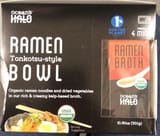 Ramen Tonkotsu-style Bowl Ocean's Halo · 10.75 oz/305 g Less salt · Less saturated fat Score 79 out of 100 , 71 points higher
 -
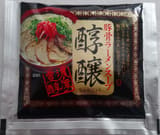 Tonkotsu Ramen Concentration Pork Bone Soup Matsubara · 45 g Less saturated fat · No gut-studied emulsifiers Score 44 out of 100 , 36 points higher
 -
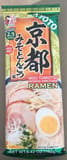 Miso tonkotsu ramen Itsuki foods · 182 g Less saturated fat · No gut-studied emulsifiers Score 35 out of 100 , 27 points higher
 -
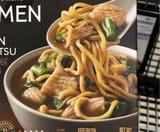 Chicken Tonkotsu Ramen P.F. Chang's · 9.5 oz/269 g Not ultra-processed · Less salt Score 48 out of 100 , 40 points higher
 -
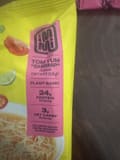 Tom Yum Ramen (Shrimp) Immi · 2.4 oz/68 g No added sugars · No gut-studied emulsifiers Score 49 out of 100 , 41 points higher
The same kind of product, at least 10 points higher, sold in the US. Never paid placements.
The Receipt
Tonkotsu Flavor Ramen Noodles
Ingredients
- Corn syrup minus 20 points
- Sugar minus 20 points
- Palm oil minus 2.5 points
- Sodium hexametaphosphate minus 1.5 points
- Sodium tripolyphosphate minus 1.5 points
- Sodium phosphate minus 1.5 points
- Sodium acid pyrophosphate minus 0.5 points
- Sodium alginate minus 0.5 points
- Guar gum minus 0.5 points
- Natural flavors minus 0.5 points
- Potassium phosphate minus 0.5 points
- Mono- and diglycerides minus 0.5 points
Processing
- Ultra-processed (NOVA 4) minus 18 points
- 8 kinds of ultra-processing markers minus 8 points
Nutrition per 100 g
- Saturated fat 13 g / 100 g minus 9 points
- Salt 2 g / 100 g minus 7 points
- Energy 450 kcal / 100 g minus 2 points
- Protein 9 g / 100 g plus 2 points
100 − 92 = 8
Can’t score above 79. Contains corn syrup, an ingredient of high concern. [1][2][3]
Can’t score above 79. High in fat, saturated fat and salt (above the front-of-pack "high" level). [13]
Nutrition per 100 g
| Energy | 450 kcal |
|---|---|
| Fat | 19 g |
| Saturated fat | 13 g |
| Carbohydrates | 60 g |
| Sugars | 3 g |
| Added sugars | 2 g |
| Fiber | 1 g |
| Protein | 9 g |
| Salt | 2 g |
Serving: 1 package (100 g)
Ingredients
- Noulles (82% Fame ble, huile de palme, amidon de tapioca, sel, correcteur d'acidité:, chlorure de potassium, épaississant:, antioxydant:, poudre de thé vert. Sauce d'épices: Sauce soja) (not recognized)
Label text, as published
Noulles (82% Fame ble, huile de palme, amidon de tapioca, sel, correcteur d'acidité: [E452, E501, E451, E500, E339, E450), chlorure de potassium, épaississant: [E401, E412], antioxydant: [E306, E304], poudre de thé vert. Sauce d'épices: Sauce soja (eau, soja, blé sell, huile de sésame, huile de caime, vin de cuisson guant, ble extraits de levure, aromes de Tonkotsu (0,5%) (soja, blé, graines de sésamel, pâte miso (eau, soja, riz, sell, crème non laitière (sirop de glucose, huile de palme hydrogénée, protéine de lait, correcteur d'acidité: E340), emulsifiant E471, antiagglomerant: [E551, sucre, huile de son den erauser de gout: E621, E635, sel, maltodextrine, antioxydant: [E306). Sachet de soupe: Sel, crème non laitière (sirop de glucose, huile de palme hydrogénée, proteine de lait, correcteur d'acidité: [E340], émulsifiant: [E471), antiagglomerant: [E551] sucre, exhausteur de goût (E621, E635), graines de sesame ala poudre ble, extraits de levure, lait en poudre entier, oignon vert déshydraté, maltodextrine, chlorure de potassium, sauce soja en poudre [soia, blé, sell, épices, poudre d'oignon, protéines de soja hydrolysées, huile de son de riz antiagglomérant: [E551). Ce produit peut contenir des traces de lupin. La lame de bie ne provient pas de Hong Kong. Zutaten: Nudeln (82%): Weizenmehl, Palmöl, Tapiokastärke, Salz, Säureregulator: [E452, E501, E451, E500, E339, E450), Kaliumchlorid, Verdickungsmittel: [E401, E412), Antioxidationsmittel: [E306, E304], Grünteepulver. Gewürzsoße: Sojasoße Wasser Sojabohnen Weizen, Salz), Sesamöl, Palmol, Kochwein [Wasser, Klebreis, Weizen), Hefeextrakte, Tonkotsu-aromen (0,5%] [Sojabohnen, Weizen, Sesamsamen), Miso-Paste Wasser, Sojabohnen, Reis, Salzl, pflanzliche Kaffeesahne (Glukosesirup gehärtetes Palmöl, Milcheiweiß. Säureregulator: E3401, Emulgator: E47 Trennmitte: E51), Zucker, Reisöl, Geschmacksverstärker. [E621, E635), Salz, Maltodextrin, Antioxidationsmittel: [E306). Suppenbeutel: Salz, pflanzliche Kaffeesähne (Glukosesirup, gehärtetes Palmöl, Milcheiweiß, Säureregulator. [E340], Emulgator: [E471, Trennmittel: (E551 Zucker, Geschmacksverse E621, E635, Sesamsamen, Knoblauchpulver Weizen, Hefeextrakte, Vollmilchpulver, dehydrierte Frühlingszwiebeln, Maltodextrin, Kaliumchlorid, Sojasoßenpulver Sojabohnen. Weizen, Salz), Gewürze. Zwiebelpulver, hydrolysiertes Sojabohnenprotein, Reisöl, Trennmittel: (E551). Dieses Produkt kam Spuren von Lupine enthalten. Weizenmehl stammt nicht aus Hongkong. Ingredienten: Noedels (82%): Tarwebloem, palmolie, tapiocazetmeel, zout, zuurteregelaar: [E452, E501, E451, E500, E339, E450), kaliumchloride, verdikkingsmiddel: [E401, E412], antioxidant (E306, E304), groene thee poeder Kruidera Sojasaus (water, soja, tarwe, zout, sesamolie, palmolie, kookwijn (water, kleefrist, tarwe, gistextracten, Tonkotsu-aroma's (0.5%) (soja, tarwe, sesamzaad), misopasta (water, soja, rijst, zout, creamer (glucosestroop, gehydrogeneerde palmolie, melkeiwit, zuurteregelaar: [E340), emulgator (E90) antiklontermiddel: E551, suiker, rijstvliesolie, smaakversterker: [E621, E635), zout, maltodextrine, antioxidant: [E306]. Soepzakje: Zout, creamer (glucosestroop, gehydrogeneerde palmolie, melkeiwit, zuurteregelaar. (E340), emulgator: [E471), antiklontermiddel: [E551], suiker, smaakversterker 2 sesamzaad, knoflookpoeder tarwel, gistextracten, volle melkpoeder, gedehydrateerde groene ui, maltodextrine, kaliumchloride, sojasauspoeder (soja, tarwe, zout), kruiden, uienpoeder, gehydrolyseerd soja-eiwit, rijstvliesolie, antiklontermiddel: [E551]. Dit product kan sporen van lupine bevatten. Tanveten is niet afkomstig van Hong Kong Ingredientes: Fideos (82%): Harina de trigo, aceite de palma, almidón de tapioca, sal, corrector de acidez (E452, E501, E451, E500, E339, E450), cloruro de potasio, espesante: [E401, E412), antioxidante: (E306, E304), té verde en polvo. Salsa de especias: Sasa de sua aqua, soja, trigo, sall, acent sésame ite de palma, vino para cocinar (agua, arroz glutinoso, trigo), extractos de levadura, aromas de Tonkotsu (0.5%)] (soja, trigo, granos de sésamo)], pasta de miso (agua, soja, arroz, sall, crema no lactea (jarabe de glucosa, aceite de palma hidrogenado, protera ce a leche corrector de acdez: [E340), emulgente: [E471), antiaglomerante: (E551, azúcar, aceite de arroz, potenciador del sabor. [E621, E635), sal, maltodextrina, antioxidante: [E306)]. Bolsita de sopa: Sal, crema no láctea (jarabe de glucosa, aceite de palma hidrogenado, proteina de la leche, corector de act E340 emulgente: [E471), antiaglomerante: [E551], azúcar, potenciador del sabor: [E621, E635), granos de sésamo, ajo en polvo (trigo), extractos de levadura, leche entera en polvo, cebolla verde deshidratada, maltodextrina, cloruro de potasio, salsa de soja en polvo (soja, trigo, sall, hiernas, cebola proteina de soja hidrolizada, aceite de arroz, antiaglomerante: [E551, Este producto puede contener trazas de lupino. El ingrediente primario harina de trigo no es originario de Hong Kong.Ingredienti: Tagliatelle [829]: Farina di grano, olio di palma, amido di tapioca, sale, comettori di acidita: E-52 E E4, E500 E339, E450, cloruro di potassio, addensanti: [E401, E412), antiossidanti: [E306, E304, tè verde in polvere. Salsă di condimento: Salsa di soia (acqua, sola, grano, sale), olio di sesamo, olio di palma, vino da cucina (acqua, riso glutinoso, grano), estrati di lievito, aromi di Tonkotsy 0.5%)|scia.va semi di sesamo pasta di miso (acqua, soia, riso, sale], panna non casearia (sciroppo di glucosio, olio di palma idrogenato, proteine del latte, correttori di acidità: [E340), emulsionanti: [E471), agenti antiagglomeranti: E551], zucchero, olio di crusca di riso, esaltation di sapicilia E621, Ef sale, maltodes lievito, laten polvere, cipolla verde disidratata, maltodestrina, cloruro di potassio, salsa di soia in polvere soia, grano, sale, spezie, cipolla in polvere, proteina di soia idrolizzata, olio di crusca di riso, agenti antiagglomeranti: E551uesto prodotto può contricace di lupina Bustina di zuppa: Sale, panna non casearia (sciroppo di glucosio, olio di palma idrogenato, proteine del latte, corettori di acidità: [E340)], emulsionanti: [E471), agenti antiagglomeranti: [E551], zucchero, esaltatori di sapidità, E63 semi di sesamo acto nanol estrat antiossidant proviene dengking da Best before (DMK): shown on package/ A consommer de préférence avant le (J/M/A): voir sur l'emballage/ Mindestens haltbar bis (T.M.J.): Sehen Verpackung/ Tenminste houdbaar tot (D.M.J.): zie verpakking/ Consumir preferentemente antes de (D.M.Y.): ver embalaje/ Da arsi preferibilmente entro (D.M.Y.); indicata sulla confezione 20.05.2025 200 829 479 4 897878 800025 ENF015
Allergens and diets
Contains: Milk, Peanuts, Soy, Wheat, Gluten, Sesame
- Not vegan
- Not vegetarian
- Not gluten-free
- Not palm-oil-free
Always check the package: recipes change.
More instant noodle soups on GoodSwap
-
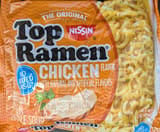 Chicken Ramen Noodle Soup Nissin · 3 oz Ultra-processedHigh in saltHigh in saturated fatContains added sugars Score 27 out of 100 Poor
 -
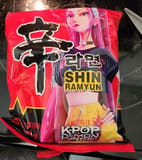 Shin Ramyun Nongshim · 120 g Ultra-processedHigh in saltContains added sugarsContains sugar alcohols Score 13 out of 100 Bad
 -
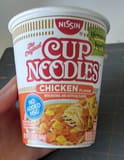 Cup Noodles Chicken Flavor Nissin · 2.25 oz (64 g) Ultra-processedHigh in saltHigh in saturated fatContains added sugars Score 12 out of 100 Bad
 -
 Kimchi Noodles Nongshim soon · 1 High in saltHigh in saturated fatContains added sugarsContains seed oils Score 5 out of 100 Bad
 -
 SHIN Spicy Noodle Soup Nongshim · 2.64 oz/75 g Ultra-processedHigh in saltHigh in saturated fatContains added sugars Score 9 out of 100 Bad
 -
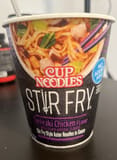 Cup Noodles Stir Fry Teriyaki Chicken Nissin · 3 oz Ultra-processedHigh in saltHigh in saturated fatContains added sugars Score 6 out of 100 Bad
More from Nissin
Sources
-
Guideline: sugars intake for adults and children
“In both adults and children, WHO recommends reducing the intake of free sugars to less than 10% of total energy intake”
who.int
-
Dietary Guidelines for Americans, 2025–2030
“Limit foods and beverages that include artificial flavors, petroleum-based dyes, artificial preservatives, and low-calorie non-nutritive sweeteners.”
cdn.realfood.gov
-
Added and free sugars should be as low as possible
“Sugar consumption is a known cause of dental caries.”
efsa.europa.eu
-
Saturated fatty acid and trans-fatty acid intake for adults and children: WHO guideline
“WHO recommends that adults and children reduce saturated fatty acid intake to 10% of total energy intake (strong recommendation).”
who.int
-
Process contaminants in vegetable oils and foods
“The highest levels of GE, as well as 3-MCPD and 2-MCPD (including esters) were found in palm oils and palm fats, followed by other oils and fats.”
efsa.europa.eu
-
“Glycidyl fatty acid esters, expressed as glycidol”
eur-lex.europa.eu
-
EFSA issues new advice on phosphates
“We estimated that dietary exposure to phosphates may exceed the new ADI for infants, toddlers and children with average consumption of phosphates in their diet.”
efsa.europa.eu
-
21 CFR 101.22 Foods; labeling of spices, flavorings, colorings and chemical preservatives
“whose significant function in food is flavoring rather than nutritional.”
ecfr.gov
-
“This study found positive associations between risk of CVD and intake of five individual and two groups of food additive emulsifiers widely used in industrial foods.”
doi.org
-
Re-evaluation of mono- and di-glycerides of fatty acids (E 471) as food additives
“The available studies did not raise any concern with regard to genotoxicity.”
doi.org
-
“For adults, WHO recommends less than 2000 mg/day of sodium (equivalent to less than 5 g/day salt), or just under a teaspoon.”
who.int
-
“Table 3: Criteria for drinks (per 100ml)”
assets.publishing.service.gov.uk
-
“Greater exposure to ultra-processed food was associated with a higher risk of adverse health outcomes, especially cardiometabolic, common mental disorder, and mortality outcomes.”
doi.org
-
Dietary emulsifiers impact the mouse gut microbiota promoting colitis and metabolic syndrome
“carboxymethylcellulose and polysorbate-80, induced low-grade inflammation and obesity/metabolic syndrome in wild-type hosts and promoted robust colitis in mice predisposed to this disorder.”
doi.org
-
“Relative to control subjects, CMC consumption modestly increased postprandial abdominal discomfort and perturbed gut microbiota composition in a way that reduced its diversity.”
doi.org
-
Spilling the Beans: How Much Caffeine is Too Much?
“For most adults, the FDA has cited 400 milligrams* a day — that's about two to three 12-fluid-ounce cups of coffee — as an amount not generally associated with negative effects.”
fda.gov
-
Regulation (EU) No 1169/2011, Annex III point 4.1 (beverages with high caffeine content)
“‘High caffeine content. Not recommended for children or pregnant or breast-feeding women’”
eur-lex.europa.eu