Food
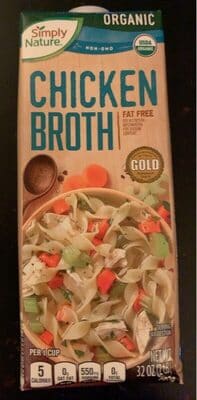
Simply Nature Free Range Chicken Broth
Score
- Ultra-processed
- Contains seed oils
- Certified organic
Why it scores 81
Simply Nature Free Range Chicken Broth scores 81 out of 100 (Excellent) under GoodSwap’s published rules. What moved the score most:
- minus 18 points Ultra-processed (NOVA 4): Classified NOVA 4: made with industrial ingredients and additives. Strong
- plus 5 points Certified organic: Carries a certified-organic label. Info
- minus 2.5 points Yeast extract: An additive class typical of ultra-processed foods (NOVA group 4). Info
Every line of the math is on The Receipt below, with its evidence tier and sources.
Better broth, stock and bouillon
-
 Organic bone broth made from free range chicken bones Bonafide Provisions · 24 fl oz/1.5 PT Not ultra-processed · No seed oils Score 100 out of 100 , 19 points higher
 -
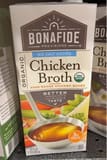 No salt added chicken broth Bonafide Provisions · 32 fl oz Not ultra-processed · No seed oils Score 100 out of 100 , 19 points higher
 -
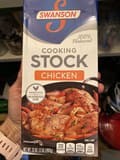 Chicken Stock Swanson · 32 oz Not ultra-processed · No seed oils Score 100 out of 100 , 19 points higher
 -
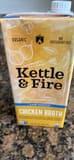 Chicken Broth Kettle & Fire · 32 oz Not ultra-processed · No seed oils Score 100 out of 100 , 19 points higher
 -
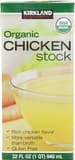 Organic chicken stock Kirkland · 32 fl oz Not ultra-processed · No seed oils Score 100 out of 100 , 19 points higher
The same kind of product, at least 10 points higher, sold in the US. Never paid placements.
The Receipt
Free Range Chicken Broth
Ingredients
- Yeast extract minus 2.5 points
- Canola oil minus 2.5 points
Processing
- Ultra-processed (NOVA 4) minus 18 points
Nutrition per 100 g
- Salt 0.5 g / 100 g minus 1 points
Bonuses
- Certified organic plus 5 points
100 − 19 = 81
Nutrition per 100 g
| Energy | 5 kcal |
|---|---|
| Fat | 0 g |
| Carbohydrates | 0 g |
| Protein | 0.4 g |
| Salt | 0.5 g |
Serving: 1 serving (100 g)
Ingredients
- chicken broth
- chicken flavor
- sea salt
- carrot juice concentrate
- yeast extract
- onion nice concentrate
- onion powder
- potato flour
- garlic powder
- tomato paste
- turmeric
- carrot powder
- canola oil
- spice* and flavor
- or anic (not recognized)
- lusively dv batavia il 60510 (not recognized)
Label text, as published
chicken broth*, chicken flavor*, sea salt, carrot juice concentrate*, yeast extract, onion nice concentrate*, onion powder*, potato flour*, garlic powder*, tomato paste*, turmeric*, carrot powder, canola oil*, spice* and flavor*, *or anic, lusively dv batavia il 60510
Allergens and diets
- Not vegan
- Not vegetarian
- Palm-oil-free
Always check the package: recipes change.
More from Simply Nature
-
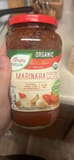 Marinara Pasta Sauce Simply Nature Score 91 out of 100 Excellent
 -
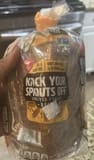 Sprouted 7 Grain Bread Simply Nature · 16 oz Score 47 out of 100 Okay
 -
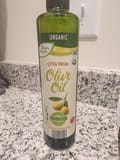 Organic Extra Virgin Olive Oil Simply Nature Score 100 out of 100 Excellent
 -
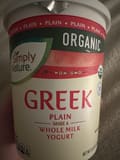 Greek Plain Grade A Whole Milk Yogurt Simply Nature · 32 oz Score 100 out of 100 Excellent
Sources
-
“replacement of saturated fat in the diet with linoleic acid effectively lowers serum cholesterol but does not support the hypothesis that this translates to a lower risk of death from coronary heart disease or all causes.”
doi.org
-
“These data provide support for current recommendations to replace saturated fat with polyunsaturated fat for primary prevention of CHD.”
doi.org
-
“For adults, WHO recommends less than 2000 mg/day of sodium (equivalent to less than 5 g/day salt), or just under a teaspoon.”
who.int
-
7 CFR 205.102 Use of the term "organic" (National Organic Program)
“Any agricultural product that is sold, labeled, or represented as “100 percent organic,” “organic,” or “made with organic (specified ingredients or food group(s))” must be: (a) Produced in accordance with the requirements specified in § 205.101 or §§ 205.202 through 205.207”
ecfr.gov
-
“Greater exposure to ultra-processed food was associated with a higher risk of adverse health outcomes, especially cardiometabolic, common mental disorder, and mortality outcomes.”
doi.org