Sodas
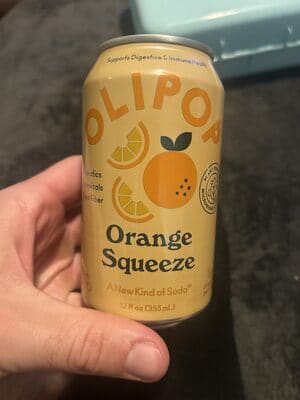
OLIPOP Orange Soda
12 fl oz
Score
- Ultra-processed
- Contains non-nutritive sweeteners
- Contains added sugars
Why it scores 47
OLIPOP Orange Soda scores 47 out of 100 (Okay) under GoodSwap’s published rules. What moved the score most:
- minus 20 points Fruit juice concentrate (sweetener): An added sugar. Strong
- minus 18 points Ultra-processed (NOVA 4): Classified NOVA 4: made with industrial ingredients and additives. Strong
- minus 4.5 points 4 kinds of ultra-processing markers: Industrial additive classes found: bulking agent, flavoring, industrial sugar or starch hydrolysate and non-nutritive sweetener. Emerging
Every line of the math is on The Receipt below, with its evidence tier and sources.
Better sodas
-
 Orange freeze A Shoc · 16 fl oz/473 mL Not ultra-processed · No added sugars Score 79 out of 100 , 32 points higher
 -
 Orange Mango Chili & Lime Soda Culture Pop · 12 fl oz/355 mL Not ultra-processed · No non-nutritive sweeteners Score 91 out of 100 , 44 points higher
 -
 Orange Cream Zevia Kidz Zevia · 7.5 fl oz (222 mL) No added sugars · No fruit juice concentrate (sweetener) Score 76 out of 100 , 29 points higher
 -
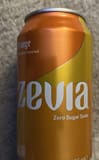 Orange Soda Zevia · 12 fl oz/355 mL No added sugars · No fruit juice concentrate (sweetener) Score 76 out of 100 , 29 points higher
 -
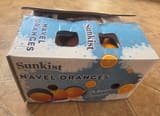 Navel Oranges Sunkist · 10 lb, or 4.5 kg (16 oranges) Not ultra-processed · No non-nutritive sweeteners Score 100 out of 100 , 53 points higher
The same kind of product, at least 10 points higher, sold in the US. Never paid placements.
The Receipt
Orange Soda
Ingredients
- Fruit juice concentrate (sweetener) minus 20 points
- Inulin (chicory root fiber) minus 2.5 points
- Stevia (steviol glycosides) minus 2.5 points
- Natural flavors minus 1.5 points
Processing
- Ultra-processed (NOVA 4) minus 18 points
- 4 kinds of ultra-processing markers minus 4.5 points
Nutrition per 100 ml
- Sugars 1.4 g / 100 ml minus 3 points
- Energy 13 kcal / 100 ml minus 1 points
100 − 53 = 47
Can’t score above 79. Contains fruit juice concentrate (sweetener), an ingredient of high concern. [1][2][3]
Nutrition per 100 ml
| Energy | 13 kcal |
|---|---|
| Fat | 0 g |
| Carbohydrates | 4.5 g |
| Sugars | 1.4 g |
| Added sugars | 0.3 g |
| Fiber | 2.5 g |
| Protein | 0 g |
| Salt | 0 g |
Serving: 1 can (355 ml)
Ingredients
- CARBONATED WATER
- OLISMART (CASSAVA ROOT FIBER, CHICORY ROOT INULIN, JERUSALEM ARTICHOKE INULIN, NOPAL CACTUS, CALENDULA FLOWER, KUDZU ROOT, MARSHMALLOW ROOT, SLIPPERY ELM BARK) (not recognized)
- LEMON JUICE
- APPLE JUICE CONCENTRATE (high concern)
- MANDARIN JUICE CONCENTRATE
- CASSAVA ROOT SYRUP
- CLEMENTINE JUICE CONCENTRATE (not recognized)
- ROSE HIP (not recognized)
- ACEROLA CHERRY
- STEVIA LEAF
- HIMALAYAN PINK SALT
- NATURAL ORANGE FLAVOR
- EXTRACT (not recognized)
Label text, as published
CARBONATED WATER, OLISMART (CASSAVA ROOT FIBER, CHICORY ROOT INULIN, JERUSALEM ARTICHOKE INULIN, NOPAL CACTUS*, CALENDULA FLOWER*, KUDZU ROOT*, MARSHMALLOW ROOT*, SLIPPERY ELM BARK*), LEMON JUICE, APPLE JUICE CONCENTRATE, MANDARIN JUICE CONCENTRATE, CASSAVA ROOT SYRUP, CLEMENTINE JUICE CONCENTRATE, ROSE HIP*, ACEROLA CHERRY*, STEVIA LEAF*, HIMALAYAN PINK SALT, NATURAL ORANGE FLAVOR*, *EXTRACT
More sodas on GoodSwap
-
 Zero Ultra Monster Energy · 1 can (16 oz) Ultra-processedContains non-nutritive sweetenersContains sugar alcoholsContains caffeine Score 51 out of 100 Okay
 -
 Strawberry Lemonade Prebiotic Soda Poppi · 355 mL / 12 oz Ultra-processedContains non-nutritive sweetenersContains added sugars Score 49 out of 100 Okay
 -
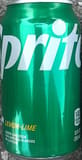 Soda Lemon-lime Sprite · 12 fl oz (355 mL) Ultra-processedContains added sugars Score 34 out of 100 Poor
 -
 Ginger Lime Poppi · 12 fl oz Ultra-processedContains non-nutritive sweetenersContains added sugars Score 49 out of 100 Okay
 -
 Java Monster Coffee + Energy Mean Bean · 15 fl oz Ultra-processedContains non-nutritive sweetenersContains added sugarsContains emulsifiers studied for gut effects Score 8 out of 100 Bad
 -
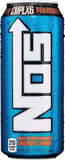 High Performance Energy Drink NOS · 16 fl oz (473 mL) Dye with an EU warning labelContains synthetic dyesUltra-processedContains non-nutritive sweeteners Score 7 out of 100 Bad
More from OLIPOP
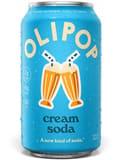
Sources
-
Guideline: sugars intake for adults and children
“In both adults and children, WHO recommends reducing the intake of free sugars to less than 10% of total energy intake”
who.int
-
Dietary Guidelines for Americans, 2025–2030
“Limit foods and beverages that include artificial flavors, petroleum-based dyes, artificial preservatives, and low-calorie non-nutritive sweeteners.”
cdn.realfood.gov
-
Added and free sugars should be as low as possible
“Sugar consumption is a known cause of dental caries.”
efsa.europa.eu
-
WHO advises not to use non-sugar sweeteners for weight control in newly released guideline
“The recommendation is based on the findings of a systematic review of the available evidence which suggests that use of NSS does not confer any long-term benefit in reducing body fat in adults or children.”
who.int
-
21 CFR 101.22 Foods; labeling of spices, flavorings, colorings and chemical preservatives
“whose significant function in food is flavoring rather than nutritional.”
ecfr.gov
-
“Greater exposure to ultra-processed food was associated with a higher risk of adverse health outcomes, especially cardiometabolic, common mental disorder, and mortality outcomes.”
doi.org