Canned foods
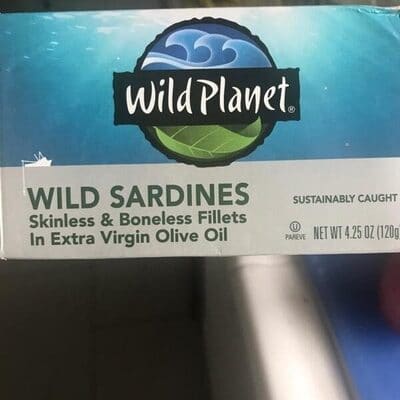
Wild Planet WILD SARDINES Skinless & Boneless Fillets In Extra Virgin Olive Oil
4.25 oz/120 g
Score
- Certified organic
- No additives
- Seed-oil free
Why it scores 99
Wild Planet WILD SARDINES Skinless & Boneless Fillets In Extra Virgin Olive Oil scores 99 out of 100 (Excellent) under GoodSwap’s published rules. What moved the score most:
- minus 8 points Processed (NOVA 3): Classified NOVA 3: processed with added salt, sugar or oil. Emerging
- plus 5 points Certified organic: Carries a certified-organic label. Info
- plus 4 points Protein 24.7 g / 100 g: A good source of protein. Info
Every line of the math is on The Receipt below, with its evidence tier and sources.
The Receipt
WILD SARDINES Skinless & Boneless Fillets In Extra Virgin Olive Oil
Processing
- Processed (NOVA 3) minus 8 points
Nutrition per 100 g
- Saturated fat 2.4 g / 100 g minus 3 points
- Salt 0.6 g / 100 g minus 1 points
- Energy 224 kcal / 100 g minus 1 points
- Protein 24.7 g / 100 g plus 4 points
Bonuses
- Certified organic plus 5 points
- No additives plus 3 points
100 − 1 = 99
Nutrition per 100 g
| Energy | 224 kcal |
|---|---|
| Fat | 14.1 g |
| Saturated fat | 2.4 g |
| Trans fat | 0 g |
| Carbohydrates | 0 g |
| Sugars | 0 g |
| Added sugars | 0 g |
| Fiber | 0 g |
| Protein | 24.7 g |
| Salt | 0.6 g |
Serving: 3 ONZ (85 g)
Ingredients
Label text, as published
SARDINES (SARDINA PILCHARDUS), ORGANIC EXTRA VIRGIN OLIVE OIL AND SEA SALT.
Allergens and diets
Contains: Fish
- Not vegan
- Not vegetarian
- Gluten-free
- Palm-oil-free
Always check the package: recipes change.
More canned foods on GoodSwap
-
 Chopped clams in clam juice Bumble Bee Foods Llc · 6.5 oz Ultra-processedHigh in saltContains added sugars Score 50 out of 100 Okay
 -
 Alaskan Pink Salmon Chicken Of The Sea · 14.75 oz/418 g No additives Score 95 out of 100 Excellent
 - Pike'N Whitefish R.R.J. Brokerage Corp. · 24 oz Ultra-processedHigh in saltContains added sugarsContains emulsifiers studied for gut effects Score 48 out of 100 Okay
-
 Smoked Oyster Rockefeller Style Bumble Bee · 106 g Contains seed oilsNo additives Score 90 out of 100 Excellent
 - Sardines in soybean oil Beach Cliff High in saturated fatContains seed oilsNo additives Score 79 out of 100 Good
-
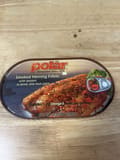 Smoked peppered herring fillets in natural juice Polar · 200 g Ultra-processedContains added sugarsContains seed oils Score 26 out of 100 Poor
More from Wild Planet
-
 Albacore Tuna Wild Planet · 5 oz (142 g) Score 97 out of 100 Excellent
 -
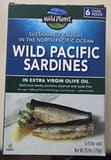 Wild Pacific Sardines Wild Planet · 6/4.4 oz cans (26.4 oz (750 g)) Score 90 out of 100 Excellent
 -
 WILD SARDINES In Extra Virgin Olive Oil with Lemon - Lightly Smoked Wild Planet · 4.4 oz/125 g Score 90 out of 100 Excellent
 - Albacore Wild Tuna In Extra Virgin Olive Oil Wild Planet · 5 oz/142 g Score 94 out of 100 Excellent
Sources
-
Saturated fatty acid and trans-fatty acid intake for adults and children: WHO guideline
“WHO recommends that adults and children reduce saturated fatty acid intake to 10% of total energy intake (strong recommendation).”
who.int
-
“For adults, WHO recommends less than 2000 mg/day of sodium (equivalent to less than 5 g/day salt), or just under a teaspoon.”
who.int
-
Dietary Guidelines for Americans, 2025–2030
“Limit foods and beverages that include artificial flavors, petroleum-based dyes, artificial preservatives, and low-calorie non-nutritive sweeteners.”
cdn.realfood.gov
-
7 CFR 205.102 Use of the term "organic" (National Organic Program)
“Any agricultural product that is sold, labeled, or represented as “100 percent organic,” “organic,” or “made with organic (specified ingredients or food group(s))” must be: (a) Produced in accordance with the requirements specified in § 205.101 or §§ 205.202 through 205.207”
ecfr.gov