Food
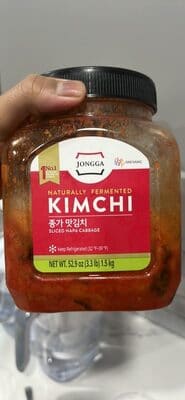
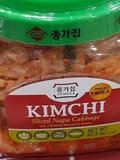
Jongga Kimchi, Sliced Napa Cabbage
1.5 kg
Score
- Ultra-processed
- High in salt
- Contains sugar alcohols
Why it scores 77
Jongga Kimchi, Sliced Napa Cabbage scores 77 out of 100 (Good) under GoodSwap’s published rules. What moved the score most:
- minus 18 points Ultra-processed (NOVA 4): Classified NOVA 4: made with industrial ingredients and additives. Strong
- minus 5 points Salt 1.6 g / 100 g: High in salt. Strong
- minus 2.5 points Sorbitol: Large amounts can have a laxative effect; the EU requires a label statement above 10% added polyols and the US for some polyols above set intakes. Regulatory
Every line of the math is on The Receipt below, with its evidence tier and sources.
Better relish, peppers and pickled vegetables
-
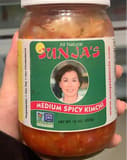 Medium Spicy Kimchi Sunja's Oriental Foods Inc · 16 oz Not ultra-processed · Less salt Score 100 out of 100 , 23 points higher
 -
 Sliced Fire Roasted Red Peppers Hannaford · 24 oz Not ultra-processed · Less salt Score 99 out of 100 , 22 points higher
 -
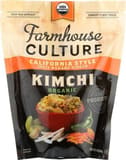 Spicy Wakame Ginger Kimchi Farmhouse Culture · 16 oz/1 lb/454 g Not ultra-processed · Less salt Score 100 out of 100 , 23 points higher
 -
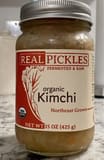 Organic Kimchi Kimchi · 15 oz Not ultra-processed · Less salt Score 97 out of 100 , 20 points higher
The same kind of product, at least 10 points higher, sold in the US. Never paid placements.
The Receipt
Kimchi, Sliced Napa Cabbage
Ingredients
- Sorbitol minus 2.5 points
Processing
- Ultra-processed (NOVA 4) minus 18 points
Nutrition per 100 g
- Salt 1.6 g / 100 g minus 5 points
- Fiber 3.6 g / 100 g plus 2 points
100 − 23.5 = 76.5 → 77
Can’t score above 79. High in salt (above the front-of-pack "high" level). [6]
Nutrition per 100 g
| Energy | 36 kcal |
|---|---|
| Fat | 0 g |
| Saturated fat | 0 g |
| Trans fat | 0 g |
| Carbohydrates | 7.1 g |
| Sugars | 3.6 g |
| Added sugars | 3.6 g |
| Fiber | 3.6 g |
| Protein | 3.6 g |
| Salt | 1.6 g |
Serving: 1 Portion (28 g)
Ingredients
- NAPA CABBAGE
- RADISH
- RICE PASTE WATER
- RICE POWDER)
- KELP BASE SAUCE (KELP EXTRACT, SORBITOL)
- RED PEPPER POWDER
- GARLIC
- FERMENTED ANCHOVY SAUCE (ANCHOW, SALT)
- SALT
- KOREAN LEEK
- ONION
- CHIVES
- FERMENTED SHRIMP SAUCE (SHRIMP, SALT, LACTIC ACID BACTERIA, GINGER CONTAINS FISH(ANCHOVY), SHRIMP)
Label text, as published
• NAPA CABBAGE, RADISH, RICE PASTE WATER, RICE POWDER), KELP BASE SAUCE(KELP EXTRACT, SORBITOL), RED PEPPER POWDER, GARLIC, FERMENTED ANCHOVY SAUCE (ANCHOW, SALT), SALT, KOREAN LEEK, ONION, CHIVES, FERMENTED SHRIMP SAUCE(SHRIMP, SALT, LACTIC ACID BACTERIA, GINGER CONTAINS FISH(ANCHOVY), SHRIMP
Allergens and diets
Contains: Fish, Crustaceans
- Not vegan
- Not vegetarian
- Palm-oil-free
Always check the package: recipes change.
More from Jongga
Sources
-
Regulation (EU) No 1169/2011, Annex III point 2.4 (foods with more than 10 % added polyols)
“‘excessive consumption may produce laxative effects’.”
eur-lex.europa.eu
-
“For adults, WHO recommends less than 2000 mg/day of sodium (equivalent to less than 5 g/day salt), or just under a teaspoon.”
who.int
-
Dietary Guidelines for Americans, 2025–2030
“Limit foods and beverages that include artificial flavors, petroleum-based dyes, artificial preservatives, and low-calorie non-nutritive sweeteners.”
cdn.realfood.gov
-
“Table 3: Criteria for drinks (per 100ml)”
assets.publishing.service.gov.uk
-
“Greater exposure to ultra-processed food was associated with a higher risk of adverse health outcomes, especially cardiometabolic, common mental disorder, and mortality outcomes.”
doi.org