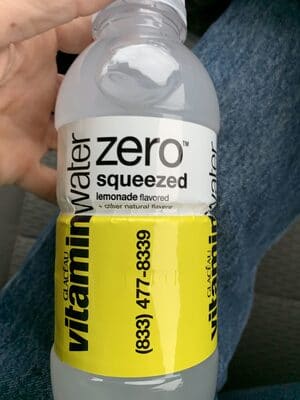
Artificially sweetened beverages
Glaceau Vitaminwater Zero Squeezed Lemonade
16.9 fl oz
Score
- Ultra-processed
- Contains non-nutritive sweeteners
Why it scores 72
Glaceau Vitaminwater Zero Squeezed Lemonade scores 72 out of 100 (Good) under GoodSwap’s published rules. What moved the score most:
- minus 18 points Ultra-processed (NOVA 4): Classified NOVA 4: made with industrial ingredients and additives. Strong
- minus 2.5 points Natural flavors: "Natural flavor" is a legal category (21 CFR 101.22(a)(3)): flavor substances from spices, fruits, vegetables, meat, dairy or fermentation. Info
- minus 2.5 points Phosphoric acid: EFSA (2019) set a group ADI for phosphates of 40 mg/kg body weight (as phosphorus) and noted that infants, toddlers and children may exceed it. Strong
Every line of the math is on The Receipt below, with its evidence tier and sources.
Better flavored and vitamin water
-
 Nutrient enhanced water Core · 23.9 fl oz/707 mL Not ultra-processed · No non-nutritive sweeteners Score 100 out of 100 , 28 points higher
 -
 Watermelon infused water Hint · 6 × 16 fl oz Not ultra-processed · No non-nutritive sweeteners Score 100 out of 100 , 28 points higher
 -
 Hint Hint · 1.5 gal/5.7 L/1 PT Not ultra-processed · No non-nutritive sweeteners Score 100 out of 100 , 28 points higher
 -
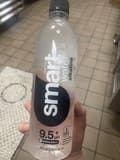 Smartwater Alkaline Smartwater · 20 fl oz Not ultra-processed · No non-nutritive sweeteners Score 98 out of 100 , 26 points higher
 -
 Cucumber Lime Glaceau Not ultra-processed · No non-nutritive sweeteners Score 98 out of 100 , 26 points higher
The same kind of product, at least 10 points higher, sold in the US. Never paid placements.
The Receipt
Vitaminwater Zero Squeezed Lemonade
Ingredients
- Natural flavors minus 2.5 points
- Phosphoric acid minus 2.5 points
- Stevia (steviol glycosides) minus 2.5 points
- Monk fruit extract minus 1.5 points
Processing
- Ultra-processed (NOVA 4) minus 18 points
- 2 kinds of ultra-processing markers minus 1.5 points
100 − 28.5 = 71.5 → 72
Nutrition per 100 ml
| Energy | 0 kcal |
|---|---|
| Fat | 0 g |
| Saturated fat | 0 g |
| Carbohydrates | 0.2 g |
| Sugars | 0 g |
| Added sugars | 0 g |
| Protein | 0 g |
| Salt | 0 g |
Serving: 500.0g
Ingredients
- Reverse osmosis water
- electrolytes (calcium and magnesium lactates and calcium and potassium phosphates)
- citric acid
- natural flavors
- vitamins A
- C (not recognized)
- E (not recognized)
- B3
- B5
- B6
- B7 (retinyl palmitate, ascorbic acid, alpha-tocopheryl acetate, niacinamide, calcium pantothenate, pyridoxine hydrochloride, biotin) (not recognized)
- phosphoric acid
- stevia leaf extract
- monk fruit extract
- zinc gluconate
- sodium selenate
Label text, as published
Reverse osmosis water, less than 0.5% of: electrolytes (calcium and magnesium lactates and calcium and potassium phosphates), citric acid, natural flavors, vitamins A, C, E, B3, B5, B6, B7 (retinyl palmitate, ascorbic acid, alpha-tocopheryl acetate, niacinamide, calcium pantothenate, pyridoxine hydrochloride, biotin), phosphoric acid, stevia leaf extract, monk fruit extract, zinc gluconate, sodium selenate.
Allergens and diets
- Palm-oil-free
Always check the package: recipes change.
More artificially sweetened beverages on GoodSwap
-
 Prime Hydration Drink - Blue Raspberry Prime Hydration · 500 mL Ultra-processedContains non-nutritive sweeteners Score 67 out of 100 Good
 -
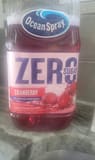 Zero Sugar Cranberry Juice Ocean Spray · 64 oz Ultra-processedContains non-nutritive sweeteners Score 75 out of 100 Good
 -
 Plant protein shake Orgain · 11 oz Ultra-processedContains non-nutritive sweetenersContains seed oilsContains whole grains Score 58 out of 100 Okay
 -
 Watermelon lime smash’r Bubbl'R · 12 fl oz Ultra-processedContains non-nutritive sweetenersContains sugar alcoholsContains caffeine Score 55 out of 100 Okay
 -
 Vanilla Naturally Flavored Syrup Torani · 12.7 fl oz Ultra-processedContains non-nutritive sweeteners Score 52 out of 100 Okay
 -
 LIGHT No Pulp Tropicana Ultra-processedContains non-nutritive sweetenersNo synthetic dyes Score 59 out of 100 Okay
More from Glaceau
-
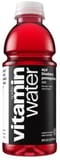 Açai-Blueberry-Pomegranate XXX Nutrient Enhanced Water Glaceau · 20 fl oz Score 18 out of 100 Bad
 -
 SmartWater Glaceau · 20 oz Score 100 out of 100 Excellent
 -
 Vitamin Water Glaceau · 20 oz Score 67 out of 100 Good
 -
 Essential electrolyte enhanced water w vitamins Glaceau · 20 fl oz 591 mL Score 12 out of 100 Bad
Sources
-
21 CFR 101.22 Foods; labeling of spices, flavorings, colorings and chemical preservatives
“whose significant function in food is flavoring rather than nutritional.”
ecfr.gov
-
EFSA issues new advice on phosphates
“We estimated that dietary exposure to phosphates may exceed the new ADI for infants, toddlers and children with average consumption of phosphates in their diet.”
efsa.europa.eu
-
WHO advises not to use non-sugar sweeteners for weight control in newly released guideline
“The recommendation is based on the findings of a systematic review of the available evidence which suggests that use of NSS does not confer any long-term benefit in reducing body fat in adults or children.”
who.int
-
Dietary Guidelines for Americans, 2025–2030
“Limit foods and beverages that include artificial flavors, petroleum-based dyes, artificial preservatives, and low-calorie non-nutritive sweeteners.”
cdn.realfood.gov
-
“Greater exposure to ultra-processed food was associated with a higher risk of adverse health outcomes, especially cardiometabolic, common mental disorder, and mortality outcomes.”
doi.org