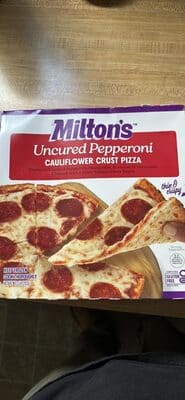
Frozen pizzas
Milton's Uncured Pepperoni Cauliflower Crust Pizza
10 oz
Score
- Ultra-processed
- High in salt
- High in saturated fat
- Contains nitrites or nitrates
- Contains added sugars
- No synthetic dyes
- Contains whole grains
Why it scores 20
Milton's Uncured Pepperoni Cauliflower Crust Pizza scores 20 out of 100 (Poor) under GoodSwap’s published rules. What moved the score most:
- minus 20 points Sugar: An added sugar. Strong
- minus 20 points Sausage and cured meats: IARC classifies processed meat (cured, salted, smoked or fermented) as Group 1, based on colorectal cancer; each 50 g eaten daily is linked to an 18% higher risk. Regulatory
- minus 18 points Ultra-processed (NOVA 4): Classified NOVA 4: made with industrial ingredients and additives. Strong
Every line of the math is on The Receipt below, with its evidence tier and sources.
Better pizza
-
 Cauliflower Crust Cheese Pizza Member's Mark · 30 oz Not ultra-processed · Less salt Score 79 out of 100 , 59 points higher
 -
 crispy thin crust Margherita pizza Udi's Gluten Free · 17.4 oz/493 g Not ultra-processed · Less salt Score 62 out of 100 , 42 points higher
 -
 Wood-Fired Crust Pizza Spinach & Goat Cheese Good & Gather Signature · 17.5 oz/497 g Not ultra-processed · Less salt Score 69 out of 100 , 49 points higher
 -
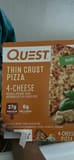 Thin Crust Pizza 4-Cheese Quest · 11 oz Less salt · No nitrites or nitrates Score 59 out of 100 , 39 points higher
 -
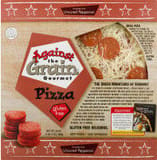 Against the grain pepperoni pizza Against the Grain Gourmet Not ultra-processed · Less salt Score 63 out of 100 , 43 points higher
The same kind of product, at least 10 points higher, sold in the US. Never paid placements.
The Receipt
Uncured Pepperoni Cauliflower Crust Pizza
Ingredients
- Sugar minus 20 points
- Sausage and cured meats minus 20 points
- Cultured celery powder (natural nitrite source) minus 7.5 points
- Modified starch minus 1.5 points
- Xanthan gum minus 1 points
Processing
- Ultra-processed (NOVA 4) minus 18 points
- 3 kinds of ultra-processing markers minus 3 points
Nutrition per 100 g
- Saturated fat 5.6 g / 100 g minus 5 points
- Salt 1.6 g / 100 g minus 5 points
- Energy 232 kcal / 100 g minus 1 points
- Protein 12 g / 100 g plus 2 points
100 − 80 = 20
Can’t score above 79. Contains sugar, an ingredient of high concern. [1][2][3][4][5]
Can’t score above 79. High in saturated fat and salt (above the front-of-pack "high" level). [11]
Nutrition per 100 g
| Energy | 232 kcal |
|---|---|
| Fat | 10.6 g |
| Saturated fat | 5.6 g |
| Trans fat | 0 g |
| Carbohydrates | 21.5 g |
| Sugars | 4.2 g |
| Added sugars | 0.7 g |
| Fiber | 1.4 g |
| Protein | 12 g |
| Salt | 1.6 g |
Serving: 0.5 pizza (142 g)
Ingredients
- CAULIFLOWER CRUST (CAULIFLOWER, LOW MOISTURE MOZZARELLA CHEESE, RICE FLOUR, TAPIOCA STARCH, RICE STARCH, EGG WHITES, MODIFIED RICE STARCH, YEAST, CANE SUGAR, SALT, CULTURED BROWN RICE, GARLIC POWDER, SPICES, XANTHAN GUM, BROWN RICE FLOUR, CITRIC ACID, LACTIC ACID)
- LOW MOISTURE PART SKIM MOZZARELLA CHEESE (PASTEURIZED PART SKIM MILK, CHEESE CULTURES, SALT, ENZYMES)
- TOMATO SAUCE (WATER, TOMATO PASTE, SEASONING, SEA SALT)
- UNCURED PEPPERONI (PORK, BEEF, SEA SALT, WATER, SPICE, TURBINADO SUGAR, NATURAL HARDWOOD SMOKED SUGAR, CULTURED CELERY POWDER, CHERRY JUICE POWDER, LIME JUICE CONCENTRATE, OLEORESIN OF PAPRIKA, LACTIC ACID STARTER CULTURE, ROSEMARY EXTRACT) (high concern)
- PECORINO ROMANO AND PARMESAN CHEESE BLEND (PECORINO ROMANO CHEESE, PARMESAN CHEESE)
Label text, as published
CAULIFLOWER CRUST (CAULIFLOWER, LOW MOISTURE MOZZARELLA CHEESE {PASTEURIZED MILK, CHEESE CULTURES, SALT, ENZYME}, RICE FLOUR, TAPIOCA STARCH, RICE STARCH, EGG WHITES, MODIFIED RICE STARCH, YEAST, CONTAINS LESS THAN 2% OF THE FOLLOWING: CANE SUGAR, SALT, CULTURED BROWN RICE, GARLIC POWDER, SPICES, XANTHAN GUM, BROWN RICE FLOUR, CITRIC ACID, LACTIC ACID), LOW MOISTURE PART SKIM MOZZARELLA CHEESE (PASTEURIZED PART SKIM MILK, CHEESE CULTURES, SALT, ENZYMES), TOMATO SAUCE (WATER, TOMATO PASTE, SEASONING {CANE SUGAR, SEA SALT, DEHYDRATED ONION AND GARLIC, SPICES}, SEA SALT), UNCURED PEPPERONI* (PORK, BEEF, SEA SALT, WATER, CONTAINS LESS THAN 2% OF THE FOLLOWING: SPICE, TURBINADO SUGAR, NATURAL HARDWOOD SMOKED SUGAR, CULTURED CELERY POWDER, CHERRY JUICE POWDER, LIME JUICE CONCENTRATE, OLEORESIN OF PAPRIKA, LACTIC ACID STARTER CULTURE, ROSEMARY EXTRACT), PECORINO ROMANO AND PARMESAN CHEESE BLEND (PECORINO ROMANO CHEESE {PASTEURIZED SHEEP'S MILK, SALT, ENZYMES}, PARMESAN CHEESE {PASTEURIZED MILK, CHEESE CULTURES, SALT, ENZYMES}).
Allergens and diets
Contains: Milk, Egg, Celery
- Not vegan
- Not vegetarian
- Palm-oil-free
Always check the package: recipes change.
More frozen pizzas on GoodSwap
-
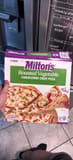 Roasted Vegetable Cauliflower Crust Pizza Milton's · 2 pizzas Ultra-processedContains added sugarsContains whole grains Score 45 out of 100 Okay
 -
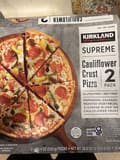 Supreme Cauliflower Crust Pizza Kirkland Signature · 38.8 oz/1.10 kg Ultra-processedHigh in saltHigh in saturated fatContains nitrites or nitrates Score 17 out of 100 Bad
 -
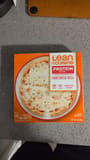 Four Cheese Pizza Lean Cuisine · 6 oz Ultra-processedContains added sugarsContains seed oils Score 29 out of 100 Poor
 -
 Mama Cozzi's Pizza Kitchen Pizza Mama Cozzi's Pizza Kitchen Ultra-processedContains added sugarsContains seed oilsContains whole grains Score 48 out of 100 Okay
 -
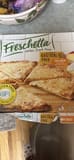 Four Cheese Pizza Freschetta · 17.5 oz/496 g Ultra-processedHigh in saturated fatContains added sugarsContains seed oils Score 34 out of 100 Poor
 -
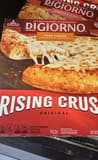 Rising Crust Original Four Cheese Digiorno · 139 g Ultra-processedContains added sugarsContains emulsifiers studied for gut effectsContains seed oils Score 48 out of 100 Okay
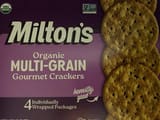
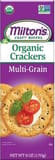
More from Milton's
Sources
-
Guideline: sugars intake for adults and children
“In both adults and children, WHO recommends reducing the intake of free sugars to less than 10% of total energy intake”
who.int
-
Dietary Guidelines for Americans, 2025–2030
“Limit foods and beverages that include artificial flavors, petroleum-based dyes, artificial preservatives, and low-calorie non-nutritive sweeteners.”
cdn.realfood.gov
-
Added and free sugars should be as low as possible
“Sugar consumption is a known cause of dental caries.”
efsa.europa.eu
-
IARC Monographs evaluate consumption of red meat and processed meat (Press Release No. 240)
“Processed meat was classified as carcinogenic to humans (Group 1), based on sufficient evidence in humans that the consumption of processed meat causes colorectal cancer.”
iarc.who.int
-
Agents Classified by the IARC Monographs, Volumes 1–142 (List of Classifications)
monographs.iarc.who.int
-
“the presence of nitrites and nitrates in foods can give rise to the formation of nitrosamines some of which are carcinogenic.”
eur-lex.europa.eu
-
Saturated fatty acid and trans-fatty acid intake for adults and children: WHO guideline
“WHO recommends that adults and children reduce saturated fatty acid intake to 10% of total energy intake (strong recommendation).”
who.int
-
“For adults, WHO recommends less than 2000 mg/day of sodium (equivalent to less than 5 g/day salt), or just under a teaspoon.”
who.int
-
“Table 3: Criteria for drinks (per 100ml)”
assets.publishing.service.gov.uk
-
“Greater exposure to ultra-processed food was associated with a higher risk of adverse health outcomes, especially cardiometabolic, common mental disorder, and mortality outcomes.”
doi.org