Beauty & personal care
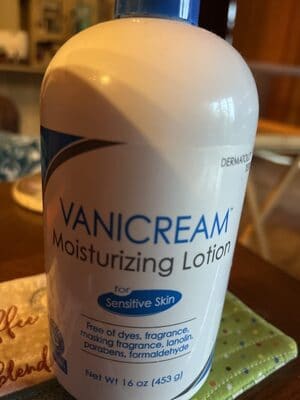
Vanicream Moisturizing Lotion
Score
- May contain traces of 1,4-dioxane
Why it scores 97
Vanicream Moisturizing Lotion scores 97 out of 100 (Excellent) under GoodSwap’s published rules. What moved the score most:
- minus 1 points Mineral oil and petrolatum: The EU prohibits petrolatum and mineral oils unless the full refining history is known and the source is not a carcinogen. Regulatory
- minus 1 points Propylene glycol: Named Allergen of the Year 2018 by the American Contact Dermatitis Society; it can cause irritant and allergic reactions. Strong
- minus 1 points Polyethylene glycols (PEG) and ethoxylates: Ingredients named with PEG, -eth- or -oxynol- can carry trace 1,4-dioxane from manufacturing (IARC Group 2B). Strong
Every line of the math is on The Receipt below, with its evidence tier and sources.
The Receipt
Vanicream Moisturizing Lotion
Ingredients
- Mineral oil and petrolatum minus 1 points
- Propylene glycol minus 1 points
- Polyethylene glycols (PEG) and ethoxylates minus 1 points
- BHT (butylated hydroxytoluene) minus 0.5 points
100 − 3.5 = 96.5 → 97
Ingredients
- Water
- petrolatum
- propylene glycol
- cetearyl alcohol
- sorbitol
- ceteareth-20
- simethicone
- glyceryl stearate
- PEG-30 stearate
- sorbic acid
- BHT
Label text, as published
Water, petrolatum, propylene glycol, cetearyl alcohol, sorbitol, ceteareth-20, simethicone, glyceryl stearate, PEG-30 stearate, sorbic acid, BHT
Allergens and diets
- Palm-oil-free
Always check the package: recipes change.
Sources
-
Regulation (EC) No 1223/2009 of 30 November 2009 on cosmetic products
“cosmetic products shall not contain any of the following: (a) prohibited substances — prohibited substances listed in Annex II”
eur-lex.europa.eu
-
“Allergic and irritant contact dermatitis and systemic cutaneous reactions to PG, which has become an increasingly common ingredient, have been documented.”
doi.org
-
1,4-Dioxane in Cosmetics: A Manufacturing Byproduct
“1,4-dioxane forms as a byproduct during the manufacturing process of certain cosmetic ingredients.”
fda.gov
-
Agents Classified by the IARC Monographs, Volumes 1–142 (List of Classifications)
monographs.iarc.who.int
-
“the use of Homosalate should be restricted to face products (non-spray and pump spray products) only, up to a maximum concentration of 7,34 %.”
eur-lex.europa.eu