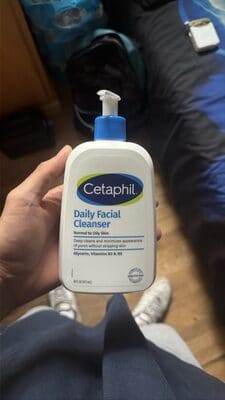
Cosmetic products
Cetaphil Daily Facial Cleanser
16 fl oz
Score
- Contains fragrance
Why it scores 93
Cetaphil Daily Facial Cleanser scores 93 out of 100 (Excellent) under GoodSwap’s published rules. What moved the score most:
- minus 5 points Fragrance (parfum): A single label term covers an undisclosed mixture. Regulatory
- minus 1 points Cocamidopropyl betaine: Rare contact allergy has been traced to manufacturing impurities (dimethylaminopropylamine, cocamidopropyl dimethylamine). Strong
- minus 1 points Sodium benzoate (cosmetic): The EU allows it up to 2.5% in rinse-off, 1.7% in oral and 0.5% in leave-on products, as benzoic acid (Annex V). Regulatory
Every line of the math is on The Receipt below, with its evidence tier and sources.
The Receipt
Daily Facial Cleanser
Ingredients
- Fragrance (parfum) minus 5 points
- Cocamidopropyl betaine minus 1 points
- Sodium benzoate (cosmetic) minus 1 points
100 − 7 = 93
Ingredients
- water
- glycerin
- cocamidopropyl betaine
- disodium laureth sulfosuccinate
- sodium cocoyl isethionate
- panthenol
- niacinamide
- pantolactone
- acrylates/c10-30 alkyl acrylate crosspolymer
- sodium benzoate
- masking fragrance (moderate concern)
- sodium chloride
- citric acid
Label text, as published
water, glycerin, cocamidopropyl betaine, disodium laureth sulfosuccinate, sodium cocoyl isethionate, panthenol, niacinamide, pantolactone, acrylates/c10-30 alkyl acrylate crosspolymer, sodium benzoate, masking fragrance, sodium chloride, citric acid
Allergens and diets
- Palm-oil-free
Always check the package: recipes change.
More cosmetic products on GoodSwap
More from Cetaphil
Sources
-
“when their concentration exceeds 0,001 % in leave-on products and 0,01 % in rinse-off products.”
eur-lex.europa.eu
-
Regulation (EC) No 1223/2009 of 30 November 2009 on cosmetic products
“cosmetic products shall not contain any of the following: (a) prohibited substances — prohibited substances listed in Annex II”
eur-lex.europa.eu
-
fda.gov
-
Occupational contact allergy to cocamidopropyl betaine and its impurities
“Contact allergy to cocamidopropyl betaine has been attributed to its impurities dimethylaminopropylamine and cocamidopropyl dimethylamine.”
doi.org