
Cakes
Kirkland Signature Tuxedo Chocolate Mousse Cake
Score
- Ultra-processed
- High in sugar
- High in saturated fat
- Contains added sugars
- Contains emulsifiers studied for gut effects
- Contains seed oils
- Contains palm oil
Why it scores 33
Kirkland Signature Tuxedo Chocolate Mousse Cake scores 33 out of 100 (Poor) under GoodSwap’s published rules. What moved the score most:
- minus 18 points Ultra-processed (NOVA 4): Classified NOVA 4: made with industrial ingredients and additives. Strong
- minus 14 points Sugars 41 g / 100 g: Very high in sugar. Strong
- minus 9 points Saturated fat 13 g / 100 g: Very high in saturated fat. Strong
Every line of the math is on The Receipt below, with its evidence tier and sources.
Better cakes and pies
-
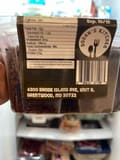 Vegan Chocolate Cake Dodah's Kitchen Not ultra-processed · Less saturated fat Score 78 out of 100 , 45 points higher
 -
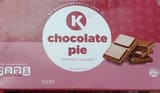 Chocolate Pie Circle K · 4 oz Not ultra-processed · No added sugars Score 74 out of 100 , 41 points higher
 -
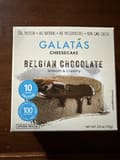 Belgian Chocolate Cheesecake (non-gmo Cheese) Galatás Not ultra-processed · Less sugar Score 70 out of 100 , 37 points higher
 -
 Frosted Chocolate Cake with Creamy Filling Baker's Treat No added sugars · No gut-studied emulsifiers Score 55 out of 100 , 22 points higher
 -
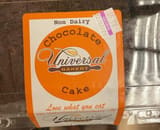 Chocolate Cake Universal Bakery · 18 oz Not ultra-processed · Less saturated fat Score 68 out of 100 , 35 points higher
The same kind of product, at least 10 points higher, sold in the US. Never paid placements.
The Receipt
Tuxedo Chocolate Mousse Cake
Ingredients
- Chocolate (sweetened, ingredient) minus 7.5 points
- Natural flavors minus 2.5 points
- Margarine minus 2.5 points
- Palm kernel oil minus 1.5 points
- Canola oil minus 1.5 points
- Mono- and diglycerides minus 1.5 points
- Polyglycerol esters of fatty acids minus 0.5 points
- Soy lecithin minus 0.5 points
Processing
- Ultra-processed (NOVA 4) minus 18 points
- 3 kinds of ultra-processing markers minus 3 points
Nutrition per 100 g
- Sugars 41 g / 100 g minus 14 points
- Saturated fat 13 g / 100 g minus 9 points
- Salt 0.8 g / 100 g minus 3 points
- Energy 463 kcal / 100 g minus 2 points
100 − 67 = 33
Can’t score above 79. High in fat, saturated fat and sugars (above the front-of-pack "high" level). [15]
Nutrition per 100 g
| Energy | 463 kcal |
|---|---|
| Fat | 27 g |
| Saturated fat | 13 g |
| Trans fat | 0 g |
| Carbohydrates | 53 g |
| Sugars | 41 g |
| Added sugars | 23.2 g |
| Fiber | 1.8 g |
| Protein | 5.3 g |
| Salt | 0.8 g |
Serving: 1 slice (99 g)
Ingredients
- tuxedo chocolate mousse #40706 cake ingredients crefim (cream. milk solids. celi ulose gel crrrageenan. cellulose gum). sugair. hater. eggs. enriched flour (hheat flour. niacin. iron. thiamine mononi tra te. ribofl fiuin. folic acid). cream cheese (cream. milk. nonffit milk. salt. gijar gun. profylene gl ycol alginate. car:rageenan. carob bea guh. bac terial cul ture:). chocolate products idairi. milk (not recognized)
- hhi te chocolate. chcicolatey coating & decorntions (chocolate liquor. sugar, whole milk. cocoa butter. fractionated paln kernel oil, hhey. nonfat milk. cocoa pohder. lactose. butter oil soy lecithin, natural flavor) (not recognized)
- margarine & shortening (noi ified palm & palm kernel ciil, canola & soybefin 0ils. hater. salt, hhev, mono - & diglycerides, polyglycerol esters of fatty ficids, soy lecithin. ci ric acid. natural flauor. uitamin a palmitate, be a-crotene (color). cholecal.ciferol1, cocoa powder, unsheetened chocolate. canola 01il, egg hhi tes. modiffied corn starch. caramel ccilor.nonfat dry milk. sodilim. dextrose. bicarbonate. brking pohder. molasses. silt. soy leci thin. sodium alginate. cellulose cgun. notural # artificial flauofs. manthan gun artificial colors forccred 40. bllie 2 lake. yellow 5 like. velloh reu 40 lae)
Label text, as published
tuxedo chocolate mousse #40706 cake ingredients crefim (cream. milk solids. celi ulose gel crrrageenan. cellulose gum). sugair. hater. eggs. enriched flour (hheat flour. niacin. iron. thiamine mononi tra te. ribofl fiuin. folic acid). cream cheese (cream. milk. nonffit milk. salt. gijar gun. profylene gl ycol alginate. car:rageenan. carob bea guh. bac terial cul ture:). chocolate products idairi. milk, hhi te chocolate. chcicolatey coating & decorntions (chocolate liquor. sugar, whole milk. cocoa butter. fractionated paln kernel oil, hhey. nonfat milk. cocoa pohder. lactose. butter oil soy lecithin, natural flavor), margarine & shortening [ noi ified palm & palm kernel ciil, canola & soybefin 0ils. hater. salt, hhev, mono - & diglycerides, polyglycerol esters of fatty ficids, soy lecithin. ci ric acid. natural flauor. uitamin a palmitate, be a-crotene (color). cholecal.ciferol1, cocoa powder, unsheetened chocolate. canola 01il, egg hhi tes. modiffied corn starch. caramel ccilor.nonfat dry milk. sodilim. dextrose. bicarbonate. brking pohder. molasses. silt. soy leci thin. sodium alginate. cellulose cgun. notural # artificial flauofs. manthan gun artificial colors forccred 40. bllie 2 lake. yellow 5 like. velloh reu 40 lae). medium chain trigil cer des. sunf lohi r lecitmin gellan gum. sodtum ehze at . 15.99 12/82a1 net ht 42 oz(2e
Allergens and diets
Contains: Milk, Soy, Egg
- Not vegan
- Not palm-oil-free
Always check the package: recipes change.
More cakes on GoodSwap
-
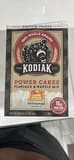 Power Cakes Flapjack & Waffle Mix Kodiak · 567 g High in saltContains added sugarsContains whole grains Score 68 out of 100 Good
 -
 Sponge Cake with Creamy Filling Hostess Twinkies · 385 g Dye with an EU warning labelContains synthetic dyesUltra-processedHigh in sugar Score 1 out of 100 Bad
 -
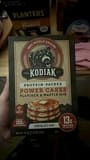 Power Cakes Flapjack & Waffle Mix Chocolate Chip Kodiak · 18 oz Ultra-processedHigh in saltContains added sugarsSeed-oil free Score 9 out of 100 Bad
 -
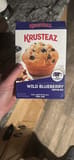 Wild Blueberry Muffin Mix Krusteaz · 384 gr Not permitted in some countriesUltra-processedHigh in sugarContains added sugars Score 1 out of 100 Bad
 - Fine cinnamon donuts Country Kitchen · 12 oz/340.5 g Not permitted in some countriesUltra-processedHigh in saturated fatContains added sugars Score 8 out of 100 Bad
-
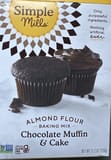 Chocolate Muffin & Cake Almond Flour Mix Simple Mills · 10.4 oz High in sugarHigh in saltContains added sugars Score 52 out of 100 Okay
More from Kirkland Signature
-
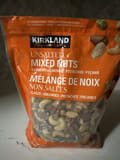 Unsalted Mixed Nuts Kirkland Signature · 1.13 kg Score 100 out of 100 Excellent
 -
 Purified Drinking Water Kirkland Signature · 500 mL Score 100 out of 100 Excellent
 -
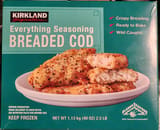 Everything Seasoning Breaded Cod Kirkland Signature · 1.13 kg Score 28 out of 100 Poor
 -
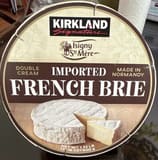 Imported French Brie Kirkland Signature Score 79 out of 100 Good
Sources
-
Guideline: sugars intake for adults and children
“In both adults and children, WHO recommends reducing the intake of free sugars to less than 10% of total energy intake”
who.int
-
21 CFR 101.22 Foods; labeling of spices, flavorings, colorings and chemical preservatives
“whose significant function in food is flavoring rather than nutritional.”
ecfr.gov
-
Saturated fatty acid and trans-fatty acid intake for adults and children: WHO guideline
“WHO recommends that adults and children reduce saturated fatty acid intake to 10% of total energy intake (strong recommendation).”
who.int
-
Process contaminants in vegetable oils and foods
“The highest levels of GE, as well as 3-MCPD and 2-MCPD (including esters) were found in palm oils and palm fats, followed by other oils and fats.”
efsa.europa.eu
-
“Glycidyl fatty acid esters, expressed as glycidol”
eur-lex.europa.eu
-
“replacement of saturated fat in the diet with linoleic acid effectively lowers serum cholesterol but does not support the hypothesis that this translates to a lower risk of death from coronary heart disease or all causes.”
doi.org
-
“These data provide support for current recommendations to replace saturated fat with polyunsaturated fat for primary prevention of CHD.”
doi.org
-
“This study found positive associations between risk of CVD and intake of five individual and two groups of food additive emulsifiers widely used in industrial foods.”
doi.org
-
Re-evaluation of mono- and di-glycerides of fatty acids (E 471) as food additives
“The available studies did not raise any concern with regard to genotoxicity.”
doi.org
-
“For adults, WHO recommends less than 2000 mg/day of sodium (equivalent to less than 5 g/day salt), or just under a teaspoon.”
who.int
-
Dietary Guidelines for Americans, 2025–2030
“Limit foods and beverages that include artificial flavors, petroleum-based dyes, artificial preservatives, and low-calorie non-nutritive sweeteners.”
cdn.realfood.gov
-
“Table 3: Criteria for drinks (per 100ml)”
assets.publishing.service.gov.uk
-
“Greater exposure to ultra-processed food was associated with a higher risk of adverse health outcomes, especially cardiometabolic, common mental disorder, and mortality outcomes.”
doi.org
-
Dietary emulsifiers impact the mouse gut microbiota promoting colitis and metabolic syndrome
“carboxymethylcellulose and polysorbate-80, induced low-grade inflammation and obesity/metabolic syndrome in wild-type hosts and promoted robust colitis in mice predisposed to this disorder.”
doi.org
-
“Relative to control subjects, CMC consumption modestly increased postprandial abdominal discomfort and perturbed gut microbiota composition in a way that reduced its diversity.”
doi.org