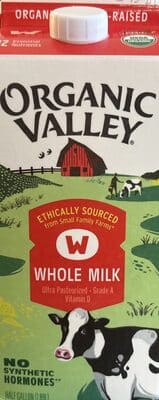
Whole milks
Cooperative Regions Of Organic Producer Pools Whole Milk Vitamin D
64 oz
Score
- Certified organic
- No additives
Why it scores 100
Cooperative Regions Of Organic Producer Pools Whole Milk Vitamin D scores 100 out of 100 (Excellent) under GoodSwap’s published rules. What moved the score most:
- plus 5 points Certified organic: Carries a certified-organic label. Info
- plus 5 points Simple whole food: A few low-concern ingredients, minimally processed. Info
- minus 2.5 points Saturated fat 5 g / 100 g: Contains some saturated fat. Counted at half for this whole-food category. Strong
Every line of the math is on The Receipt below, with its evidence tier and sources.
The Receipt
Whole Milk Vitamin D
Nutrition per 100 g
- Saturated fat 5 g / 100 g minus 2.5 points
- Protein 8 g / 100 g plus 2 points
Bonuses
- Certified organic plus 5 points
- Simple whole food plus 5 points
100 + 9.5 = 109.5 → 100
Nutrition per 100 g
| Energy | 150 kcal |
|---|---|
| Fat | 8 g |
| Saturated fat | 5 g |
| Trans fat | 0 g |
| Carbohydrates | 12 g |
| Sugars | 11 g |
| Added sugars | 0 g |
| Fiber | 0 g |
| Protein | 8 g |
| Salt | 0.3 g |
Serving: 240ml
Ingredients
Label text, as published
Organic Grade A Milk, Vitamin D3.
Allergens and diets
Contains: Milk
- Not vegan
- Palm-oil-free
Always check the package: recipes change.
Packaging
Composite material
Context only: no points in v1.
More whole milks on GoodSwap
-
 Whole ultra-filtered milk Fairlife · 52 fl oz Score 97 out of 100 Excellent
 -
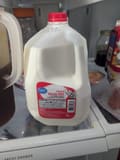 Whole Milk Great Value · 1 gallon No additives Score 100 out of 100 Excellent
 -
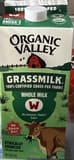 Whole Milk Organic Valley · Half gallon (1.89 L) Certified organicNo additives Score 100 out of 100 Excellent
 -
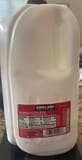 Homogenized Milk Kirkland Signature · 1 gal. (3.78 L) No additives Score 100 out of 100 Excellent
 -
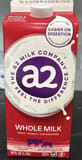 A2 Whole Milk A2 No additives Score 100 out of 100 Excellent
 -
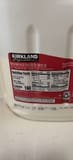 Homogenized Milk Kirkland Signature · 1 gallon No additives Score 100 out of 100 Excellent
More from Cooperative Regions Of Organic Producer Pools
Sources
-
Saturated fatty acid and trans-fatty acid intake for adults and children: WHO guideline
“WHO recommends that adults and children reduce saturated fatty acid intake to 10% of total energy intake (strong recommendation).”
who.int
-
Dietary Guidelines for Americans, 2025–2030
“Limit foods and beverages that include artificial flavors, petroleum-based dyes, artificial preservatives, and low-calorie non-nutritive sweeteners.”
cdn.realfood.gov
-
7 CFR 205.102 Use of the term "organic" (National Organic Program)
“Any agricultural product that is sold, labeled, or represented as “100 percent organic,” “organic,” or “made with organic (specified ingredients or food group(s))” must be: (a) Produced in accordance with the requirements specified in § 205.101 or §§ 205.202 through 205.207”
ecfr.gov