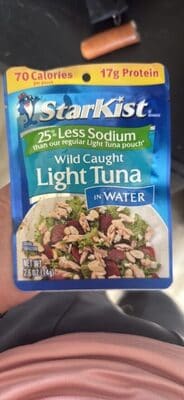
Canned tunas
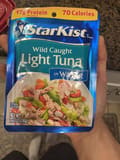
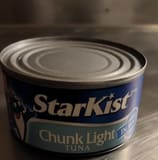
Starkist Wild Caught Light Tuna
2.6 oz/74 g
Score
- No additives
Why it scores 100
Starkist Wild Caught Light Tuna scores 100 out of 100 (Excellent) under GoodSwap’s published rules. What moved the score most:
- plus 4 points Protein 23 g / 100 g: A good source of protein. Info
- minus 3 points Salt 0.7 g / 100 g: High in salt. Strong
- plus 3 points No additives: No food additives in the ingredient list. Info
Every line of the math is on The Receipt below, with its evidence tier and sources.
The Receipt
Wild Caught Light Tuna
Nutrition per 100 g
- Salt 0.7 g / 100 g minus 3 points
- Protein 23 g / 100 g plus 4 points
Bonuses
- No additives plus 3 points
100 + 4 = 100
Nutrition per 100 g
| Energy | 95 kcal |
|---|---|
| Fat | 0.7 g |
| Saturated fat | 0 g |
| Trans fat | 0 g |
| Carbohydrates | 0 g |
| Sugars | 0 g |
| Added sugars | 0 g |
| Fiber | 0 g |
| Protein | 23 g |
| Salt | 0.7 g |
Serving: 74.0g
Ingredients
Label text, as published
LIGHT TUNA, WATER, VEGETABLE BROTH, SALT.
Allergens and diets
Contains: Fish
- Not vegan
- Not vegetarian
- Palm-oil-free
Always check the package: recipes change.
More canned tunas on GoodSwap
-
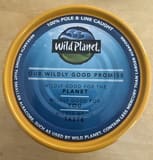 Albacore Tuna Wild Planet · 5 oz (142 g) No additives Score 97 out of 100 Excellent
 -
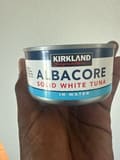 Albacore Solid White Tuna in Water Kirkland · 153 g Ultra-processed Score 81 out of 100 Excellent
 -
 Chunk Light Tuna Chicken Of The Sea · 7 oz No additives Score 96 out of 100 Excellent
 -
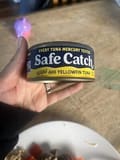 wild AHI YELLOWFIN TUNA Safe Catch · 5 oz No additives Score 98 out of 100 Excellent
 -
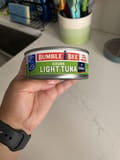 Chunk Light Tuna in Water Bumble Bee · g No additives Score 96 out of 100 Excellent
 -
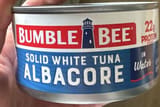 Solid White Tuna Albacore in Water Bumble Bee · 12 oz/340 g Ultra-processedNo additives Score 83 out of 100 Excellent
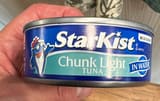
More from Starkist

Sources
-
“For adults, WHO recommends less than 2000 mg/day of sodium (equivalent to less than 5 g/day salt), or just under a teaspoon.”
who.int
-
Dietary Guidelines for Americans, 2025–2030
“Limit foods and beverages that include artificial flavors, petroleum-based dyes, artificial preservatives, and low-calorie non-nutritive sweeteners.”
cdn.realfood.gov