Chickens
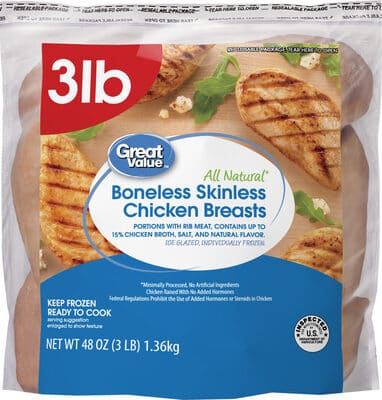
Great Value Boneless Skinless Chicken Breast
48 oz
Score
- No additives
Why it scores 100
Great Value Boneless Skinless Chicken Breast scores 100 out of 100 (Excellent) under GoodSwap’s published rules. What moved the score most:
- plus 4 points Protein 20.5 g / 100 g: A good source of protein. Info
- minus 2.5 points Natural flavors: "Natural flavor" is a legal category (21 CFR 101.22(a)(3)): flavor substances from spices, fruits, vegetables, meat, dairy or fermentation. Info
- minus 1 points Salt 0.5 g / 100 g: Contains some salt. Strong
Every line of the math is on The Receipt below, with its evidence tier and sources.
The Receipt
Boneless Skinless Chicken Breast
Ingredients
- Natural flavors minus 2.5 points
Nutrition per 100 g
- Salt 0.5 g / 100 g minus 1 points
- Protein 20.5 g / 100 g plus 4 points
100 + 0.5 = 100.5 → 100
Nutrition per 100 g
| Energy | 98 kcal |
|---|---|
| Fat | 2.2 g |
| Saturated fat | 0.5 g |
| Trans fat | 0 g |
| Carbohydrates | 0 g |
| Sugars | 0 g |
| Fiber | 0 g |
| Protein | 20.5 g |
| Salt | 0.5 g |
Serving: 1 portion (112 g)
Ingredients
- CONTAINS UP TO 15% CHICKEN BROTH (not recognized)
- SALT
- NATURAL FLAVOR
Label text, as published
CONTAINS UP TO 15% CHICKEN BROTH, SALT, AND NATURAL FLAVOR
More chickens on GoodSwap
-
 Seasoned Rotisserie Chicken Kirkland Signature · 1360 g (1 chicken) Ultra-processedContains added sugarsContains emulsifiers studied for gut effects Score 26 out of 100 Poor
 -
 Mandarin Orange Chicken Crazy Cuizine · 66 oz Ultra-processedContains added sugarsContains emulsifiers studied for gut effectsContains seed oils Score 20 out of 100 Poor
 -
 Chicken Meatballs Trader Joe's · 12 oz Score 91 out of 100 Excellent
 -
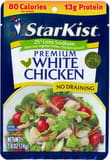 Premium White Chicken Starkist · 2.6 oz Ultra-processed Score 76 out of 100 Good
 -
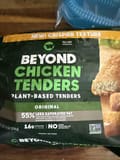 Beyond Chicken Tenders Plant-Based Tenders Beyond Meat · 8 oz Not permitted in some countriesContains added sugarsContains seed oilsNo synthetic dyes Score 21 out of 100 Poor
 -
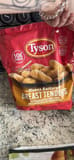 Honey Battered Breast Tenders Tyson · 25.5 oz/1.59 lb/722 g Ultra-processedContains added sugarsContains whole grains Score 26 out of 100 Poor
More from Great Value
-
 Purified Drinking Water Great Value · 16.9 fl oz (500 mL) Score 100 out of 100 Excellent
 -
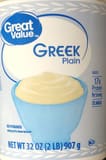 Greek Plain Great Value · 907 g Score 100 out of 100 Excellent
 -
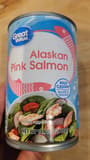 Alaskan Pink Salmon Great Value · 14.75 oz Score 95 out of 100 Excellent
 -
 Hydrate Alkaline Water Great Value · 23.7 fl oz or 700 mL Score 98 out of 100 Excellent
Sources
-
21 CFR 101.22 Foods; labeling of spices, flavorings, colorings and chemical preservatives
“whose significant function in food is flavoring rather than nutritional.”
ecfr.gov
-
“For adults, WHO recommends less than 2000 mg/day of sodium (equivalent to less than 5 g/day salt), or just under a teaspoon.”
who.int
-
Dietary Guidelines for Americans, 2025–2030
“Limit foods and beverages that include artificial flavors, petroleum-based dyes, artificial preservatives, and low-calorie non-nutritive sweeteners.”
cdn.realfood.gov