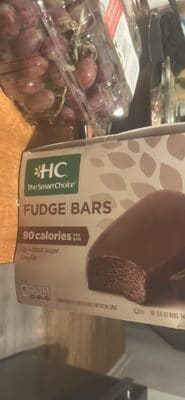
Ice cream bars
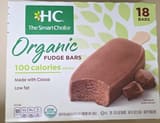
HC The Smart Choice Fudge Bars
1368 g
Score
- Ultra-processed
- Contains non-nutritive sweeteners
- Contains sugar alcohols
- Contains emulsifiers studied for gut effects
- May contain traces of 1,4-dioxane
Why it scores 23
HC The Smart Choice Fudge Bars scores 23 out of 100 (Poor) under GoodSwap’s published rules. What moved the score most:
- minus 20 points Aspartame: Labels must warn people with phenylketonuria (PKU) because aspartame contains phenylalanine (US and EU). Regulatory
- minus 18 points Ultra-processed (NOVA 4): Classified NOVA 4: made with industrial ingredients and additives. Strong
- minus 8 points 9 kinds of ultra-processing markers: Industrial additive classes found: bulking agent, emulsifier, flavoring, humectant, industrial protein, industrial sugar or starch hydrolysate, non-nutritive sweetener, sugar alcohol (polyol) and thickener, stabilizer or gelling agent. Emerging
Every line of the math is on The Receipt below, with its evidence tier and sources.
Better ice cream bars and frozen treats
-
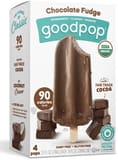 Chocolate Fudge Goodpop · 260 g No non-nutritive sweeteners · No sugar alcohols Score 68 out of 100 , 45 points higher
 -
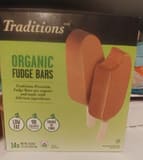 Organic fudge bars Traditions · 14*88 mL No non-nutritive sweeteners · No sugar alcohols Score 54 out of 100 , 31 points higher
 -
 Carb Smart Fudge Bars Breyers · 18 fl oz/532 mL No ethoxylated ingredients · No aspartame Score 45 out of 100 , 22 points higher
 -
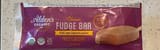 Classic fudge bar Alden's Organic · 2.5 fl oz/74 mL Not ultra-processed · No non-nutritive sweeteners Score 58 out of 100 , 35 points higher
 -
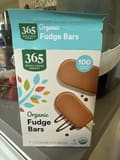 Fudge Bars 365 Whole Foods · 10 fl oz/296 mL No non-nutritive sweeteners · No sugar alcohols Score 45 out of 100 , 22 points higher
The same kind of product, at least 10 points higher, sold in the US. Never paid placements.
The Receipt
Fudge Bars
Ingredients
- Aspartame minus 20 points
- Cellulose gum (carboxymethylcellulose) minus 7.5 points
- Carrageenan minus 7.5 points
- Polysorbate 80 minus 4 points
- Soluble corn fiber (resistant dextrin) minus 1.5 points
- Sorbitol minus 1.5 points
- Milk protein concentrate / isolate minus 0.5 points
- Glycerin minus 0.5 points
- Vegetable gums (unspecified) minus 0.5 points
- Maltodextrin minus 0.5 points
- Locust bean gum minus 0.5 points
- Mono- and diglycerides minus 0.5 points
- Guar gum minus 0.5 points
- Whey protein concentrate / isolate minus 0.5 points
- Natural flavors minus 0.5 points
Processing
- Ultra-processed (NOVA 4) minus 18 points
- 9 kinds of ultra-processing markers minus 8 points
Nutrition per 100 g
- Sugars 10.5 g / 100 g minus 5 points
100 − 77.5 = 22.5 → 23
Can’t score above 79. Contains aspartame, an ingredient of high concern. [1][2][3][4][5][6][7][8][9]
Nutrition per 100 g
| Energy | 118 kcal |
|---|---|
| Fat | 1.3 g |
| Saturated fat | 0.7 g |
| Trans fat | 0 g |
| Carbohydrates | 23.7 g |
| Sugars | 10.5 g |
| Added sugars | 0 g |
| Fiber | 2.6 g |
| Protein | 5.3 g |
| Salt | 0.2 g |
Serving: 1 portion (76 g)
Ingredients
- SKIM MILK
- CONDENSED SKIM MILK
- POLYDEXTROSE
- WHOLE MILK
- SORBITOL
- COCOA (PROCESSED WITH ALKALI)
- MILK PROTEIN CONCENTRATE
- GLYCERIN
- STABILIZER BLEND (MALTODEXTRIN, WHEY POWDER, CELLULOSE GUM, LOCUST BEAN GUM, MONO- AND DIGLYCERIDES, GUAR GUM, CORN STARCH, CARRAGEENAN, POLYSORBATE 80)
- WHEY PROTEIN CONCENTRATE
- ASPARTAME (high concern)
- VITAMIN A PALMITATE
- NATURAL FLAVOR
Label text, as published
SKIM MILK, CONDENSED SKIM MILK, POLYDEXTROSE, WHOLE MILK, SORBITOL*, COCOA (PROCESSED WITH ALKALI), MILK PROTEIN CONCENTRATE, CONTAINS 2% OR LESS OF: GLYCERIN, STABILIZER BLEND (MALTODEXTRIN, WHEY POWDER, CELLULOSE GUM, LOCUST BEAN GUM, MONO- AND DIGLYCERIDES, GUAR GUM, CORN STARCH, CARRAGEENAN, POLYSORBATE 80), WHEY PROTEIN CONCENTRATE, ASPARTAME, VITAMIN A PALMITATE, NATURAL FLAVOR.
Allergens and diets
Contains: Milk
- Not vegan
- Palm-oil-free
Always check the package: recipes change.
More ice cream bars on GoodSwap
-
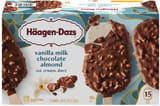 Vanilla Milk Chocolate Almond Ice Cream Bars Häagen-Dazs · 45 fl oz (1.33 L) Ultra-processedHigh in sugarHigh in saturated fatContains added sugars Score 34 out of 100 Poor
 -
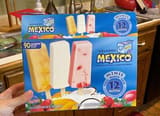 helados Mexico Mexico · 12 × 1.5 fl oz Ultra-processedHigh in sugarHigh in saturated fatContains added sugars Score 34 out of 100 Poor
 -
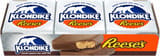 Klondike Reese's Klondike · 4 fl oz Ultra-processedHigh in sugarHigh in saturated fatContains added sugars Score 5 out of 100 Bad
More from HC The Smart Choice
Sources
-
Regulation (EU) No 1169/2011, Annex III point 2.3 (aspartame)
“‘contains a source of phenylalanine’ shall appear on the label in cases where aspartame/aspartame-acesulfame salt is designated in the list of ingredients by its specific name.”
eur-lex.europa.eu
-
Aspartame hazard and risk assessment results released (IARC, WHO and FAO joint news release)
“Citing “limited evidence” for carcinogenicity in humans, IARC classified aspartame as possibly carcinogenic to humans (IARC Group 2B) and JECFA reaffirmed the acceptable daily intake of 40 mg/kg body weight.”
who.int
-
Aspartame and Other Sweeteners in Food
“The FDA disagrees with IARC’s conclusion that these studies support classifying aspartame as a possible carcinogen to humans.”
fda.gov
-
“Aspartame and its breakdown products are safe for human consumption at current levels of exposure”
efsa.europa.eu
-
Artificial sweeteners and cancer risk: Results from the NutriNet-Santé population-based cohort study
“In this large cohort study, artificial sweeteners (especially aspartame and acesulfame-K), which are used in many food and beverage brands worldwide, were associated with increased cancer risk.”
doi.org
-
WHO advises not to use non-sugar sweeteners for weight control in newly released guideline
“The recommendation is based on the findings of a systematic review of the available evidence which suggests that use of NSS does not confer any long-term benefit in reducing body fat in adults or children.”
who.int
-
Dietary Guidelines for Americans, 2025–2030
“Limit foods and beverages that include artificial flavors, petroleum-based dyes, artificial preservatives, and low-calorie non-nutritive sweeteners.”
cdn.realfood.gov
-
“Relative to control subjects, CMC consumption modestly increased postprandial abdominal discomfort and perturbed gut microbiota composition in a way that reduced its diversity.”
doi.org
-
Dietary emulsifiers impact the mouse gut microbiota promoting colitis and metabolic syndrome
“carboxymethylcellulose and polysorbate-80, induced low-grade inflammation and obesity/metabolic syndrome in wild-type hosts and promoted robust colitis in mice predisposed to this disorder.”
doi.org
-
“This study found positive associations between risk of CVD and intake of five individual and two groups of food additive emulsifiers widely used in industrial foods.”
doi.org
-
“The Panel concluded that there was no need for a numerical ADI and that there would be no safety concern at the reported uses and use levels for the unmodified and modified celluloses”
doi.org
-
“We found direct associations between the risk of type 2 diabetes and exposures to various food additive emulsifiers widely used in industrial foods, in a large prospective cohort of French adults.”
doi.org
-
Re-evaluation of carrageenan (E 407) and processed Eucheuma seaweed (E 407a) as food additives
“However, the Panel noted uncertainties as regards the chemistry, the exposure assessment and biological and toxicological data.”
doi.org
-
Agents Classified by the IARC Monographs, Volumes 1–142 (List of Classifications)
monographs.iarc.who.int
-
Scientific Opinion on the re-evaluation of polysorbates (E 432–436) as food additives
“There is no concern regarding genotoxicity, carcinogenicity or developmental toxicity.”
doi.org
-
Regulation (EU) No 1169/2011, Annex III point 2.4 (foods with more than 10 % added polyols)
“‘excessive consumption may produce laxative effects’.”
eur-lex.europa.eu
-
Re-evaluation of mono- and di-glycerides of fatty acids (E 471) as food additives
“The available studies did not raise any concern with regard to genotoxicity.”
doi.org
-
21 CFR 101.22 Foods; labeling of spices, flavorings, colorings and chemical preservatives
“whose significant function in food is flavoring rather than nutritional.”
ecfr.gov
-
Guideline: sugars intake for adults and children
“In both adults and children, WHO recommends reducing the intake of free sugars to less than 10% of total energy intake”
who.int
-
“Greater exposure to ultra-processed food was associated with a higher risk of adverse health outcomes, especially cardiometabolic, common mental disorder, and mortality outcomes.”
doi.org
-
1,4-Dioxane in Cosmetics: A Manufacturing Byproduct
“1,4-dioxane forms as a byproduct during the manufacturing process of certain cosmetic ingredients.”
fda.gov