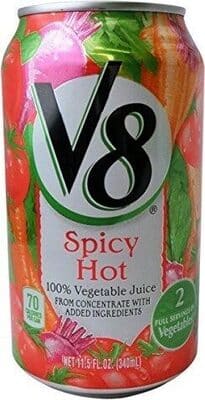
Non-alcoholic beverages
V8 Vjuice spicy hot -- case
11.5 fl oz
Score
- No synthetic dyes
Why it scores 87
V8 Vjuice spicy hot -- case scores 87 out of 100 (Excellent) under GoodSwap’s published rules. What moved the score most:
- minus 6 points Sugars 2.9 g / 100 ml: High in sugar. Strong
- minus 3 points Salt 0.7 g / 100 ml: High in salt. Strong
- minus 2.5 points Natural flavors: "Natural flavor" is a legal category (21 CFR 101.22(a)(3)): flavor substances from spices, fruits, vegetables, meat, dairy or fermentation. Info
Every line of the math is on The Receipt below, with its evidence tier and sources.
The Receipt
Vjuice spicy hot -- case
Ingredients
- Natural flavors minus 2.5 points
Nutrition per 100 ml
- Sugars 2.9 g / 100 ml minus 6 points
- Salt 0.7 g / 100 ml minus 3 points
- Energy 17 kcal / 100 ml minus 2 points
100 − 13.5 = 86.5 → 87
Nutrition per 100 ml
| Energy | 17 kcal |
|---|---|
| Fat | 0 g |
| Saturated fat | 0 g |
| Trans fat | 0 g |
| Carbohydrates | 3.5 g |
| Sugars | 2.9 g |
| Added sugars | 0 g |
| Fiber | 0.6 g |
| Protein | 0.9 g |
| Salt | 0.7 g |
Serving: Amount per serving (341 ml)
Ingredients
- VEGETABLE JUICE (WATER AND CONCENTRATED JUICE OF TOMATOES, CARROTS, CELERY, BEETS, PARSLEY, LETTUCE, WATERCRESS, SPINACH)
- SALT
- NATURAL FLAVORING
- VITAMIN C (ASCORBIC ACID)
- BETA CAROTENE
- CITRIC ACID
Label text, as published
INGREDIENTS: VEGETABLE JUICE (WATER AND CONCENTRATED JUICE OF TOMATOES, CARROTS, CELERY, BEETS, PARSLEY, LETTUCE, WATERCRESS, SPINACH), SALT, NATURAL FLAVORING, VITAMIN C (ASCORBIC ACID), BETA CAROTENE, CITRIC ACID.
Allergens and diets
Contains: Celery
- Palm-oil-free
Always check the package: recipes change.
More non-alcoholic beverages on GoodSwap
-
 S.PELLEGRINO Sparkling Natural Mineral Water S.pellegrino · 500 mL No additives Score 100 out of 100 Excellent
 -
 SmartWater Glaceau · 20 oz No additives Score 100 out of 100 Excellent
 -
 Oikos Pro Strawberry Banana Flavored with Other Natural Flavors Oikos Pro · 7 fl oz (207 mL) Ultra-processedContains non-nutritive sweetenersNo synthetic dyes Score 69 out of 100 Good
 -
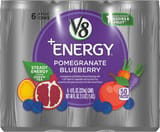 V v-fusion +energy pomegranate blueberry vegetable V8 · 48 fl oz Ultra-processedContains non-nutritive sweetenersContains caffeine Score 71 out of 100 Good
 -
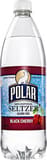 Seltzer sparkling water black cherry flavored Polar · 1 L No additives Score 100 out of 100 Excellent
 -
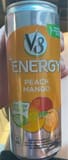 Peach Mango V8 · 11.5 fl oz Ultra-processedContains non-nutritive sweetenersContains caffeine Score 60 out of 100 Good
More from V8
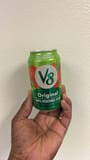
Sources
-
21 CFR 101.22 Foods; labeling of spices, flavorings, colorings and chemical preservatives
“whose significant function in food is flavoring rather than nutritional.”
ecfr.gov
-
Guideline: sugars intake for adults and children
“In both adults and children, WHO recommends reducing the intake of free sugars to less than 10% of total energy intake”
who.int
-
“For adults, WHO recommends less than 2000 mg/day of sodium (equivalent to less than 5 g/day salt), or just under a teaspoon.”
who.int
-
Dietary Guidelines for Americans, 2025–2030
“Limit foods and beverages that include artificial flavors, petroleum-based dyes, artificial preservatives, and low-calorie non-nutritive sweeteners.”
cdn.realfood.gov