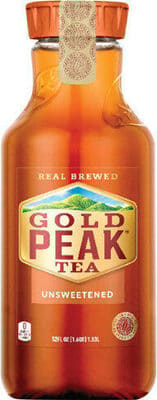
Iced teas
Coca-Cola Company Unsweetened black iced tea drink
52.0 fl oz
Score
- Contains caffeine
Why it scores 100
Coca-Cola Company Unsweetened black iced tea drink scores 100 out of 100 (Excellent) under GoodSwap’s published rules. What moved the score most:
- plus 5 points Simple whole food: A few low-concern ingredients, minimally processed. Info
- minus 2.5 points Phosphoric acid: EFSA (2019) set a group ADI for phosphates of 40 mg/kg body weight (as phosphorus) and noted that infants, toddlers and children may exceed it. Strong
Every line of the math is on The Receipt below, with its evidence tier and sources.
The Receipt
Unsweetened black iced tea drink
Ingredients
- Phosphoric acid minus 2.5 points
Bonuses
- Simple whole food plus 5 points
100 + 2.5 = 102.5 → 100
Nutrition per 100 ml
| Energy | 0 kcal |
|---|---|
| Fat | 0 g |
| Saturated fat | 0 g |
| Trans fat | 0 g |
| Carbohydrates | 0 g |
| Sugars | 0 g |
| Added sugars | 0 g |
| Protein | 0 g |
| Salt | 0 g |
Serving: 12 fl oz (360 ml)
Ingredients
Label text, as published
BREWED TEA (FILTERED WATER, BLACK TEA LEAVES), PHOSPHORIC ACID.
Allergens and diets
- Vegan
- Vegetarian
- Gluten-free
- Palm-oil-free
Always check the package: recipes change.
More iced teas on GoodSwap
-
 Citron Ginger Tea Vonbee · 2 kg Ultra-processedHigh in sugarContains added sugarsContains emulsifiers studied for gut effects Score 20 out of 100 Poor
 -
 PURE LEAF Real Brewed Tea UNSWEETENED NO SUGAR Pure Leaf · 18.5 fl oz (1.15 PT) 547 mL Contains caffeine Score 100 out of 100 Excellent
 -
 Green Tea with Ginseng and Honey Arizona · 128 fl oz/1 gal/3.78 L Ultra-processedContains added sugarsContains caffeine Score 35 out of 100 Poor
 -
 Arizona diet green tee Arizona · 128 fl oz Ultra-processedContains non-nutritive sweetenersContains added sugars Score 44 out of 100 Okay
 -
 Antioxidant Super Tea Pomegranate Honey Green Tea Pom Wonderful Llc · 12 fl oz/355 mL Ultra-processedContains added sugarsContains caffeineNo additives Score 26 out of 100 Poor
 -
 Arnold Palmer Lite Half & Half Iced Tea Lemonade Arizona · 128 fl oz Ultra-processedContains non-nutritive sweetenersContains added sugars Score 23 out of 100 Poor
More from Coca-Cola Company
Sources
-
EFSA issues new advice on phosphates
“We estimated that dietary exposure to phosphates may exceed the new ADI for infants, toddlers and children with average consumption of phosphates in their diet.”
efsa.europa.eu
-
Spilling the Beans: How Much Caffeine is Too Much?
“For most adults, the FDA has cited 400 milligrams* a day — that's about two to three 12-fluid-ounce cups of coffee — as an amount not generally associated with negative effects.”
fda.gov
-
Regulation (EU) No 1169/2011, Annex III point 4.1 (beverages with high caffeine content)
“‘High caffeine content. Not recommended for children or pregnant or breast-feeding women’”
eur-lex.europa.eu