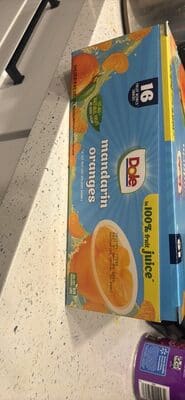
Citrus
Dole Mandarin Oranges
4 lb (1.81 kg)
Score
- Contains added sugars
Why it scores 79
Dole Mandarin Oranges scores 79 out of 100 (Good) under GoodSwap’s published rules. What moved the score most:
- minus 20 points Fruit juice concentrate (sweetener): An added sugar. Strong
Capped at 79: Contains fruit juice concentrate (sweetener), an ingredient of high concern.
Every line of the math is on The Receipt below, with its evidence tier and sources.
Better canned fruit and fruit cups
-
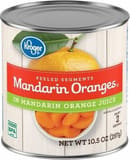 Lite mandarin orange peeled segments Kroger · 10.5 oz/297 g No added sugars · No fruit juice concentrate (sweetener) Score 100 out of 100 , 21 points higher
 -
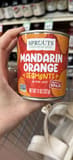 Mandarin Orange Segments Sprouts Farmers Market · 11 oz No added sugars · No fruit juice concentrate (sweetener) Score 100 out of 100 , 21 points higher
 -
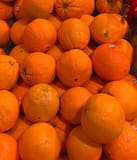 Navel oranges Ahold · 8 lb/3.62 kg No added sugars · No fruit juice concentrate (sweetener) Score 98 out of 100 , 19 points higher
 -
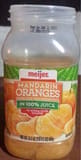 Mandarin Oranges Meijer · 24.5 oz/695 g No added sugars · No fruit juice concentrate (sweetener) Score 100 out of 100 , 21 points higher
 -
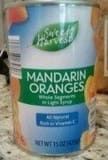 Sweet harvest mandarin oranges whole segments in light syrup No added sugars · No fruit juice concentrate (sweetener) Score 100 out of 100 , 21 points higher
The same kind of product, at least 10 points higher, sold in the US. Never paid placements.
The Receipt
Mandarin Oranges
Ingredients
- Fruit juice concentrate (sweetener) minus 20 points
100 − 20 = 80 → capped at 79
Capped at 79. Contains fruit juice concentrate (sweetener), an ingredient of high concern. [1][2][3]
Nutrition per 100 g
| Energy | 62 kcal |
|---|---|
| Fat | 0 g |
| Saturated fat | 0 g |
| Trans fat | 0 g |
| Carbohydrates | 14.2 g |
| Sugars | 12.4 g |
| Added sugars | 0 g |
| Fiber | 0.9 g |
| Protein | 0.9 g |
| Salt | 0 g |
Serving: 1 container (113 g)
Ingredients
- mandarin oranges
- water
- white grape juice concentrate (high concern)
- lemon juice from concentrate
- water
- lemon juice concentrate
- ascorbic acid
Label text, as published
mandarin oranges, water, white grape juice concentrate, lemon juice from concentrate, water, lemon juice concentrate, ascorbic acid
Allergens and diets
- Vegan
- Vegetarian
- Gluten-free
- Palm-oil-free
Always check the package: recipes change.
More citrus on GoodSwap
-
 Mandarin Oranges Dole · 113 g Ultra-processedContains non-nutritive sweeteners Score 76 out of 100 Good
 -
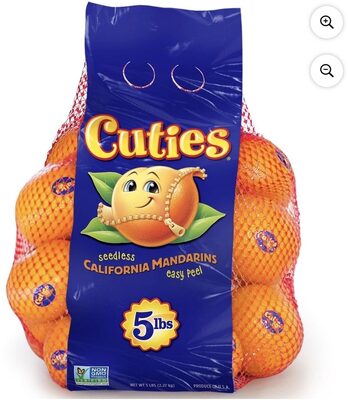 Seedless Clementine Mandarins Cuties · 5 lb No additives Score 100 out of 100 Excellent
 - Mandarin Oranges In Pear Juice From Concentrate 365 Everyday Value · 10.5 oz/298 g Contains added sugars Score 75 out of 100 Good
More from Dole
Sources
-
Guideline: sugars intake for adults and children
“In both adults and children, WHO recommends reducing the intake of free sugars to less than 10% of total energy intake”
who.int
-
Dietary Guidelines for Americans, 2025–2030
“Limit foods and beverages that include artificial flavors, petroleum-based dyes, artificial preservatives, and low-calorie non-nutritive sweeteners.”
cdn.realfood.gov
-
Added and free sugars should be as low as possible
“Sugar consumption is a known cause of dental caries.”
efsa.europa.eu