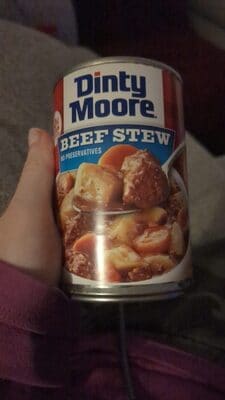
Beef stews
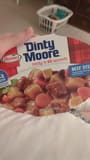
Dinty Moore Beef Stew Sm
15 oz (425 g)
Score
- Ultra-processed
- Contains added sugars
- Seed-oil free
- No synthetic dyes
Why it scores 23
Dinty Moore Beef Stew Sm scores 23 out of 100 (Poor) under GoodSwap’s published rules. What moved the score most:
- minus 20 points Caramel color: The FDA says classes III and IV, which can contain 4-MEI, are the most commonly used food color additives by volume. Regulatory
- minus 20 points Sugar: An added sugar. Strong
- minus 18 points Ultra-processed (NOVA 4): Classified NOVA 4: made with industrial ingredients and additives. Strong
Every line of the math is on The Receipt below, with its evidence tier and sources.
Better soups
-
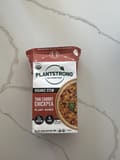 Thai carrot chickpea stew Plantstrong · 16.9 fl oz/479 g Not ultra-processed · No added sugars Score 100 out of 100 , 77 points higher
 -
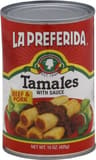 Tamales beef pork La Preferida · 15 oz Not ultra-processed · No added sugars Score 87 out of 100 , 64 points higher
 -
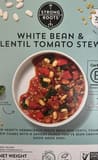 White bean & lentil stew Strong Roots · 10 oz Not ultra-processed · No added sugars Score 96 out of 100 , 73 points higher
 -
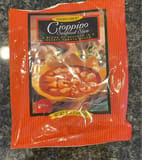 Cioppino Seafood Stew Trader Joe's · 16 oz Not ultra-processed · No added sugars Score 84 out of 100 , 61 points higher
 -
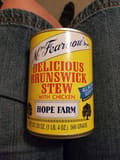 Delicious Brunswick Stew with Chicken Mrs. Fearnow's · 20 oz Not ultra-processed · No caramel color Score 59 out of 100 , 36 points higher
The same kind of product, at least 10 points higher, sold in the US. Never paid placements.
The Receipt
Beef Stew Sm
Ingredients
- Caramel color minus 20 points
- Sugar minus 20 points
- Soy protein isolate / concentrate minus 2.5 points
- Modified starch minus 1.5 points
- Maltodextrin minus 1.5 points
- Disodium ribonucleotides minus 1.5 points
- Natural flavors minus 0.5 points
Processing
- Ultra-processed (NOVA 4) minus 18 points
- 6 kinds of ultra-processing markers minus 7.5 points
Nutrition per 100 g
- Saturated fat 1.7 g / 100 g minus 1 points
- Salt 1.1 g / 100 g minus 3 points
100 − 77 = 23
Can’t score above 79. Contains caramel color, an ingredient of high concern. [1][2][3][4][5][6][7]
Nutrition per 100 g
| Energy | 85 kcal |
|---|---|
| Fat | 4.2 g |
| Saturated fat | 1.7 g |
| Trans fat | 0 g |
| Carbohydrates | 7.2 g |
| Sugars | 1.3 g |
| Added sugars | 1.3 g |
| Fiber | 0.4 g |
| Protein | 4.2 g |
| Salt | 1.1 g |
Serving: 1 cup (236 g)
Ingredients
- BEEF STOCK
- BEEF
- POTATOES
- CARROTS
- BEEF FAT
- CORN FLOUR
- TEXTURED VEGETABLE PROTEIN (SOY FLOUR, CARAMEL COLOR)
- SALT
- TOMATO PASTE
- MODIFIED CORNSTARCH
- POTATO STARCH
- MUSHROOM EXTRACT (MUSHROOMS, MALTODEXTRIN)
- CARAMEL COLOR (high concern)
- DISODIUM INOSINATE AND DISODIUM GUANYLATE
- SUGAR (high concern)
- FLAVORING
Label text, as published
BEEF STOCK, BEEF, POTATOES, CARROTS, CONTAINS 2% OR LESS OF BEEF FAT, CORN FLOUR, TEXTURED VEGETABLE PROTEIN (SOY FLOUR, CARAMEL COLOR), SALT, TOMATO PASTE, MODIFIED CORNSTARCH, POTATO STARCH, MUSHROOM EXTRACT (MUSHROOMS, MALTODEXTRIN), CARAMEL COLOR, DISODIUM INOSINATE AND DISODIUM GUANYLATE, SUGAR, FLAVORING
Allergens and diets
Contains: Soy
- Not vegan
- Not vegetarian
- Palm-oil-free
Always check the package: recipes change.
Packaging
Metal
Context only: no points in v1.
More from Dinty Moore
Sources
-
Questions & Answers About 4-MEI
“Based on current science, the FDA has no reason to believe that there are any immediate or short-term health risks presented by 4-MEI at the levels expected in food.”
fda.gov
-
Agents Classified by the IARC Monographs, Volumes 1–142 (List of Classifications)
monographs.iarc.who.int
-
Proposition 65 List of Chemicals Known to the State to Cause Cancer or Reproductive Toxicity
“The date refers to the initial appearance of the chemical on the list.”
oehha.ca.gov
-
Guideline: sugars intake for adults and children
“In both adults and children, WHO recommends reducing the intake of free sugars to less than 10% of total energy intake”
who.int
-
Dietary Guidelines for Americans, 2025–2030
“Limit foods and beverages that include artificial flavors, petroleum-based dyes, artificial preservatives, and low-calorie non-nutritive sweeteners.”
cdn.realfood.gov
-
Added and free sugars should be as low as possible
“Sugar consumption is a known cause of dental caries.”
efsa.europa.eu
-
21 CFR 101.22 Foods; labeling of spices, flavorings, colorings and chemical preservatives
“whose significant function in food is flavoring rather than nutritional.”
ecfr.gov
-
Saturated fatty acid and trans-fatty acid intake for adults and children: WHO guideline
“WHO recommends that adults and children reduce saturated fatty acid intake to 10% of total energy intake (strong recommendation).”
who.int
-
“For adults, WHO recommends less than 2000 mg/day of sodium (equivalent to less than 5 g/day salt), or just under a teaspoon.”
who.int
-
“Greater exposure to ultra-processed food was associated with a higher risk of adverse health outcomes, especially cardiometabolic, common mental disorder, and mortality outcomes.”
doi.org