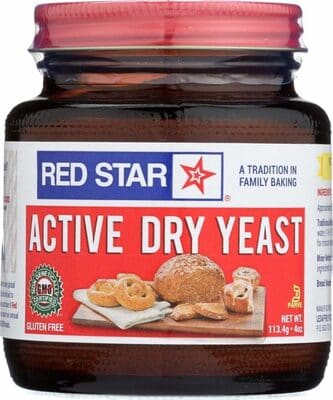
baker's yeast
Red Star Active dry yeast
4 oz
Score
- Ultra-processed
Why it scores 79
Red Star Active dry yeast scores 79 out of 100 (Good) under GoodSwap’s published rules. What moved the score most:
- minus 18 points Ultra-processed (NOVA 4): Classified NOVA 4: made with industrial ingredients and additives. Strong
- minus 2.5 points Sorbitan monostearate: An additive class typical of ultra-processed foods (NOVA group 4). Info
Capped at 79: No nutrition facts on file, so we can't confirm excellent.
Every line of the math is on The Receipt below, with its evidence tier and sources.
The Receipt
Active dry yeast
START100
Ingredients
- Sorbitan monostearate minus 2.5 points
subtotal−2.5
Processing
- Ultra-processed (NOVA 4) minus 18 points
subtotal−18
Nutrition
- Nutrition facts unavailable no points
subtotal0
TOTAL 79Good
100 − 20.5 = 79.5 → 80 → capped at 79
Capped at 79. No nutrition facts on file, so we can't confirm excellent.
Ingredients
High Moderate Not recognized Tap an ingredient for its evidence and rules.
Label text, as published
Yeast, Sorbitan Monostearate
Allergens and diets
- Vegan
- Vegetarian
- Palm-oil-free
Always check the package: recipes change.
More from Red Star
Sources
-
“Greater exposure to ultra-processed food was associated with a higher risk of adverse health outcomes, especially cardiometabolic, common mental disorder, and mortality outcomes.”
doi.org