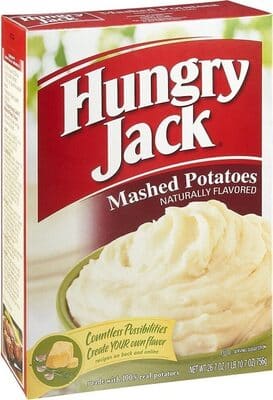
Instant mashed potatoes
Hungry Jack Mashed Potatoes
756 g
Score
- Ultra-processed
- Contains emulsifiers studied for gut effects
Why it scores 53
Hungry Jack Mashed Potatoes scores 53 out of 100 (Okay) under GoodSwap’s published rules. What moved the score most:
- minus 20 points BHA (butylated hydroxyanisole): IARC classifies BHA as Group 2B (possibly carcinogenic to humans), based on animal studies. Regulatory
- minus 18 points Ultra-processed (NOVA 4): Classified NOVA 4: made with industrial ingredients and additives. Strong
- minus 7.5 points Sodium bisulfite: Sulfites must be declared above 10 mg/kg in the EU and UK and at 10 ppm or more in the US because some people, especially people with asthma, react to them. Regulatory
Every line of the math is on The Receipt below, with its evidence tier and sources.
Better fries and frozen potatoes
-
 Potato Flakes Instant Mashed Potatoes Bob's Red Mill · 16 oz Not ultra-processed · No gut-studied emulsifiers Score 100 out of 100 , 47 points higher
 -
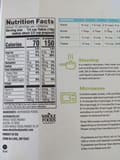 Original instant mashed potatoes, original 365 Everyday Value · 8 oz/227 g Not ultra-processed · No gut-studied emulsifiers Score 95 out of 100 , 42 points higher
 -
 Idahoan original instant mashed potatoes Idahoan · 6.2 oz/176 g Not ultra-processed · No gut-studied emulsifiers Score 92 out of 100 , 39 points higher
 -
 Mashed Potatoes Trader Joe's Not ultra-processed · No gut-studied emulsifiers Score 91 out of 100 , 38 points higher
 -
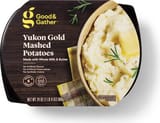 Yukon gold mashed potatoes Good & Gather · 24 oz Not ultra-processed · No gut-studied emulsifiers Score 90 out of 100 , 37 points higher
The same kind of product, at least 10 points higher, sold in the US. Never paid placements.
The Receipt
Mashed Potatoes
Ingredients
- BHA (butylated hydroxyanisole) minus 20 points
- Sodium bisulfite minus 7.5 points
- Mono- and diglycerides minus 2.5 points
- Sodium acid pyrophosphate minus 1.5 points
Processing
- Ultra-processed (NOVA 4) minus 18 points
Nutrition per 100 g
- Energy 381 kcal / 100 g minus 2 points
- Fiber 4.8 g / 100 g plus 2 points
- Protein 9.5 g / 100 g plus 2 points
100 − 47.5 = 52.5 → 53
Can’t score above 79. Contains BHA (butylated hydroxyanisole), an ingredient of high concern. [1][2][3][4][5]
Nutrition per 100 g
| Energy | 381 kcal |
|---|---|
| Fat | 0 g |
| Saturated fat | 0 g |
| Trans fat | 0 g |
| Carbohydrates | 76.2 g |
| Sugars | 0 g |
| Added sugars | 0 g |
| Fiber | 4.8 g |
| Protein | 9.5 g |
| Salt | 0.2 g |
Serving: 1/3 cup (21 g)
Ingredients
- IDAHO POTATO FLAKES
- MONOGLYCERIDE
- FRESHNESS PRESERVED WITH: SODIUM ACID PYROPHOSPHATE
- SODIUM BISULFITE (moderate concern)
- CITRIC ACID
- BHA (high concern)
Label text, as published
IDAHO POTATO FLAKES, MONOGLYCERIDE, FRESHNESS PRESERVED WITH: SODIUM ACID PYROPHOSPHATE, SODIUM BISULFITE, CITRIC ACID, BHA.
Allergens and diets
Contains: Sulphites
- Vegan
- Vegetarian
- Palm-oil-free
Always check the package: recipes change.
More instant mashed potatoes on GoodSwap
-
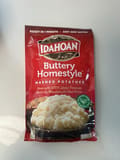 Buttery Homestyle Mashed Potatoes Idahoan · 1.36 kg Ultra-processedHigh in saltHigh in saturated fatContains added sugars Score 28 out of 100 Poor
 -
 Original Mashed Potatoes Idahoan · 22 g Ultra-processed Score 74 out of 100 Good
 -
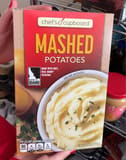 Mashed Potatoes Chef's Cupboard Ultra-processedContains emulsifiers studied for gut effects Score 72 out of 100 Good
 -
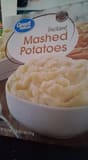 Instant Mashed Potatoes Great Value · 26.7 oz/757 g Ultra-processedContains emulsifiers studied for gut effects Score 72 out of 100 Good
 -
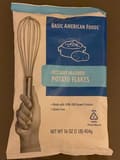 Stutz Packing Co. Basic American Foods · 16 oz (1 lb) Score 73 out of 100 Good
More from Hungry Jack
-
 Complete Buttermilk Pancake & Waffle Mix Hungry Jack · 2 lb Score 14 out of 100 Bad
 -
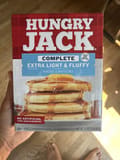 Complete Extra Light & Fluffy Pancake & Waffle Mix Hungry Jack · 907 g Score 18 out of 100 Bad
 -
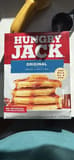 Original Pancake & Waffle Mix Hungry Jack · 32 oz Score 61 out of 100 Good
 -
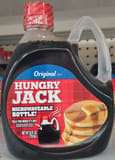 Hungry Jack original syrup Hungry Jack · 24 fl oz Score 11 out of 100 Bad
Sources
-
Agents Classified by the IARC Monographs, Volumes 1–142 (List of Classifications)
monographs.iarc.who.int
-
Proposition 65 List of Chemicals Known to the State to Cause Cancer or Reproductive Toxicity
“The date refers to the initial appearance of the chemical on the list.”
oehha.ca.gov
-
Report on Carcinogens, 15th Edition: Butylated Hydroxyanisole
“Butylated hydroxyanisole (BHA) is reasonably anticipated to be a human carcinogen based on sufficient evidence of carcinogenicity from studies in experimental animals.”
ntp.niehs.nih.gov
-
List of Select Chemicals in the Food Supply Under FDA Review
“The table below includes select food ingredients (including food and color additives), food contact substances, and contaminants under FDA review as of May 12, 2026 .”
fda.gov
-
“The Panel concluded that exposure to BHA from its use as food additive based on new exposure estimates does not exceed the ADI of 1 mg/kg bw/day at the mean”
doi.org
-
Regulation (EU) No 1169/2011 of 25 October 2011 on the provision of food information to consumers
“ANNEX II SUBSTANCES OR PRODUCTS CAUSING ALLERGIES OR INTOLERANCES 1. Cereals containing gluten, namely: wheat, rye, barley, oats, spelt, kamut or their hybridised strains”
eur-lex.europa.eu
-
“1. Cereals containing gluten, namely: wheat (such as spelt and khorasan wheat), rye, barley, oats or their hybridised strains, and products thereof”
legislation.gov.uk
-
“This study found positive associations between risk of CVD and intake of five individual and two groups of food additive emulsifiers widely used in industrial foods.”
doi.org
-
Re-evaluation of mono- and di-glycerides of fatty acids (E 471) as food additives
“The available studies did not raise any concern with regard to genotoxicity.”
doi.org
-
EFSA issues new advice on phosphates
“We estimated that dietary exposure to phosphates may exceed the new ADI for infants, toddlers and children with average consumption of phosphates in their diet.”
efsa.europa.eu
-
Dietary Guidelines for Americans, 2025–2030
“Limit foods and beverages that include artificial flavors, petroleum-based dyes, artificial preservatives, and low-calorie non-nutritive sweeteners.”
cdn.realfood.gov
-
“Greater exposure to ultra-processed food was associated with a higher risk of adverse health outcomes, especially cardiometabolic, common mental disorder, and mortality outcomes.”
doi.org
-
Dietary emulsifiers impact the mouse gut microbiota promoting colitis and metabolic syndrome
“carboxymethylcellulose and polysorbate-80, induced low-grade inflammation and obesity/metabolic syndrome in wild-type hosts and promoted robust colitis in mice predisposed to this disorder.”
doi.org
-
“Relative to control subjects, CMC consumption modestly increased postprandial abdominal discomfort and perturbed gut microbiota composition in a way that reduced its diversity.”
doi.org