Prepared meats
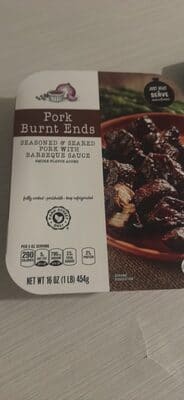
Pork Street Deli Pork Burnt Ends
16 oz
Score
- Ultra-processed
- Contains added sugars
- No synthetic dyes
Why it scores 8
Pork Street Deli Pork Burnt Ends scores 8 out of 100 (Bad) under GoodSwap’s published rules. What moved the score most:
- minus 20 points Dextrose: An added sugar. Strong
- minus 20 points Sugar: An added sugar. Strong
- minus 18 points Ultra-processed (NOVA 4): Classified NOVA 4: made with industrial ingredients and additives. Strong
Every line of the math is on The Receipt below, with its evidence tier and sources.
Better deli meat
-
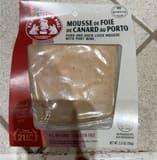 Pork and duck liver mousse with port wine Three Little Pigs · 5.5 oz Not ultra-processed · No added sugars Score 79 out of 100 , 71 points higher
 -
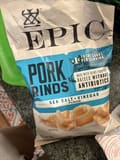 Pork Rinds Sea Salt + Vinegar Flavor Epic · 2.5 oz No added sugars · No dextrose Score 67 out of 100 , 59 points higher
 -
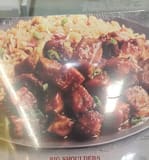 Pork burnt ends Big Shoulders Smokehouse · 48 oz/3 lb Not ultra-processed · No molasses Score 44 out of 100 , 36 points higher
 -
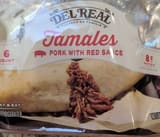 Tamales Pork with Red Sauce Del Real · 24 oz/1.5 lb/680 g Not ultra-processed · No added sugars Score 98 out of 100 , 90 points higher
 -
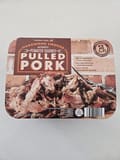 Pitmarster seasoned pulled pork Member's Mark · 32 oz Not ultra-processed · No added sugars Score 99 out of 100 , 91 points higher
The same kind of product, at least 10 points higher, sold in the US. Never paid placements.
The Receipt
Pork Burnt Ends
Ingredients
- Dextrose minus 20 points
- Sugar minus 20 points
- Molasses minus 10 points
Processing
- Ultra-processed (NOVA 4) minus 18 points
- 6 kinds of ultra-processing markers minus 7.5 points
Nutrition per 100 g
- Sugars 16.4 g / 100 g minus 8 points
- Saturated fat 3.6 g / 100 g minus 3 points
- Salt 1.4 g / 100 g minus 5 points
- Energy 207 kcal / 100 g minus 1 points
100 − 92.5 = 7.5 → 8
Can’t score above 79. Contains dextrose, an ingredient of high concern. [1][2][3][7][8][9][10][11]
Nutrition per 100 g
| Energy | 207 kcal |
|---|---|
| Fat | 7.9 g |
| Saturated fat | 3.6 g |
| Trans fat | 0 g |
| Carbohydrates | 19.3 g |
| Sugars | 16.4 g |
| Added sugars | 11.4 g |
| Fiber | 0 g |
| Protein | 15 g |
| Salt | 1.4 g |
Serving: 1 portion (140 g)
Ingredients
- SEASONED AND SEARED PORK (BONELESS PORK, WATER, GARLIC POWDER, SMOKE FLAVOR, SEASONING, DEXTROSE, SALT, BLACK PEPPER, SEASONING)
- BBQ SAUCE (WATER, SUGAR, MOLASSES, DISTILLED VINEGAR, TOMATO PASTE, HIGH FRUCTOSE CORN SYRUP, BROWN SUGAR, SOY SAUCE, MODIFIED POTATO STARCH, SALT, ORANGE JUICE CONCENTRATE, NATURAL SMOKE FLAVOR, CHIPOTLE PEPPER, PAPRIKA, SPICE, DRIED ONION, DRIED GARLIC, MUSTARD FLOUR, NATURAL FLAVOR, CARAMEL COLOR, LEMON JUICE CONCENTRATE, POTASSIUM SORBATE AND SODIUM BENZOATE [PRESERVATIVES], YEAST EXTRACT, MALTODEXTRIN, PINEAPPLE JUICE CONCENTRATE, XANTHAN GUM, ASCORBIC ACID, CHILI POWDER) (not recognized)
Label text, as published
SEASONED AND SEARED PORK* (BONELESS PORK, WATER, GARLIC POWDER, SMOKE FLAVOR, SEASONING [SEA SALT, POTASSIUM CARBONATE, NATURAL FLAVOR], DEXTROSE, SALT, BLACK PEPPER, SEASONING [SUGAR, SALT, DEXTROSE, SPICES, PAPRIKA, GARLIC, ONION, NATURAL SMOKE FLAVOR, CITRIC ACID]), AND BBQ SAUCE (WATER, SUGAR, MOLASSES, DISTILLED VINEGAR, TOMATO PASTE, HIGH FRUCTOSE CORN SYRUP, BROWN SUGAR, SOY SAUCE [WATER, WHEAT, SOYBEANS, SALT], MODIFIED POTATO STARCH, SALT, CONTAINS LESS THAN 2% OF ORANGE JUICE CONCENTRATE, NATURAL SMOKE FLAVOR, CHIPOTLE PEPPER, PAPRIKA, SPICE, DRIED ONION, DRIED GARLIC, MUSTARD FLOUR, NATURAL FLAVOR, CARAMEL COLOR, LEMON JUICE CONCENTRATE, POTASSIUM SORBATE AND SODIUM BENZOATE [PRESERVATIVES], YEAST EXTRACT, MALTODEXTRIN, PINEAPPLE JUICE CONCENTRATE, XANTHAN GUM, ASCORBIC ACID, CHILI POWDER [CHILI PEPPER, SPICE, SALT, GARLICI, AUTOLYZED YEAST EXTRACT). *PORK SEARED IN VEGETABLE OIL.
Allergens and diets
Contains: Soy, Wheat, Gluten, Mustard
- Not vegan
- Not vegetarian
- Not gluten-free
- Palm-oil-free
Always check the package: recipes change.
More prepared meats on GoodSwap
-
 Smoked Snack Stick Slim Jim · 8 g Ultra-processedHigh in saltHigh in saturated fatContains nitrites or nitrates Score 11 out of 100 Bad
 -
 Turkey Pepperoni Hormel · 6 oz Ultra-processedHigh in saltContains nitrites or nitratesContains added sugars Score 21 out of 100 Poor
 -
 Turkey Bacon Butterball · 12 oz Ultra-processedContains nitrites or nitratesContains added sugarsContains seed oils Score 30 out of 100 Poor
 -
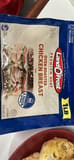 Oven Roasted Chicken Breast Land O'Frost · 16 oz Ultra-processedHigh in saltContains nitrites or nitratesContains added sugars Score 22 out of 100 Poor
 -
 Uncured Turkey Bacon Turkey Chopped & Good & Gather · 8 oz/227 g High in saltContains nitrites or nitratesContains added sugarsNo additives Score 66 out of 100 Good
 -
 Original Bacon Oscar Mayer · 12 oz High in saltHigh in saturated fatContains nitrites or nitratesContains added sugars Score 42 out of 100 Okay
Sources
-
Guideline: sugars intake for adults and children
“In both adults and children, WHO recommends reducing the intake of free sugars to less than 10% of total energy intake”
who.int
-
Dietary Guidelines for Americans, 2025–2030
“Limit foods and beverages that include artificial flavors, petroleum-based dyes, artificial preservatives, and low-calorie non-nutritive sweeteners.”
cdn.realfood.gov
-
Added and free sugars should be as low as possible
“Sugar consumption is a known cause of dental caries.”
efsa.europa.eu
-
Saturated fatty acid and trans-fatty acid intake for adults and children: WHO guideline
“WHO recommends that adults and children reduce saturated fatty acid intake to 10% of total energy intake (strong recommendation).”
who.int
-
“For adults, WHO recommends less than 2000 mg/day of sodium (equivalent to less than 5 g/day salt), or just under a teaspoon.”
who.int
-
21 CFR 184.1866 High fructose corn syrup
“a sweet, nutritive saccharide mixture containing either approximately 42 or 55 percent fructose”
ecfr.gov
-
Questions & Answers About 4-MEI
“Based on current science, the FDA has no reason to believe that there are any immediate or short-term health risks presented by 4-MEI at the levels expected in food.”
fda.gov
-
Agents Classified by the IARC Monographs, Volumes 1–142 (List of Classifications)
monographs.iarc.who.int
-
Proposition 65 List of Chemicals Known to the State to Cause Cancer or Reproductive Toxicity
“The date refers to the initial appearance of the chemical on the list.”
oehha.ca.gov
-
“Greater exposure to ultra-processed food was associated with a higher risk of adverse health outcomes, especially cardiometabolic, common mental disorder, and mortality outcomes.”
doi.org