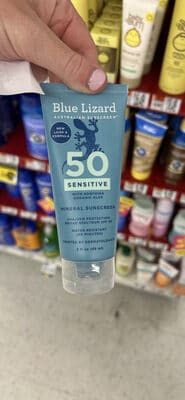
Food
Blue Lizzard Mineral Sunscreen
3 oz
Score
- Ultra-processed
- Contains chemical UV filters
- Contains added sugars
Why it scores 58
Blue Lizzard Mineral Sunscreen scores 58 out of 100 (Okay) under GoodSwap’s published rules. What moved the score most:
- minus 20 points Corn syrup: An added sugar. Strong
- minus 18 points Ultra-processed (NOVA 4): Classified NOVA 4: made with industrial ingredients and additives. Strong
- minus 2.5 points Disodium EDTA: An ingredient class typical of ultra-processed foods (NOVA group 4). Info
Every line of the math is on The Receipt below, with its evidence tier and sources.
The Receipt
Mineral Sunscreen
Ingredients
- Corn syrup minus 20 points
- Disodium EDTA minus 2.5 points
Processing
- Ultra-processed (NOVA 4) minus 18 points
- 2 kinds of ultra-processing markers minus 1.5 points
Nutrition
- Nutrition facts unavailable no points
100 − 42 = 58
Can’t score above 79. Contains corn syrup, an ingredient of high concern. [1][2][3]
Can’t score above 79. No nutrition facts on file, so we can't confirm excellent.
Ingredients
- 1,2-Hexanediol
- Aloe Barbadensis Leaf Juice Powder
- Alumina
- Aluminum Stearate (not recognized)
- Butyloctyl Salicylate
- C12-15 Alkyl Benzoate
- Caprylyl Glycol
- Cetyl Dimethicone
- Cetyl PEG/PPG-10/1 Dimethicone
- Dimethicone
- Disodium EDTA
- Ethylhexyl Palmitate
- Ethylhexyl Stearate
- Euphorbia Cerifera (Candelilla) Wax
- Hexy Laurale (not recognized)
- Hydroxyacetophenone
- Methyl Glucose Dioleate (high concern)
- Octyldodecyl Neopentanoate
- PEG-7 Hydrogenated Castor Oil (not recognized)
- Polyglyceryl-4 Isostearate
- Polyhydroxystearic Acid
- Propanediol
- Tocopherol (Vitamin E)
- Tocopheryl Acetate
- PHexadecene Copolymer (not recognized)
- Water
Label text, as published
1,2-Hexanediol, Aloe Barbadensis Leaf Juice Powder, Alumina, Aluminum Stearate, Butyloctyl Salicylate, C12-15 Alkyl Benzoate, Caprylyl Glycol, Cetyl Dimethicone, Cetyl PEG/PPG-10/1 Dimethicone, Dimethicone, Disodium EDTA, Ethylhexyl Palmitate, Ethylhexyl Stearate, Euphorbia Cerifera (Candelilla) Wax, Hexy Laurale, Hydroxyacetophenone, Methyl Glucose Dioleate, Octyldodecyl Neopentanoate, PEG-7 Hydrogenated Castor Oil, Polyglyceryl-4 Isostearate, Polyhydroxystearic Acid, Propanediol, Tocopherol (Vitamin E), Tocopheryl Acetate, PHexadecene Copolymer, Water
Sources
-
Guideline: sugars intake for adults and children
“In both adults and children, WHO recommends reducing the intake of free sugars to less than 10% of total energy intake”
who.int
-
Dietary Guidelines for Americans, 2025–2030
“Limit foods and beverages that include artificial flavors, petroleum-based dyes, artificial preservatives, and low-calorie non-nutritive sweeteners.”
cdn.realfood.gov
-
Added and free sugars should be as low as possible
“Sugar consumption is a known cause of dental caries.”
efsa.europa.eu
-
“Greater exposure to ultra-processed food was associated with a higher risk of adverse health outcomes, especially cardiometabolic, common mental disorder, and mortality outcomes.”
doi.org
-
“Benzophenone-3 is not safe for the consumer when used as a UV filter up to the current maximum concentration of 6 % in sunscreen products”
eur-lex.europa.eu
-
“the use of Homosalate should be restricted to face products (non-spray and pump spray products) only, up to a maximum concentration of 7,34 %.”
eur-lex.europa.eu