Fruits
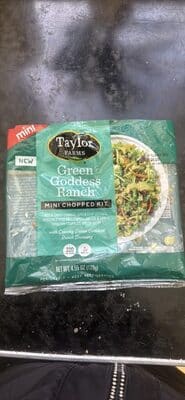
Taylor Farms Green Goddess Ranch Mini Chopped Kit
4.55 oz
Score
- Ultra-processed
- Contains added sugars
- Contains seed oils
- Contains palm oil
- No synthetic dyes
Why it scores 21
Taylor Farms Green Goddess Ranch Mini Chopped Kit scores 21 out of 100 (Poor) under GoodSwap’s published rules. What moved the score most:
- minus 20 points Sugar: An added sugar. Strong
- minus 20 points Malt syrup: An added sugar. Strong
- minus 18 points Ultra-processed (NOVA 4): Classified NOVA 4: made with industrial ingredients and additives. Strong
Every line of the math is on The Receipt below, with its evidence tier and sources.
The Receipt
Green Goddess Ranch Mini Chopped Kit
Ingredients
- Sugar minus 20 points
- Malt syrup minus 20 points
- Soybean oil minus 2.5 points
- Xanthan gum minus 1.5 points
- Natural flavors minus 1.5 points
- Sunflower oil minus 1.5 points
- Yeast extract minus 0.5 points
- Maltodextrin minus 0.5 points
- Palm oil minus 0.5 points
Processing
- Ultra-processed (NOVA 4) minus 18 points
- 5 kinds of ultra-processing markers minus 6 points
Nutrition per 100 g
- Saturated fat 2.3 g / 100 g minus 3 points
- Salt 0.8 g / 100 g minus 3 points
- Energy 171 kcal / 100 g minus 1 points
100 − 79.5 = 20.5 → 21
Can’t score above 79. Contains sugar, an ingredient of high concern. [1][2][3]
Nutrition per 100 g
| Energy | 171 kcal |
|---|---|
| Fat | 14 g |
| Saturated fat | 2.3 g |
| Trans fat | 0 g |
| Carbohydrates | 9.3 g |
| Sugars | 2.3 g |
| Added sugars | 0.8 g |
| Fiber | 1.6 g |
| Protein | 2.3 g |
| Salt | 0.8 g |
Serving: 1 portion (129 g)
Ingredients
- GREEN GODDESS RANCH DRESSING (SOYBEAN OIL, CULTURED LOWFAT BUTTERMILK, BASIL, SOUR CREAM, WATER, EGG YOLKS, DISTILLED VINEGAR, SALT, SUGAR, SPICES, LACTIC ACID, XANTHAN GUM, MUSTARD SEED, NATURAL FLAVORS [INCLUDES MILK], DEHYDRATED GARLIC, DEHYDRATED GREEN ONION, DEHYDRATED ONION, FRUIT JUICE [COLOR], OLEORESIN TURMERIC [COLOR])
- CABBAGE (RED CABBAGE, SAVOY CABBAGE)
- GREEN LEAF LETTUCE
- BROCCOLI
- CARROT
- CHEESE AND GARLIC CROUTON CRUMBLES (ENRICHED FLOUR, SUNFLOWER OIL, CHEDDAR CHEESE GARLIC SEASONING, WHEAT FLAKES, PALM OIL, SEA SALT, CANE SUGAR, YEAST)
- GREEN ONION
- RESPONSIBLY SOURCED PALM OIL | WWW.RSPO.ORG
Label text, as published
GREEN GODDESS RANCH DRESSING (SOYBEAN OIL, CULTURED LOWFAT BUTTERMILK, BASIL, SOUR CREAM [CULTURED NONFAT MILK, CREAM], WATER, EGG YOLKS, DISTILLED VINEGAR, SALT, CONTAINS LESS THAN 2% OF SUGAR, SPICES, LACTIC ACID, XANTHAN GUM, MUSTARD SEED, NATURAL FLAVORS [INCLUDES MILK], DEHYDRATED GARLIC, DEHYDRATED GREEN ONION, DEHYDRATED ONION, FRUIT JUICE [COLOR], OLEORESIN TURMERIC [COLOR]), CABBAGE (RED CABBAGE, SAVOY CABBAGE), GREEN LEAF LETTUCE, BROCCOLI, CARROT, CHEESE AND GARLIC CROUTON CRUMBLES (ENRICHED FLOUR [WHEAT FLOUR, MALTED BARLEY, NIACIN, IRON, THIAMIN MONONITRATE, RIBOFLAVIN, FOLIC ACID], SUNFLOWER OIL [SUNFLOWER OIL, ROSEMARY EXTRACT {TO MAINTAIN FRESHNESS}], CHEDDAR CHEESE GARLIC SEASONING [CHEESE POWDER {CHEDDAR CHEESE (MILK, SALT, CULTURES, ENZYMES), WHEY}, SALT, GARLIC POWDER, YEAST EXTRACT, NATURAL FLAVORS, CITRIC ACID, PARSLEY, SPICE, MALTODEXTRIN], WHEAT FLAKES, PALM OIL*, SEA SALT, CANE SUGAR, YEAST), GREEN ONION, *RESPONSIBLY SOURCED PALM OIL | WWW.RSPO.ORG
Allergens and diets
Contains: Milk, Soy, Wheat, Gluten, Egg, Mustard
- Not vegan
- Not gluten-free
- Not palm-oil-free
Always check the package: recipes change.
More fruits on GoodSwap
-
 Sweet Kale Chopped Kit Taylor Farms · 12 oz Ultra-processedContains added sugarsContains seed oils Score 52 out of 100 Okay
 -
 Sugar Free Strawberry Preserves Smucker's No additives Score 100 out of 100 Excellent
 -
 All-Vegetable shortening Crisco · 456 g Ultra-processedContains emulsifiers studied for gut effectsContains seed oilsContains palm oil Score 57 out of 100 Okay
 -
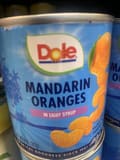 Mandarin Oranges in Light Syrup Dole · 123 g Contains added sugars Score 67 out of 100 Good
 -
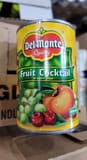 Fruit Cocktail In Heavy Syrup Del Monte · 127 g Ultra-processedContains added sugarsNo synthetic dyes Score 26 out of 100 Poor
 -
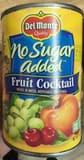 Fruit Cocktail Del Monte · 121 g Ultra-processedContains non-nutritive sweetenersNo synthetic dyes Score 63 out of 100 Good
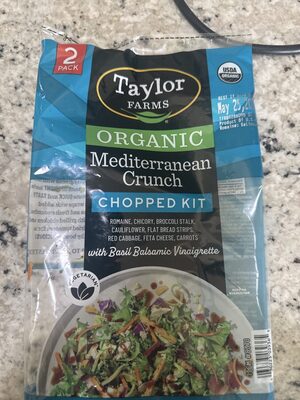
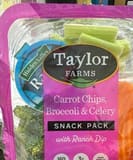
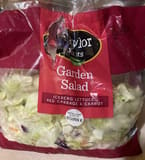
More from Taylor Farms
Sources
-
Guideline: sugars intake for adults and children
“In both adults and children, WHO recommends reducing the intake of free sugars to less than 10% of total energy intake”
who.int
-
Dietary Guidelines for Americans, 2025–2030
“Limit foods and beverages that include artificial flavors, petroleum-based dyes, artificial preservatives, and low-calorie non-nutritive sweeteners.”
cdn.realfood.gov
-
Added and free sugars should be as low as possible
“Sugar consumption is a known cause of dental caries.”
efsa.europa.eu
-
“replacement of saturated fat in the diet with linoleic acid effectively lowers serum cholesterol but does not support the hypothesis that this translates to a lower risk of death from coronary heart disease or all causes.”
doi.org
-
“These data provide support for current recommendations to replace saturated fat with polyunsaturated fat for primary prevention of CHD.”
doi.org
-
21 CFR 101.22 Foods; labeling of spices, flavorings, colorings and chemical preservatives
“whose significant function in food is flavoring rather than nutritional.”
ecfr.gov
-
Saturated fatty acid and trans-fatty acid intake for adults and children: WHO guideline
“WHO recommends that adults and children reduce saturated fatty acid intake to 10% of total energy intake (strong recommendation).”
who.int
-
Process contaminants in vegetable oils and foods
“The highest levels of GE, as well as 3-MCPD and 2-MCPD (including esters) were found in palm oils and palm fats, followed by other oils and fats.”
efsa.europa.eu
-
“Glycidyl fatty acid esters, expressed as glycidol”
eur-lex.europa.eu
-
“For adults, WHO recommends less than 2000 mg/day of sodium (equivalent to less than 5 g/day salt), or just under a teaspoon.”
who.int
-
“Greater exposure to ultra-processed food was associated with a higher risk of adverse health outcomes, especially cardiometabolic, common mental disorder, and mortality outcomes.”
doi.org