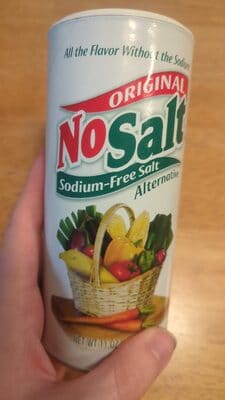
Condiments
Nosalt Original sodiumfree salt alternative ounce
11 oz
Score
- Ultra-processed
Why it scores 80
Nosalt Original sodiumfree salt alternative ounce scores 80 out of 100 (Excellent) under GoodSwap’s published rules. What moved the score most:
- minus 18 points Ultra-processed (NOVA 4): Classified NOVA 4: made with industrial ingredients and additives. Strong
- minus 2.5 points Silicon dioxide: An additive class typical of ultra-processed foods (NOVA group 4). Info
Every line of the math is on The Receipt below, with its evidence tier and sources.
Better salt
-
 Sea Salt Grinder Mccormick Not ultra-processed · No silicon dioxide Score 100 out of 100 , 20 points higher
 -
 Everything but the salt Dash · 2.6 oz Not ultra-processed · No silicon dioxide Score 100 out of 100 , 20 points higher
 -
 Extra Fine Himalayan Pink Salt Good Tires Not ultra-processed · No silicon dioxide Score 100 out of 100 , 20 points higher
 -
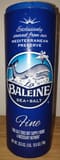 Fine Sea Salt La Baleine · 750 Not ultra-processed · No silicon dioxide Score 100 out of 100 , 20 points higher
 -
 Himalayan chef, himalayan pink salt grinder Himalayan Chef · 368 g Not ultra-processed · No silicon dioxide Score 100 out of 100 , 20 points higher
The same kind of product, at least 10 points higher, sold in the US. Never paid placements.
The Receipt
Original sodiumfree salt alternative ounce
Ingredients
- Silicon dioxide minus 2.5 points
Processing
- Ultra-processed (NOVA 4) minus 18 points
100 − 20.5 = 79.5 → 80
Nutrition per 100 g
| Energy | 0 kcal |
|---|---|
| Fat | 0 g |
| Carbohydrates | 0 g |
| Added sugars | 0 g |
| Protein | 0 g |
| Salt | 0 g |
Serving: 0.25 tsp (1.3 g)
Ingredients
Label text, as published
POTASSIUM CHLORIDE, POTASSIUM BITARTRATE, ADIPIC ACID, SILICON DIOXIDE. MINERAL OIL AND FUMARIC ACID.
Allergens and diets
- Vegan
- Vegetarian
- Gluten-free
- Palm-oil-free
Always check the package: recipes change.
More condiments on GoodSwap
-
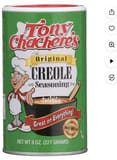 Original Creole Seasoning Tony Chachere's · 227 g Score 87 out of 100 Excellent
 -
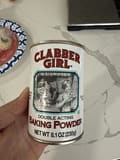 Baking Powder Clabber Girl · 8.1 oz (230 g) High in salt Score 79 out of 100 Good
 -
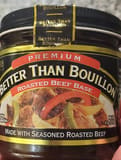 Roasted Beef Base Better Than Bouillon · 8 oz Ultra-processedHigh in saltContains added sugarsContains seed oils Score 8 out of 100 Bad
 -
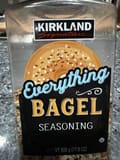 Everything Bagel Seasoning Kirkland Signature · 505 g High in saltNo additives Score 79 out of 100 Good
 -
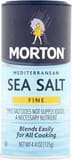 Sea Salt Fine Morton · 125 g High in saltNo additives Score 79 out of 100 Good
 -
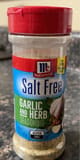 Salt free garlic and herb seasoning Mccormick · 4.37 oz/123 g No additives Score 100 out of 100 Excellent
Sources
-
“Greater exposure to ultra-processed food was associated with a higher risk of adverse health outcomes, especially cardiometabolic, common mental disorder, and mortality outcomes.”
doi.org