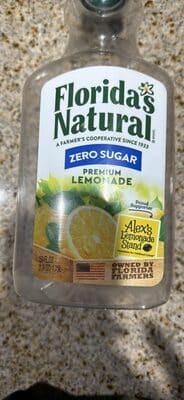
Sodas
Florida's Natural Premium Lemonade
59 fl oz/1.8 qt/1.75 L
Score
- Ultra-processed
- Contains non-nutritive sweeteners
Why it scores 69
Florida's Natural Premium Lemonade scores 69 out of 100 (Good) under GoodSwap’s published rules. What moved the score most:
- minus 18 points Ultra-processed (NOVA 4): Classified NOVA 4: made with industrial ingredients and additives. Strong
- minus 4.5 points 4 kinds of ultra-processing markers: Industrial additive classes found: emulsifier, flavoring, modified starch and non-nutritive sweetener. Emerging
- minus 2.5 points Natural flavors: "Natural flavor" is a legal category (21 CFR 101.22(a)(3)): flavor substances from spices, fruits, vegetables, meat, dairy or fermentation. Info
Every line of the math is on The Receipt below, with its evidence tier and sources.
Better lemonade
-
 Polar seltzer raspberry pink lemonade Polar · 96 fl oz Not ultra-processed · No non-nutritive sweeteners Score 100 out of 100 , 31 points higher
 -
 Seltzerade - Mango Limeade Polar · 12 fl oz Not ultra-processed · No non-nutritive sweeteners Score 100 out of 100 , 31 points higher
 -
 No sugar added strawberry lemonade Uncle Matt's · 52 fl oz/1.62 qt/1.53 L Not ultra-processed · No modified starch Score 100 out of 100 , 31 points higher
 -
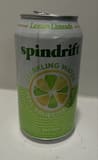 Lemon Limeade Spindrift · 12 fl oz Not ultra-processed · No non-nutritive sweeteners Score 100 out of 100 , 31 points higher
 -
 Strawberry Lemonade Synergy Not ultra-processed · No non-nutritive sweeteners Score 95 out of 100 , 26 points higher
The same kind of product, at least 10 points higher, sold in the US. Never paid placements.
The Receipt
Premium Lemonade
Ingredients
- Natural flavors minus 2.5 points
- Stevia (steviol glycosides) minus 2.5 points
- Modified starch minus 2.5 points
- Glycerol ester of rosin (ester gum) minus 1.5 points
Processing
- Ultra-processed (NOVA 4) minus 18 points
- 4 kinds of ultra-processing markers minus 4.5 points
100 − 31.5 = 68.5 → 69
Nutrition per 100 ml
| Energy | 0 kcal |
|---|---|
| Fat | 0 g |
| Saturated fat | 0 g |
| Carbohydrates | 0.4 g |
| Sugars | 0 g |
| Added sugars | 0 g |
| Protein | 0 g |
| Salt | 0 g |
Serving: 8 fl oz (240 ml)
Ingredients
- WATER
- LEMON JUICE
- CITRIC ACID (PROVIDES TARTNESS)
- NATURAL FLAVORS
- STEVIA LEAF SWEETENER
- POTASSIUM CITRATE (REGULATES TARTNESS)
- MODIFIED CORN STARCH
- GLYCEROL ESTER OF ROSIN
Label text, as published
WATER, LEMON JUICE**, CITRIC ACID (PROVIDES TARTNESS), NATURAL FLAVORS, STEVIA LEAF SWEETENER, POTASSIUM CITRATE (REGULATES TARTNESS), MODIFIED CORN STARCH, GLYCEROL ESTER OF ROSIN.
Allergens and diets
- Palm-oil-free
Always check the package: recipes change.
More sodas on GoodSwap
-
 Zero Ultra Monster Energy · 1 can (16 oz) Ultra-processedContains non-nutritive sweetenersContains sugar alcoholsContains caffeine Score 51 out of 100 Okay
 -
 Strawberry Lemonade Prebiotic Soda Poppi · 355 mL / 12 oz Ultra-processedContains non-nutritive sweetenersContains added sugars Score 49 out of 100 Okay
 -
 Soda Lemon-lime Sprite · 12 fl oz (355 mL) Ultra-processedContains added sugars Score 34 out of 100 Poor
 -
 Cherry Lime Sparkling Water Waterloo Ultra-processedNo additives Score 83 out of 100 Excellent
 -
 Root Beer Prebiotic Soda Poppi · 355 mL Ultra-processedContains non-nutritive sweetenersContains added sugars Score 28 out of 100 Poor
 -
 Lemon-Lime Soda Sprite · 6 × 16.9 fl oz Ultra-processedContains added sugars Score 41 out of 100 Okay
More from Florida's Natural
-
 100% Premium Orange Juice from Concentrate Florida's Natural · 1.53 L Score 90 out of 100 Excellent
 -
 No Pulp 100% Premium Orange Juice From Concentrate Pasteurized Florida's Natural · 1.53 L Score 90 out of 100 Excellent
 -
 100% Premium Orange Juice From Concentrate Florida's Natural · 89 fl oz/2.78 qt/2.63 L Score 90 out of 100 Excellent
 -
 With Pulp 100% Premium Orange Juice From Concentrate With Calcium & Vitamin D Florida's Natural · 52 fl oz/1.6 qt/1.53 L Score 87 out of 100 Excellent
Sources
-
21 CFR 101.22 Foods; labeling of spices, flavorings, colorings and chemical preservatives
“whose significant function in food is flavoring rather than nutritional.”
ecfr.gov
-
WHO advises not to use non-sugar sweeteners for weight control in newly released guideline
“The recommendation is based on the findings of a systematic review of the available evidence which suggests that use of NSS does not confer any long-term benefit in reducing body fat in adults or children.”
who.int
-
Dietary Guidelines for Americans, 2025–2030
“Limit foods and beverages that include artificial flavors, petroleum-based dyes, artificial preservatives, and low-calorie non-nutritive sweeteners.”
cdn.realfood.gov
-
“Greater exposure to ultra-processed food was associated with a higher risk of adverse health outcomes, especially cardiometabolic, common mental disorder, and mortality outcomes.”
doi.org